Pandemic fallout blunts textbook policy of raising land supply to curb rising home prices
It is wise to calibrate increasing Government Land Sales sites for private homes. The reason? Covid-19 and construction costs

Singapore
PRIVATE home prices in Singapore rose for the sixth consecutive quarter in the third quarter of 2021, up 1.1 per cent. Developers sold 3,550 new homes excluding executive condominium units in the latest quarter.
Pasir Ris 8 sold around 85 per cent of its 487 units at its launch weekend in July, where there were multiple rounds of price hikes.
Unsold inventory of uncompleted private homes, with planning approvals, has been declining since the first quarter of 2019.
Unsold inventory excluding executive condos is at 17,140 units as at the end of Q3 2021 versus 36,839 units as at the end of Q1 2019. The level of unsold inventory is less than two years of sales of uncompleted homes based on recent trends.
Developers sold 9,901 units of uncompleted private homes in the first nine months of 2021 compared with 9,838 and 9,734 units in the whole of 2020 and 2019 respectively.
Low interest rates, economic recovery, an improving job market, political stability, and public infrastructure improvements underpin demand for private homes.
The pandemic has likely amplified the value of a home as people spend more time at home. Some people may also be tempted to buy for fear of missing out.
In any market, when demand is strong, supply should rise such that prices do not run away.
Can we expect a big jump in the number of homes put up for sale in the upcoming Government Land Sales (GLS) Programme for the first half of 2022?
The government offered land that can potentially yield about 2,000 private homes (including executive condo units) in the Confirmed List under the H2 2021 GLS Programme, up almost 25 per cent from 1,605 units for the H1 2021 GLS Programme.
Still, the estimated number of new private homes from sites on the Confirmed List of the H2 2021 GLS Programme is more than 25 per cent lower than that in each of H1 2018 and H2 2018 of 2,775 and 2,705 units, respectively.
Recent government tenders for a suburban private predominantly residential site at Lentor Central and an executive condo site at Tampines Street 62 drew nine bidders each and bullish top bids.
Government tenders that closed in September for two residential with commercial at first storey land sites at Slim Barracks Rise drew 10 bids per site. The bids received were competitively bunched.
Strong home buying interest and the hunger of developers for land could justify upping supply under the Confirmed List of the GLS Programme.
Perhaps the supply of new homes from sites on the Confirmed List of the 2022 GLS Programme can match or exceed levels seen in 2018.
More residential land may be needed given the low inventory of unsold uncompleted homes and trends seen over the last decade of household sizes shrinking and more living in private homes.
Between 2010 and 2020, the number of resident households grew by almost 20 per cent, outpacing the growth in the resident population of 7.2 per cent. Average household size shrank from 3.5 in 2010 to 3.22 in 2020. The proportion of resident households living in HDB dwellings fell from 82.4 per cent in 2010 to 78.7 per cent in 2020.
The size of the resident population as at end-June 2021 dipped 1.4 per cent from a year ago mainly due to travel restrictions in the midst of the Covid-19 pandemic, which resulted in more residents staying overseas for 12 months or more.
Hold that thought
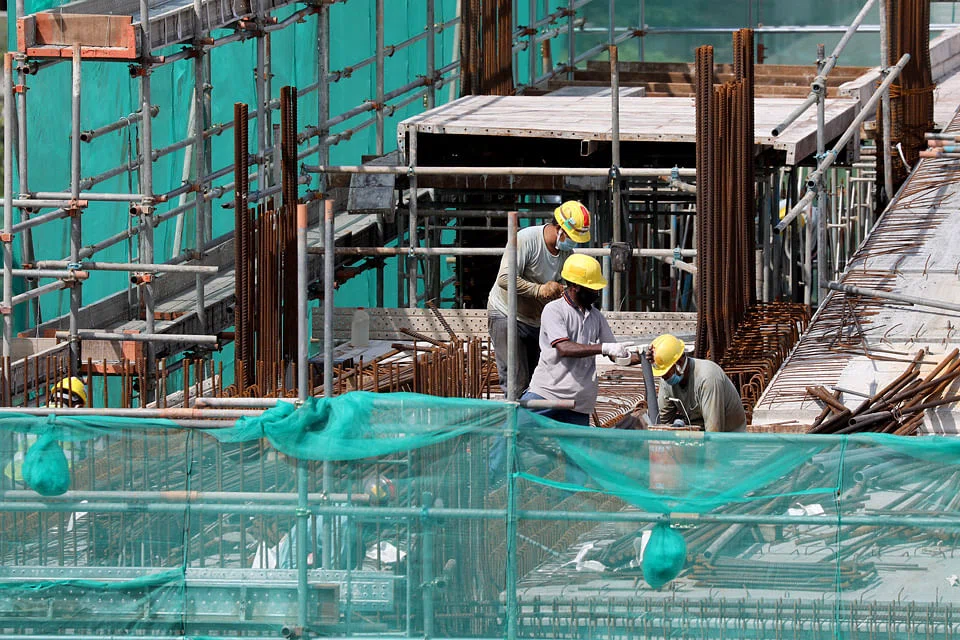
But the pandemic throws a spanner on upping land supply for new homes as a major risk facing developers across various property segments is rising construction costs.
International consultancy firm Turner & Townsend said in its Singapore market insight report August 2021 that the construction sector is facing significant manpower shortages, supply chain constraints, and productivity concerns.
Turner & Townsend projects that tender price escalation this year could be around 10 to 15 per cent. The consultancy noted that prices of key construction materials such as steel bars and cement as at June 2021 rose by 36.2 per cent and 6 per cent respectively, compared with prices as at December 2020.
Compared to a year ago, the number of work permit holders in the construction, marine shipyard and process sectors fell by around 60,000 or 16 per cent to 311,000 as at December 2020. This number declined further to 304,200 in June 2021.
Wing Tai Holdings said in its results announcement for the financial year ended Jun 30, 2021: "The construction industry is facing rising costs due to manpower shortage and reduced productivity from the implementation of safe management measures at worksites."
Releasing more GLS sites on the Confirmed List for building homes risks driving up construction activity and worsening the competition for manpower and building materials.
Options exist for developers to secure residential sites beyond what is on the Confirmed List of the GLS Programme. Developers can trigger the release of sites from the Reserve List of the GLS Programme. Sites offered on the Reserve List for H2 2021 could yield around 4,860 private homes in total.
Also, developers can secure residential sites from the en bloc market. Here, activity appears to be picking up with deals being done and more sites being put up for sale.
In September, Savills Singapore announced the sale of Flynn Park in Pasir Panjang, which is zoned for residential use, for S$371 million to a joint venture between Hoi Hup Realty and Sunway Developments.
In October, a joint venture between subsidiaries of UOL Group and Singapore Land Group clinched a tender to purchase en bloc property Watten Estate Condominium for S$550.8 million.
Recently, various en bloc hopefuls have come to the market.
In October, ERA put up Chuan Park Condominium, near Lorong Chuan MRT station, for collective sale at an indicative price of S$938 million. According to ERA, Chuan Park can be redeveloped into 900 to 919 homes.
In the same month, PropNex launched the collective sale of residential redevelopment site Lakepoint Condominium with a reserve price of S$640 million, while Savills Singapore put up for collective sale High Point at Mount Elizabeth with a guide price of S$550 million.
Over time, continuously raising productivity in the construction industry can lead to more new homes being built with fewer migrant workers. For now though, shortage of construction workers is a problem.
Irrational exuberance
Until the risks of rising construction costs are better contained, it may be wise for the government to be cautious in increasing land supply for private homes. Should there be irrational exuberance in home prices, the government may need to curb demand by rolling out cooling measures.
Supply of private homes takes much longer to catch up with demand compared with many other goods, where factories may crank up supply quickly to meet demand. The pandemic has increased the time taken to build new homes.
Still, over time, the efforts of the government, the construction sector, en bloc hopefuls and developers will see supply catch up with demand thereby cooling a hot Singapore private home market.
Buyers of new homes, who are purchasing for investment, should take heed that they may be receiving the keys to their new homes when the supply crunch in homes has been alleviated, thus posing challenges in selling or leasing.