PGIM eyes Singapore, Tokyo offices and China logistics for APAC value-add fund

THE fourth in PGIM Real Estate's series of Asia-Pacific value-add funds has raised US$970 million, and is in advanced discussions for additional commitments that would take the capital raise to over US$1 billion.
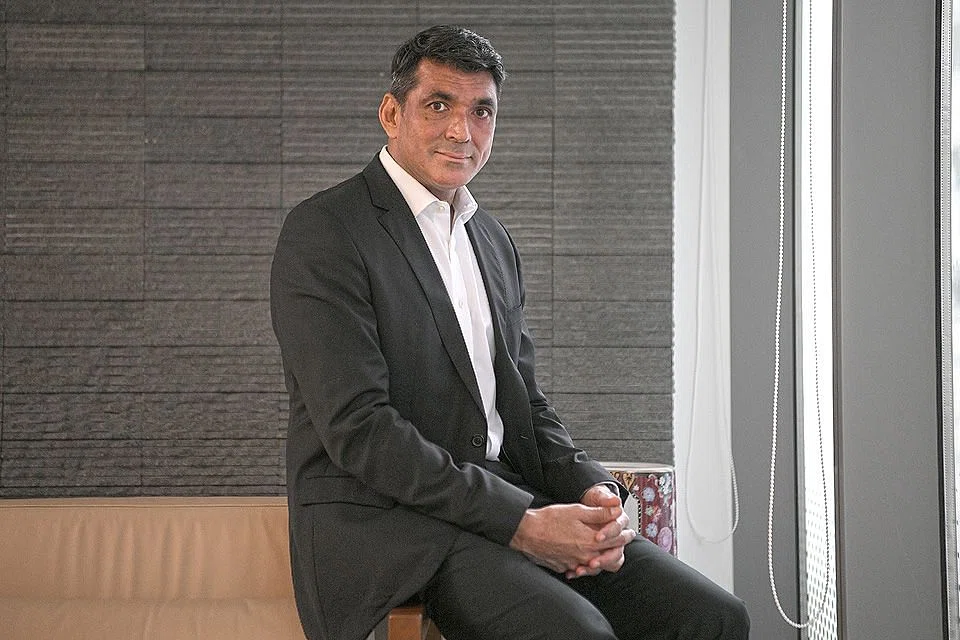
The fund, AVP IV, had an original target of 650 million euros or about US$789 million, said Benett Theseira, head of Asia-Pacific for PGIM Real Estate, in an interview with The Business Times (BT).
That the capital raise has exceeded its initial target is an indication that investors "see a significant opportunity in the region's recovery from the Covid-19 pandemic", according to PGIM Real Estate.
PGIM Real Estate is the real-estate investment and financing business of PGIM, the US$1.4 trillion global investment management business of New York-listed Prudential Financial Inc.
AVP IV will invest in distinct and executable value-add and selective opportunistic strategies across Asia-Pacific real estate, including offices, logistics, residential and retail properties, in both mature and emerging markets.
In property investment, each deal typically fits into one of the three main philosophies: core, value-add and opportunistic, depending on the risk and return characteristics. Core strategies suit conservative, long-term investors looking for stable income with minimal risk and management of the asset.
Meanwhile, some value-add strategies include material leasing of 20 per cent or more, or where there is significant refurbishment and necessary capital expenditure (capex) to be incurred, said Mr Theseira. Returns from such "manage-to-core" investments are generated from a combination of income and capital appreciation.
Opportunistic strategies, considered the riskiest, tend to involve construction risks, such as a ground-up development or the redevelopment of a property. Returns from such "build-to-core" deals are primarily delivered in the form of capital appreciation.
Investments in data centres across the Asia-Pacific are among the current "high-conviction" strategies for AVP IV, according to Mr Theseira.
The fund is also eyeing assets in the logistics sector in China and Australia, and selectively in Japan and South Korea, as well as build-to-rent, build-to-sell, co-living spaces and more in Japan and Australia.
Additionally, it is looking into opportunities in the office sector in markets where there is a strong business outlook and recovery prospects. "In particular, we like the Singapore and Tokyo office markets, and will be monitoring Sydney and Hong Kong - where rental markets have been facing considerable headwinds - to enter at an appropriate opportunity," Mr Theseira told BT.
AVP IV will also invest in classic value-add strategies that involve light to major refurbishments or capex, repositioning, stabilisation of occupancy and optimisation of tenant mix, and so on, as well as selective ground-up developments or redevelopment opportunities.
The target returns and leverage vary across the AVP IV portfolio, depending on the market, sector and risk profile of each investment. "The typical gross rate of returns we seek ranges from the low to high teens, depending on the underlying asset risk," said Mr Theseira. "A typical leverage would range from 50 per cent to 65 per cent, with an average target of 55 per cent for the portfolio."
The investors in AVP IV have largely been European institutional investors. About 60 per cent by value are from pension funds, 30 per cent from insurance firms and 10 per cent from other investors such as corporates, foundations and family offices.
David Fassbender, portfolio manager for the value-add fund series and head of South-east Asia for PGIM Real Estate, said AVP IV has retained a "substantial number" of clients who invested with the prior funds while also broadening its client base, attracting new investors from Europe and the Asia-Pacific.
The fundraise for AVP IV will close in the middle of March 2021.
Mr Theseira said: "While we have not seen the level of price correction that we had expected in early 2020, we feel that there are still attractive opportunities in the value-add and opportunistic space.
"We expect demand for assets to stay strong and possibly even increase, as interest rates are expected to remain at historical lows for the foreseeable future. The spreads between real estate yields and government bonds have widened, maintaining real estate's appeal as an attractive asset class."
Furthermore, the successful management of the Covid-19 pandemic by Asia-Pacific governments and their economies' consequential stronger recovery may lead to more institutional interest and capital flows into the region. "This will further accelerate the diversification of global institutional real estate portfolios," Mr Theseira said.
PGIM Real Estate has offices in Singapore, Tokyo, Seoul, Shanghai, Hong Kong and Sydney. "Our ground presence gives us a competitive advantage over others in executing transactions, where many investors who used to travel for such deals may face difficulties for a large part of 2021," Mr Theseira said.