

Sasseur Reit posts 6.7% increase in Q2 DPU to 1.614 S cents; manager eyes potential acquisition
 Add BT as a preferred source
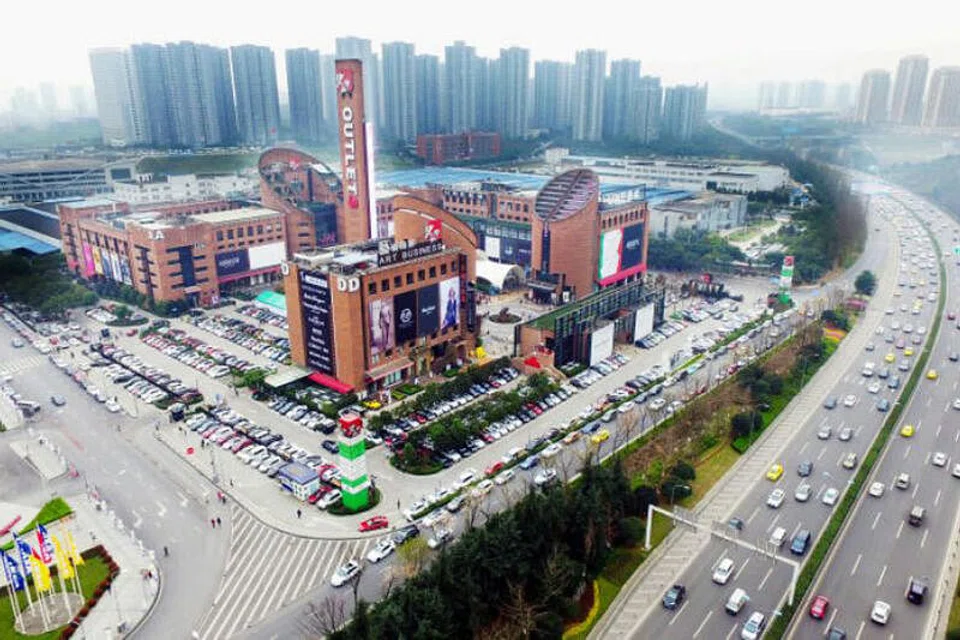
Sasseur Real Estate Investment Trust CRPU (Sasseur Reit), which owns outlet malls in China, posted a distribution per unit (DPU) of 1.614 Singapore cents for the three months ended June 30, up 6.7 per cent from the DPU of 1.512 cents in the year-ago period.
Distributable income rose 19.7 per cent to S$21.7 million in Q2, from S$18.2 million a year ago.
The Reit manager said it has elected to retain 10 per cent of distributable income for Q2 to provide funding for future capital expenditure and working capital purposes. The distribution will be paid out on Sept 28.
"As we look ahead, we want to continue to embark on strategic asset enhancement initiatives (AEIs) to strengthen our portfolio," said Cecilia Tan, chief executive officer of the manager, at a briefing following the results announcement on Friday morning.
Without the retention, Q2 DPU would have been around 1.79 cents, the manager said.
"As the portfolio matures, and (because) we're also seeing some increased competition in some of the localities, there is this continuing need for us to keep up with the competition to stay relevant," Ms Tan said.
Part of the funds from the DPU retention will go towards AEI works at the Chongqing Bishan mall, which are expected to be completed in December this year.
In addition, the Reit manager said it was "reviewing opportunities" for potential acquisitions.
"I know the market has been very anxious," Ms Tan said, noting feedback that the Reit has not yet made an acquisition after three years since its listing in early 2018.
"Suffice to say, we have already started work to really look into the feasibility of unlocking acquisitions via the right-of-first-refusal (ROFR) assets," she added. "If we were to make an acquisition, I would definitely continue to focus on China and also leverage on the sponsor's strengths."
The manager said it was eyeing two ROFR properties in Xi'an and Guiyang, which have gross floor area of 141,708 square metres (sq m) and 193,520 sq m, respectively.
"The retail assets are very large-scale, relative to industrial or office (properties)," Ms Tan said. So for us to do an acquisition, we really need to plan this very carefully."
Sasseur Reit's aggregate leverage was fairly stable at 27.8 per cent as at June 30, translating into a debt headroom of S$825 million based on the leverage limit of 50 per cent.
However, due to the size of the potential acquisition, the manager said it is likely to have to tap on the market to raise funds if the plans do go through.
Ms Tan opined that the time could soon be ripe, with Sasseur Reit now trading at around its net asset value (NAV).
The Reit's NAV per unit rose to 93.61 Singapore cents as at June 30, 2021, from 91.40 cents as at Dec 31, 2020. Meanwhile, the counter closed 0.5 per cent or 0.5 Singapore cents higer at 95 cents on Friday, after the results announcement.
"I think this signals that the market is now accepting that we have the strong fundamentals to deliver sustainable growth going forward," Ms Tan said.
"We need the market to be with us," she added. "On the acquisition front, we are accelerating our pace (but) without slowing down on our asset management strategy."
In Q2, Sasseur Reit's rental income under its entrusted management agreements (EMAs) was 5.6 per cent higher at S$32.0 million, from S$30.3 million in the year-ago period.
EMA rental income was up 8 per cent to S$30.2 million, after adjusting for a straight-lining of an annual 3 per cent escalation of the fixed component of EMA rental income.
"The strong set of results was mainly due to active leasing activities which increased the representation of highly sought-after brands, improvement in operating performance and lower interest expenses following the completion of loan refinancing exercise in September 2020," Ms Tan said in a statement accompanying the results announcement.
On a quarter-on-quarter basis, portfolio occupancy dipped 1 percentage point to 92.5 per cent in Q2, from 93.5 per cent in Q1.
As at end-June, weighted average lease expiry stood at 2.4 years by net lettable area and 0.9 year by gross revenue.
READ MORE
Decoding Asia newsletter: your guide to navigating Asia in a new global order. Sign up here to get Decoding Asia newsletter. Delivered to your inbox. Free.
Copyright SPH Media. All rights reserved.
TRENDING NOW

MedPark’s assistant CEO runs a hospital where patients, physicians precede profits

E-commerce is killing ‘real’ commerce, says China’s beverage king Zhong Shanshan

Laos-China Railway picks up steam, but S-E Asian country struggles to capture gains

NDR 2026: Singapore to create new Western island to support 'new generation of industries'

