

Singapore central region retail rents down 0.5% in Q2, signals rocky road to recovery
Lisa Kriwangko
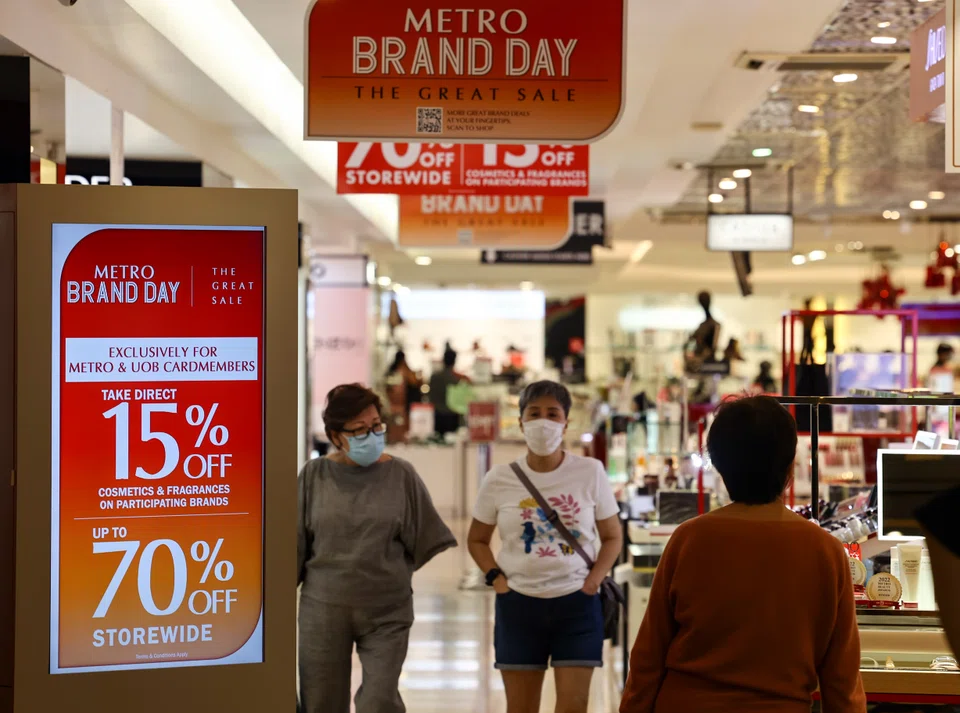
WHILE the easing of pandemic measures have supported retail activity, border restrictions and the looming economic downturn remain obstacles to the sector’s recovery.
Rents of retail spaces in Singapore’s central region fell for the second quarter in a row this year. Q2 2022 rents slipped 0.5 per cent quarter on quarter following Q1’s 0.4 per cent decline, according to figures from the Urban Redevelopment Authority (URA) released on Friday (Jul 22).
Prices of retail space in the central region also dropped by 1.2 per cent in Q2 after it dipped 1.4 per cent in Q1.
“Since the removal of Safe Management Measures in Q2 2022, shopping and dining activities have returned to the retail market, bringing long-awaited relief to shops and eateries,” said Leonard Tay, head of research at Knight Frank Singapore.
The Vaccinated Travel Framework also bolstered tourist arrivals, he added. The months of April to June saw a total of 1.3 million visitors enter the country, jumping from 246,145 people in the first quarter of the year.
“The pick-up in tourist inflow contributed to the rise in footfall in Q2 2022, injecting life into the central areas which were deprived of pedestrian traffic during the worst of the pandemic. Singapore remains a key destination for many tourists as well as a spot for major events such as the Singapore Grand Prix that will be held in September this year,” Tay said, adding that he expects the retail property sector to improve in the remaining half of the year.
Wong Xian Yang, head of research (Singapore) at Cushman & Wakefield, added that retailers had more confidence to take up physical spaces as workers are returning to offices.
However, prime retail is “unlikely” to see a full recovery until travel restrictions in North Asia are lifted and tourist numbers recover to pre-pandemic levels, according to Catherine He, head of research (Singapore) at Colliers.
“According to the International Air Transport Association, that will only happen by 2023,” she said.
She added that retailers will face headwinds such as manpower shortages and higher operating costs arising from inflationary pressure and supply chain disruptions.
“Higher interest rates and the prospect of a possible recession could reduce discretionary income and prompt consumers to tighten their wallets, thus curtailing retail spending,” He said.
“Inflation woes also mean that landlords are unlikely to push for high rental escalations in the current business climate, while rising interest rates and tighter mortgage repayments may also further cap consumer spending,” said Lam Chern Woon, head of research and consulting at Edmund Tie.
That said, Collier’s He noted that a there is a “saving grace” for the retail market. New retail supply is expected to remain muted at about 30 per cent of the historical 10-year average, with no new supply for prime retail. This could lend support to rents and occupancies.
Lam added that malls are renovating, refreshing their tenant mix and integrating technology to stay relevant and attractive to shoppers.
At the end of Q2 2022, there was a total supply of 438,000 square metres (sq m) gross floor area of retail space from projects in the pipeline, compared with the 415,000 sq m the previous quarter.
The stock of retail space rose by 1,000 sq m net lettable area (NLA) in Q2 2022, same as the increase recorded in the previous quarter. The second quarter also saw the amount of occupied retail space increased by 8,000 sq m of net lettable area NLA, contrasting from the decrease of 12,000 sq m in Q1.
Island-wide quarterly net absorption in the private retail property segment was positive at 3,000 sq m in Q2 2022, compared with the decrease of 14,000 sq m in the previous quarter, noted He. This was contributed mainly by improvement in occupancy in 2 sub-markets: 10,000 sq m in the Fringe Area and 8,000 sq m in the Rest of Central Area.
By the end of June, islandwide vacancy rate reached 8.2 per cent, sliding 1 percentage point from that as at end March.
In the Fringe Area, vacancy rate fell to 7.4 per cent, noted Lam. “This demonstrates its continued resilience amid the entrenchment of hybrid work arrangements. With median rents of the suburban market unexpectedly declining by 1 per cent this quarter, this could potentially indicate that higher asking rents might have hit the threshold of some retailers,” he said.
Meanwhile, vacancy rates for the Orchard Planning Area and the Central Area Outside Orchard were at 11.7 per cent and 11.4 per cent respectively.
Lam said: “We expect suburban retail rents to lead the market’s recovery and clock around 8 per cent rental growth this year, while other segments are poised for between 3 and 5 per cent rental growth in 2022.”
“However, if China relaxes its Covid-19 policy, alongside the return of Chinese tourists, the possibility of prime retail rental growth outpacing suburban retail cannot be ruled out,” he added.
Wong said: “We anticipate retail net demand in Orchard to return to positive territory in H2 2022 with the area still being a key destination for new-to-market, digital-native and established brands alike.”
He noted that H&M’s sister brand & Other Stories is opening at ION Orchard, while online fashion brands Claude and Neonmello are debuting their physical stores at Takashimaya Shopping Centre and Plaza Singapura respectively. Sportswear giant Puma opened a flagship store of about 7,000 square feet (sq ft) at 313@Somerset and homegrown furniture brand Castlery will launch its largest showroom of 24,000 sq ft at Liat Towers in Q3.
Meanwhile, Tay estimated retail rents to grow by 2 to 4 per cent for the whole of 2022.
TRENDING NOW

Singapore government slaps loan curbs on individual private-hire car buyers

If Europe goes to war, the fallout will be felt in East Asia
The grid is the transition: Why Asean’s next energy challenge is coordination

Indonesia stocks suffer worst plunge in nearly 30 years as MSCI proposes standalone status

