Singapore commercial property investment deals dive, but should pick up next year: Savills IM
Figure was US$2.7b in first nine months against US$8b for same period in 2019, but Singapore remains attractive to investors, says real estate fund manager
Singapore
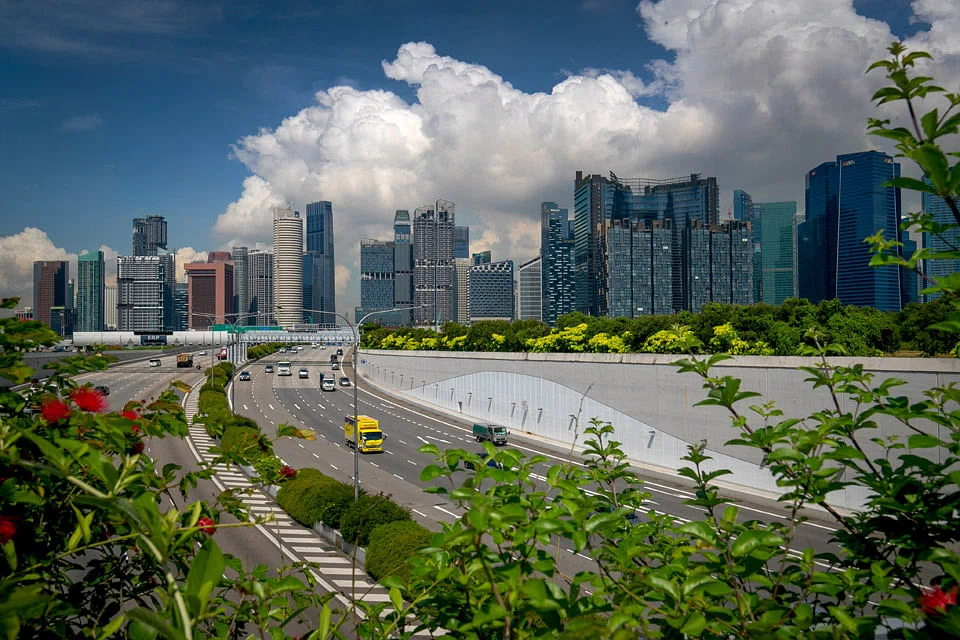
SINGAPORE'S commercial property investment volumes have plunged as expected this year, with US$2.7 billion achieved in the first nine months, against US$8 billion for the same period in 2019.
The volume for full year 2019 was US$10 billion, according to Savills Investment Management (Savills IM).
The 10-year average for commercial property investment volumes is US$7.7 billion. Commercial properties include office, retail, industrial and hotel.
There are still some deals being finalised so 2020 full year could reach US$3.2 billion, said Savills IM.
It expects 2021 will be better as investment volumes may hit US$5.6 billion given that Singapore real estate remains attractive for investors, the real estate fund manager said in a recent survey/outlook report.
"Savills IM's survey showed that Singapore ranked fifth in terms of geographical markets expected to attract the most real estate investments in 2021, after the US, UK, Canada and pan-Asia."
Benedict Lai, Savills IM research manager, said: "Singapore stands out as one of the key markets that we expect will attract stronger real estate investment inflows as borders reopen and as an effective vaccine rolls out. Over the next five years, our long-term view is that most Asia-Pacific markets will likely out-perform the global average from an average returns perspective.
"Singapore is one of the markets within the region that would also outperform in the long term. The city state remains an attractive destination for foreign investors due to its stable policy regime, relative neutrality, sustainability initiatives and plans to become Asia's digital capital."
Key picks for Singapore include offices in Singapore's Central Business District (CBD), which should see increase investor interest as a result of the government's long term rejuvenation plans and incentives for the area.
It also likes fringe-of-CBD, Grade B properties that offer value-add opportunities, as well as the logistics sector - growth which is dependent on the strength of economic recovery due to the Singapore economy's dependence on exports.
Logistics, multifamily and CBD offices in key locations across Asia-Pacific will present attractive investment opportunities in 2021 as investors regain confidence following the Covid-19 crisis, the report said.
It envisages no major demise of the office sector despite the increase in agile working driven by the pandemic.
"Offices in CBD locations with good transport links are here to stay while the resilient income streams and long-lease tenancy of logistics assets represent a strong buy for core/core-plus investors.
Logistics, which has been a clear winner throughout the pandemic because of the increase in online shopping, will continue to be backed by solid fundamentals and structural tailwinds.
But with returns on traditional property assets - office, industrial and retail - low, investors are also looking to alternative sectors such as student housing, build-to-rent accommodation, senior living and data centres.
"The broad theme of increased allocation to logistics has also seen a similar trend in Singapore," it said.
Since the start of 2020, investment volumes of income producing commercial properties in Singapore have slowed down, except for industrials which include factories, business parks, high-tech space, in addition to logistics.
While offices continue to make up half of the investment volumes for the first nine months of 2020, which is in line with the long-term trend, the percentage of industrial deals has doubled compared to the same time period in 2019 - from 13 per cent to 25 per cent.
Over US$675 million worth of industrial deals were transacted since the start of 2020 to Q3 2020.
Last year, industrial transactions were close to US$1.2 billion with half of that attributed to the single large industrial sale of a 25-hectare site at Tuas South Avenue 14 to Australia-based Logos Property, which is quite unusual for its large ticket size of S$585 million in early 2019.
The seller was the Singapore unit of Norway-headquartered solar firm REC which entered into a S$585 million sale-and-leaseback transaction on its Tuas South property with Logos Property, reportedly one of the biggest of its kind here.
Savills IM expects this pace to be sustained in terms of higher allocation to logistics, although restrictive border controls may pose a challenge for foreign investors to inspect properties. But weakness in the retail and hospitality industry means that the allocation is likely to remain below its 10-year average of 18 per cent and 10 per cent, respectively.
A risk to watch out for in 2021 is a prolonged lockdown globally due to a resurgence in new infections. This would have a impact on investments in Singapore for foreign investors (as at Q3 2020, more than 57 per cent of commercial investment volumes are cross-border, which is higher than the 10-year average of 33 per cent).