

Singapore developers waiting for 'Sword of Damocles' moment: report
Lisa Kriwangko
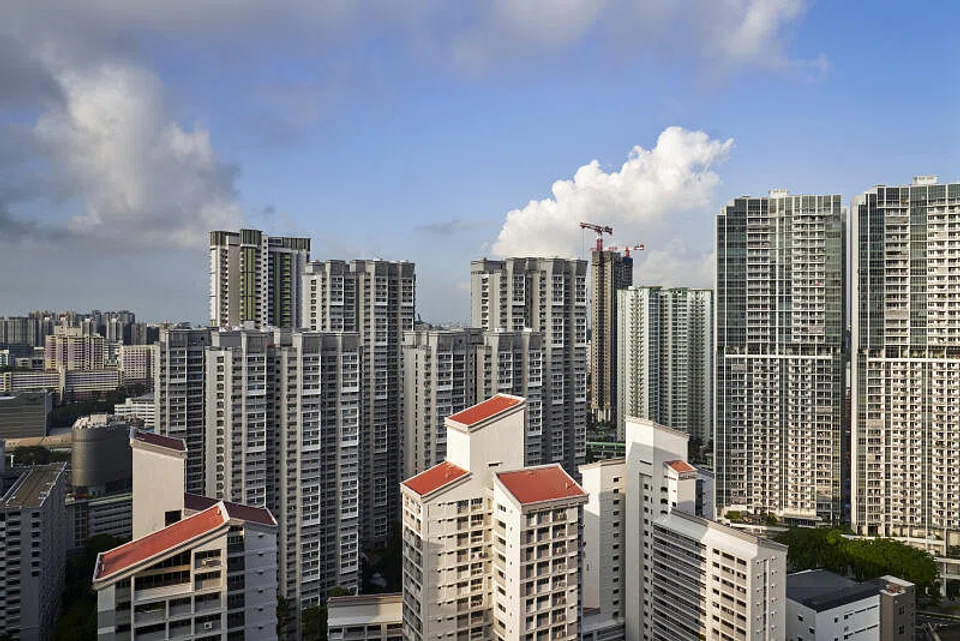
PROPERTY developers in Singapore should brace themselves for cooling measures ahead, UOB Kay Hian (UOBKH) said, as the odds of policy action have "manifestly increased".
"Waiting for the Sword Of Damocles," said the report this week.
That condo resale volumes reached 1,662 units in March meant sales have hit a 10-year high and amounting to more than a doubling from a year ago. These, in addition to other potent data points, have increased the chances of the government introducing cooling measures to limit further price increases in the next few months, said UOBKH.
Private property prices were up 3.3 per cent quarter on quarter (q-o-q) and 6.6 per cent year on year (y-o-y) in Q1 2021 - this marks the fourth straight quarterly improvement, after a soft 1 per cent fall in Q1 2020.
The upward trend reflects strong underlying residential demand, supported by soft mortgage rates and macroeconomic recovery, said Citi in a Monday report.
Bucking the trend, the three months also saw a 2.2 per cent q-o-q and 0.6 per cent y-o-y increase in private property rents, after three straight quarters of decline.
Citi said this was due to a delay in housing completions, a higher demand for larger-sized units on work-from-home arrangements, and an incremental inflow of visitors on dependent's or long-term visit passes.
HDB prices are also heading higher. HDB prices rose 0.8 per cent month on month (m-o-m) and 9.5 per cent y-o-y in March, marking the ninth straight month of increases.
The delays in build-to-order flats, rising prices on the private side and improving market sentiment have pushed demand, and consequently raised HDB prices in March to just 5 per cent off their peak seen in April 2013.
"Arguably, the Singapore government would be more worried about excessively exuberant HDB prices relative to prices for private residential units," said UOBKH.
"In our view, price increases of this magnitude may be politically unpalatable and reinforces our expectation for cooling measures," it added.
Still, Citi said the sanguine demand growth juxtaposed against the timid supply movement will lead to some bullish strategies from property developers later this year.
It estimated that the unsold pipeline is low due to a delay in completions and solid primary sales. It also forecast supply growth to be "manageable", adding 1.8 per cent in 2021, 2.9 per cent in 2022 and 3.7 per cent in 2023.
"We expect upcoming government land tenders to attract intense competition and en-bloc deals to heat up beginning H2 2021," it said.
Just on Tuesday, a tender for a 99-year leasehold plot directly connected to the Farrer Park MRT Station and near Mustafa Centre drew 10 bids.
The highest bid, from a tie-up between City Developments Ltd and MCL Land, came in at nearly S$445.9 million, or S$1,129 per square foot per plot ratio.
This is the second government land sale (GLS) tender for private residential development to close after the "circuit breaker" and the double-digit number of bidders showed the hunger for land among developers, said Huttons Asia.
Huttons' director of research Lee Sze Teck said the volume of uncompleted unsold stock is "getting dangerously low". The previous low at Q2 2017 stood at 15,805 units.
Even with this top bid at 12.8 per cent higher than the previous GLS tender at Perumal Road in January 2017, it is deemed "measured", said Mr Lee.
Between Q1 2017 and Q1 2021, the Urban Redevelopment Authority's non-landed property price index has increased at 17.4 per cent. This is at a quicker pace than the 12.8 per cent increase. By this measure, "developers are mindful of the potential risk of new cooling measures affecting demand", said Mr Lee.
Knight Frank Singapore's head of consultancy, Alice Tan, noted too that Tuesday's tender closing was some six months since the last GLS tender in late-October.
"Given the rather long period in between tenders, developers were hungry to replenish their land banks."
The number of unsold private housing units in uncompleted projects with planning approvals has dwindled from a high of 36,839 units in Q1 2019 to 21,602 units in Q1 2021 , based on URA data, said Ms Tan.
The Business Times reported this week that more properties could soon be put up for sale en bloc, as unit owners hope to cash in on resilient real estate prices in Singapore and developers' growing appetite for land.
That said, consultants are seeing "a mismatch in price expectations", so deals might be slow to close or fall through entirely.
The strength in the residential property market in Singapore has been mirrored around the world, with significant price increases in developed markets like Canada, New Zealand, the US, the UK and Australia. UOBKH noted that almost all of the above markets have also reported multi-year highs in transaction volumes.
"With the US Federal Reserve setting the tone for other central banks, it appears that the era of ultra-low interest rates bolstering asset prices will continue, especially as governments remain sensitive in needing to support economic recovery post the Covid-19 pandemic," it added.
READ MORE:






