

Singapore hits pause on building new data centres; short-term rents up
Sustainability is behind the moratorium; Republic has about 60 data centres guzzling electricity
Singapore
SINGAPORE authorities have nudged data centre players to stop building new ones on this land-scarce island, triggering a rise in short-term rental rates.
A moratorium on constructing new data centres was "implicitly imposed" since early last year during a closed-door session with government agencies and industry players, The Business Times understands.
The regulatory nudge was done so that the government could find a more sustainable way to support the growth of the multibillion-dollar data centre market.
The government is aiming to keep the business growing at a steady pace while ensuring that data centres become more energy efficient.
It remains unclear when the moratorium will be lifted, although some speculate it could end in 2021. With rising demand for storing this "new oil" in the digital economy, short-term rental rates are climbing.
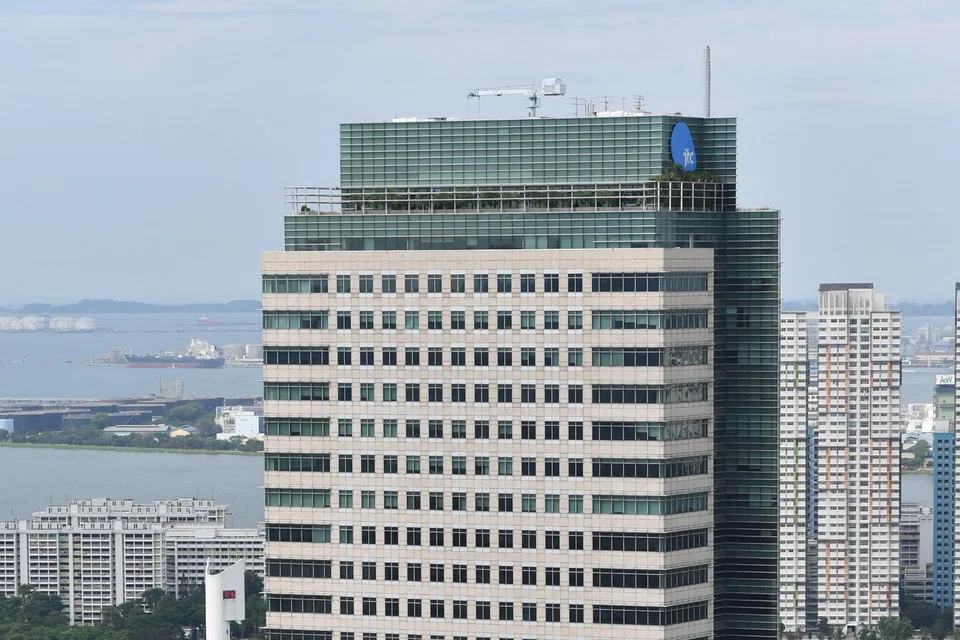
In response to BT's queries, the Economic Development Board, Infocomm Media Development Authority and JTC Corporation said in a joint statement that the government has been "working with the industry to grow the vibrancy of, and expertise in Singapore's tech ecosystem". This includes working on the sustainable growth of data centres in Singapore and conducting regular reviews of data centre-related policies.
According to data storage player Iron Mountain, Singapore has about 60 data centres here guzzling electricity.
This pause on new data centres has interrupted business expansion plans for data centre players. Last January, Australian data centre operator NEXTDC had plans to expand its presence to the Asian market, starting with Singapore. It was keen on purchasing a plot of land to build its first data centre out of Australia.
But the land owner's application to JTC for the lease transfer had been pending approval for a long period of time. Matt Howard, chief operating officer of NEXTDC, later found out that JTC had temporarily stopped processing such applications due to a moratorium.
Speaking to BT, Mr Howard said he understands that there are also "a number" of other operators who are on the waitlist.
Tom Duncan, executive director for data centre solutions at CBRE Asia-Pacific, said that the impact of the moratorium on new co-location supply is "felt keenly in the market, as there is limited capacity to meet the strong demand for take-up".
Rental rates at data centre spaces based on cost per kilowatt (kW) have risen about 30 per cent year-on-year, with much of that gain coming over the past six months, said Tricia Song, head of research at Colliers International Singapore.
CBRE's Mr Duncan said that as at September, co-location rates for customers with large load requirements of about one megawatt (MW) have increased up to 18 per cent year-on-year. He added that co-location vacancy has dropped sharply from 33 per cent in 2016, to 8 per cent as at Q2 2020.
A CBRE survey also found that 30 per cent of investors in the Asia-Pacific are considering purchasing data centres this year, compared to 18 per cent recorded in 2019.
The extent to which data centre operators will benefit from this supply crunch depends on some factors. One is who the data centres serve. Rates will rise more for retail data centre operators than wholesalers.
Wholesalers typically serve very large customers, such as AWS and Azure, and offer long leases of up to 10 years or even more. Retail customers have shorter leases of about three to five years.
Lynus Pook, director of the logistics, industrial and data centre advisory group at Cushman & Wakefield, said such customers will "feel the pinch" when their lease terms are up.
This is especially so given the difficulty in relocating. Data centres are a "very sticky" market, he said, adding that there are not many available spaces left even if customers do wish to relocate.
Clement Goh, chief executive for South-east Asia at ST Telemedia Global Data Centres, said the current scenario does not translate into "inflated" data centre rates though. He said his company works with "global customers across multiple markets", and that it views "customer relationships as long-term partnerships".
Rangu Salgame, chief executive and chairman of Princeton Digital Group, agreed that the relationship between vendors and customers is a "much more long-term game" and that the industry "does not generally exploit short term gains".
Locally listed real estate investment trusts (Reits) with data-centre operations, such as Keppel DC Reit (KDC Reit), Mapletree Industrial Trust (MIT) and Ascendas Reit will not see a big boost in the near term, according to DBS Group Research analyst Dale Lai. This is because the three have "only a very small proportion of leases expiring in the coming quarters", Mr Lai said. "The Reits will only enjoy higher revenues when these leases come due for renewal."
As at Sept 30, the weighted average lease expiry of KDC Reit's portfolio stood at 7.2 years.
Mr Lai said it is also important to differentiate co-location and fully-fitted data centres, from "shell and core" data centres. The co-location and fully-fitted data centres would benefit the most as the landlord also acts as the operator of the facility. This gives it stronger pricing power.
Shell and core data centres, on the other hand, are typically managed by the tenants, he said. As such, the rental rates a landlord can charge would be less impacted by the current rents for data centres.
KDC Reit, a pure-play data centre operator, has a mix of all three types of leases in its portfolio. MIT has fully-fitted leases as well as shell and core leases. Ascendas Reit's data centre portfolio consists largely of shell and core leases.
Whatever the case, rents are likely to stay elevated for a while, since the asset class is nascent and requires highly specialised knowledge and expertise, said Colliers' Ms Song.
Cushman & Wakefield's Mr Pook said given that the supply of data centres in Singapore is "very tight", rates are likely to rise. Rents could head north by at least 10 to 15 per cent in 2021, with more increases expected in 2022 and 2023.
TRENDING NOW

Looking beyond looming CEO succession, should UOB potentially pursue a transformative merger?
MAS holds monetary policy settings, pausing after two straight tightenings

Once staunchly pro-China, Malaysian Chinese businesses are now distancing themselves from Beijing
Stocks to watch: Kore US Reit, Parkway Life Reit, Raffles Education, Vin’s Holdings

