

Singapore industrial space rents, prices up in Q2; supply makes a rebound: JTC
Lisa Kriwangko
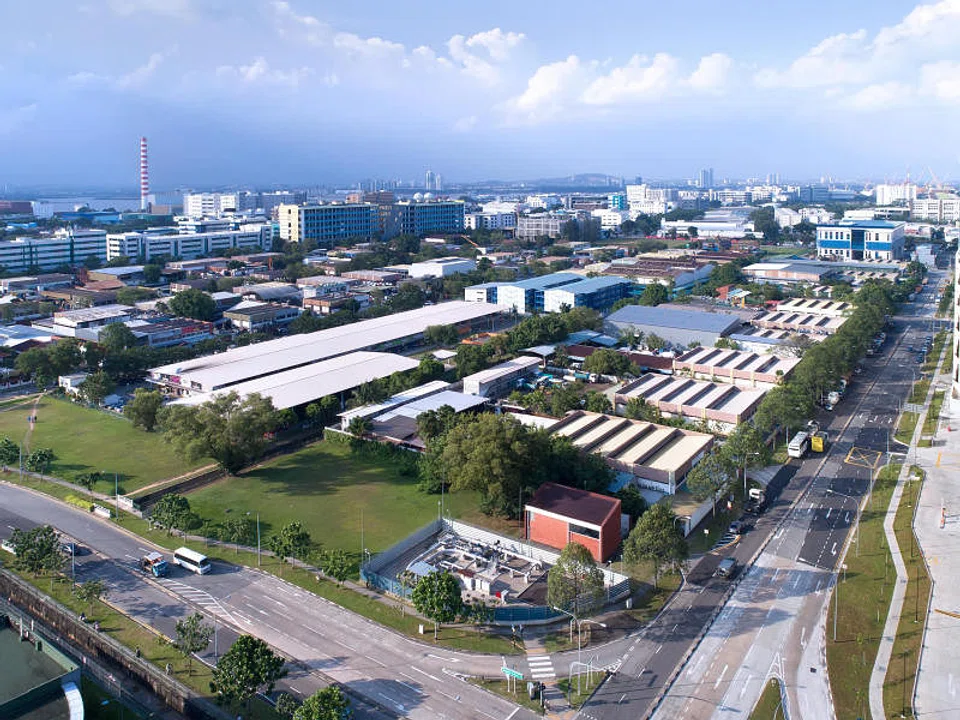
INDUSTRIAL rents and prices in Q2 rose over the quarter for the third straight quarterly season, reflecting the economic recovery seen in the manufacturing sector, data released by JTC on Thursday showed.
Analysts see a global chip shortage and more in-bound biotech investments creating more demand ahead, though this is tempered by the rise in supply, with total available stock seeing its largest quarterly rise since 2017.
According to JTC, prices of industrial properties gained 1.8 per cent quarter on quarter (qoq), while rentals edged up 0.6 per cent in Q2. Prices and rents are up 1.6 per cent and 0.3 per cent respectively when compared to the previous year.
The year-long construction delays in Singapore's industrial property market are beginning to see an end.
In Q2 2021, total available stock increased by 374,000 square metres (sq m) compared to Q1, the largest quarterly rise since 2017. By the end of the third month in Q2, there were 50.5 million sq m of industrial space.
Meanwhile, occupancy rate inched up by 0.1 percentage point qoq and 0.7 percentage point year on year (yoy) to 90.1 per cent as new completions start to catch up with persisting delays.
Tay Huey Ying, head of research and consultancy at JLL Singapore, said the sustained uptrend in rents was underpinned by healthy demand on the back of strong manufacturing output growth.
She noted that the islandwide vacancy rate dipped below the 10 per cent mark for the first time in more than five years, back to the 9.9 per cent seen in Q1 2016.
Mirroring Q1 2021, multiple-user factories was the only segment which saw q-o-q growth in occupancy rate, rising 0.7 per cent.
But this was almost offset by business parks and warehouses, which slipped 0.3 per cent and 0.1 per cent respectively, as increases in supply outpaced new demand. Occupancy rate for single-user factories remained unchanged in Q2.
Leonard Tay, head of research at Knight Frank, added that the global chip shortage, expansions in electronics-related manufacturing activities, as well as increased flow of biotechnology investments into Singapore, could continue to increase demand for factories.
"There are also indications that the global chip shortage could be more protracted than previously anticipated, and semiconductor manufacturers may be more sanguine in committing capital to increase production volumes, driving demand for industrial space," he said.
CBRE noted that while factory and warehouse rents have increased in the same quarter, the pace of increase was faster for high-specs factory and prime logistics projects amid tighter occupancy, said Tricia Song, head of research for Southeast Asia at CBRE.
Lee Nai Jia, deputy director of the National University of Singapore's Institute of Real Estate and Urban Studies, added that most of the new completions seem to be built for technology firms, logistics and central kitchens.
He said: "These segments are doing well despite the pandemic, and are likely looking to expand their capacity."
During the quarter, JTC also allocated a total of 103,100 sq m of ready-built facilities (RBF) space to industrialists, which included 66,900 sq m of high-rise space and 23,700 sq m of land-based factory space.
Total RBF returns in Q2 were 44,500 sq m, of which 30,200 sq m was high-rise space and 8,600 sq m was land-based factory space. According to JTC, about 52 per cent of the total returns were due to natural expiries or companies consolidating their operations.
The industrial land and infrastructure agency expects a further increase in industrial space supply. Based on approved plans as at end-June, an estimated 1.7 million sq m of industrial space is set to be completed by the end of the year.
"Between 2022 and 2024, an additional 3 million sq m of industrial space is expected to be completed. This amounts to an average annual supply of about 1.4 million sq m from now until end-2024. As a comparison, the average annual supply and demand of industrial space were around 0.7 million sq m and 0.8 million sq m respectively over the past three years," JTC said.
JLL's Ms Tay said full-year rent growth is on track to rise within its earlier projection of 3 per cent, while prices could grow run ahead of its earlier full-year estimate of a 5 per cent increase.
Knight Frank's Mr Tay projected that overall factory rents and prices would increase "moderately" between 1 to 3 per cent for the whole of 2021.
CBRE's Ms Song cautioned, though, that the performance of the industrial market is still being weighed down by older stock. "The submarket remains two-tier, and this could keep the pace of rental increases in check," she said.
Similarly, Edmund Tie's head, research & consulting Lam Chern Woon said uneven recovery in the manufacturing sector particularly local SMEs may also put some pressure on rents of older stock. "However, the right quality and high-spec properties should continue to register slight growth in prices and rents."
TRENDING NOW

Cracks emerge in AI borrowing boom as CoreWeave, Oracle and SoftBank debt worries grow

Could stablecoins be the future of money?
‘How many will survive?’: Bubble fears arise as China’s humanoid robotics face reality check

Philippine power giant First Gen rebuffs foreign offers, plans up to US$2.6 billion in expansion

