

Singapore's renewed love affair with Aussie property driving acquisitions
Singapore
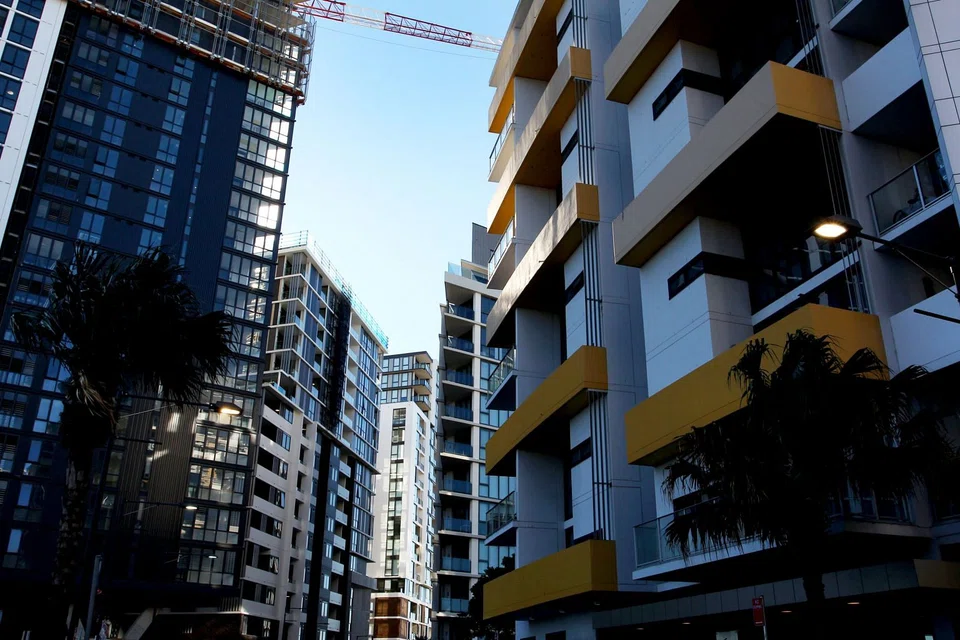
SINGAPORE investors' love for Australian real estate was rekindled this year, with acquisitions up 20 per cent to US$3.4 billion driven by the transparent and deep market, good yields, freehold opportunities and cheap currency.
"Australia has always been a treasure cove of acquisition targets for Singapore companies; maybe it's a Singaporean thing... where we go there so often for holidays or to (further our) studies," said Derek Tan, DBS Group Research property analyst.
He cited the reasons why companies are drawn to Australia: A transparent and deep real estate transaction market with clear rule of law, efficient tax system, freehold opportunities, comparatively higher yields and a currency (A$1 is equivalent to 93.5 Singapore cents) now at multi-year lows.
This year's US$3.4 billion investment is the third-highest since 2014, when about US$3.8 billion was spent on Australian property.
Significant transactions by Singapore investors in Australia this year include GIC buying a 25.1 per cent stake in Lendlease International Towers Sydney Trust from the Canada Pension Plan Investment Board and Lendlease Group.
The trust which owns premium-grade office properties in Sydney's central business district (CBD) was set up in 2012 and is valued at A$4.3 billion (S$4 billion).
In November this year, SPH Reit bought a half-stake in a freehold mall, Westfield Marion Shopping Centre, in the state of South Australia. The transaction with Lendlease Real Estate Investments comes at a price tag of A$670 million.
Earlier this month, Mapletree Investments said it had successfully closed a new Australian private commercial trust at about A$654 million in total fund equity.
Mascot Private Trust was fully invested at closing and owns 10 Grade A office assets that are strategically located in key Australian gateway cities - Sydney, Melbourne, Adelaide, Brisbane and Perth - with a total asset value of about A$1.4 billion.
The trust, which is targeting 12 per cent internal rate of return, will be managed by Mapletree Real Estate Advisors, a wholly-owned subsidiary of Mapletree Investments, which in turn is fully owned by Temasek Holdings.
Mapletree Investments will retain a 27 per cent stake in Mascot to align with investor interest.
"If I was putting my money anywhere in the Asia-Pacific in the long term, I would continue to put it in Australia," said a fund manager in the Emerging Trends in Real Estate Asia-Pacific 2020 report, by the Urban Land Institute (ULI) and PwC.
With both Sydney and Melbourne continuing to rank near the top of this year's investor ranking survey, this fund manager's opinion clearly has widespread support, the report said.
Real Capital Analytics data showed that Australian investment volume rose 3 per cent year-on-year in the first half of 2019, making it the only one of the five busiest markets in the Asia-Pacific region to record an increase in transactions.
Above-average rental growth from strong tenant demand and falling vacancy lend support for the continued interest in the commercial real estate, said Christine Li, Cushman & Wakefield's head of research for Singapore & South-east Asia. Net effective rents in prime Sydney CBD and the Melbourne CBD experienced a strong 10 per cent and 11.3 per cent annual growth, respectively, over the last five years, she added.
In addition, typical leases for Australian commercial properties are five to 10 years, with fixed annual increases which range, depending on the market, from 3 to 5 per cent, Ms Li noted. This contrasts with Singapore's typical office lease of three years.
"This becomes very attractive for Reits or real estate investment trusts, because Reits typically want to have DPU (distribution per unit) growth," Ms Li explained.
Singapore's Grade A CBD yield stands at around 3 per cent, whereas it is still around 4-5 per cent for Australia, she said.
As of Q3 2019, Sydney's office yield is 4.5 per cent; Melbourne's is 4.8 per cent; and Brisbane's is 5.6 per cent.
"With limited or even negative returns from fixed-income investments, investors sought the comparatively high yields offered by Australian commercial properties," added Ms Li.
There's also demand for Australian industrial and logistics properties particularly near the city centres due to the increased end-user demand for last-mile deliveries, she noted. This has pushed up land values for industrial properties closer to the city centres.
Investor interest is mainly focused on office assets in Sydney and Brisbane and retail assets in Adelaide, according to Ms Li. "Overall, most of the Australian cities are still sought-after but investors tend to be a bit more cautious on Melbourne office due to the large impending supply which is around 10 per cent of the total inventory in the near term."
With the strong interest, Australian property has become more expensive. DBS' Mr Tan said that caution is needed for future acquisitions.
But there are always value-adding opportunities if one looks hard enough, he pointed out.
"The compression in returns has been happening for a number of years and the interesting cities that are seeing more transactions of late have been (in the suburbs of) Sydney, Melbourne and Brisbane, and interestingly now Adelaide where the local government is spending big money on infrastructure and defence," Mr Tan said. "In 2020, Australia will most likely continue to feature strongly among investors and we are not surprised to see more industrial and commercial transactions in the above cities, although the quantum and pace may moderate given the strong compression in yields - or rise in real estate prices - which one should be more cautious (about), going in at this point."
TRENDING NOW

‘We’ll look at it, we’ll see what is feasible’: SIA CEO on new business-class seat colours
SIA Q2 net profit quadruples to S$209.7 million on better unit revenue, lower Air India losses

Higher rates, weaker spending: Is the Philippines entering stagflation?

The limits of China’s trade concessions to Europe

