Size helps but it's not a panacea for Reits seeking to re-rate
Underlying properties should deliver growth consistently and sustainably under innovative management

SOME investors like real estate investment trusts (Reits) to be safe if somewhat boring vehicles that pay steady distributions akin to bonds issued by high quality issuers.
But, in the nearly two decades since the first Reit was listed on the Singapore Exchange (SGX), Reits have hardly been boring vehicles. Many Reit managers have been active in scaling up via new acquisitions, which often lead to calls for fresh equity.
The pursuit of scale is also playing out with mergers among Reits. Listed in 2013, Mapletree Greater China Commercial Trust subsequently expanded its investment mandate and changed its name to Mapletree North Asia Commercial Trust (MNACT).
MNACT is set to transform further. On Dec 31, 2021, the managers of Mapletree Commercial Trust (MCT) and MNACT announced a proposed merger that will propel the combined entity, which is to be called Mapletree Pan Asia Commercial Trust (MPACT), to be among Asia's 10 largest Reits.
The combined portfolio will have 18 commercial assets across Singapore, Hong Kong, China, Japan and South Korea, with assets under management (AUM) of around S$17.1 billion.
Numerous SGX-listed property groups trade at big discounts to net asset value (NAV). Investors often wonder what these groups will do to narrow discounts between share price and NAV.
Kudos to MNACT's manager on pursuing the proposed merger, which tries to rectify the problem of the trust persistently trading below book value.
The proposed merger is to be effected through MCT acquiring all the units of MNACT via a trust scheme of arrangement. Unitholders of MNACT will receive either new units of MCT or a mix of new units of MCT and cash based on the scheme consideration price of S$1.1949 per MNACT unit held.
The price of S$1.1949 reflects MNACT's NAV per unit as at Sep 30, 2021, adjusted to exclude MNACT's distribution per unit (DPU) for the six months to Sep 30, 2021, and to incorporate valuation of the trust's investment properties and joint venture as of Oct 31, 2021.
The said price represents a premium of 14.4 per cent and 17.3 per cent to the one-month volume-weighted average price (VWAP) and 12-month VWAP to Dec 27, 2021 respectively.
But MCT's unit price has fallen post-announcement of the proposed merger, which makes the deal far less enticing for MNACT's unitholders.
Is bigger better in the Reit world? Will unitholders of MCT and MNACT prosper by coming together?
Mergers can enhance portfolio diversification and reduce single asset concentration.
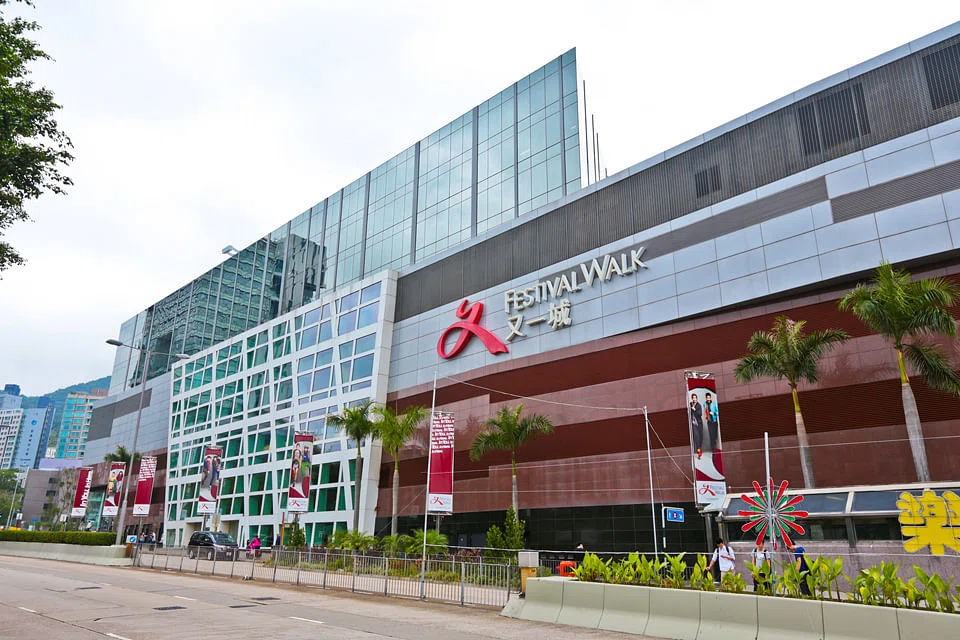
Festival Walk in Hong Kong, which accounts for 54 per cent of MNACT's AUM, will contribute 26 per cent of AUM in the merged entity. What happens to Festival Walk's leasehold title that expires in 2047 will be closely watched albeit there are precedents of lease extensions granted and many properties in Hong Kong are in the same boat as Festival Walk.
Reits face limits on their borrowings and exposure to development activities. A merger can help by substantially expanding debt funding capacity and headroom for development as well as asset enhancement initiatives.
Also, a merger can lead to higher free float and greater weighting on key stock indices, which may result in more investor interest and better pricing of the merged entity.
However, exposure to asset classes with strong structural growth drivers can perhaps help even more than being big. MCT, Mapletree Industrial Trust (MIT) and Mapletree Logistics Trust (MLT) all share a common sponsor in Mapletree Investments and are all constituents of the benchmark Straits Times Index.
MIT and MLT are exposed to new economy asset classes such as data centres and modern warehouses respectively while MCT owns malls, offices and business parks. As at Jan 14, 2022, MCT, MIT and MLT traded at premiums to end-September 2021 NAVs of 6 per cent, 48 per cent and 35 per cent respectively.
It is not immediately obvious how a successful merger will enhance the competitiveness of a Reit in its underlying business of leasing out space for rental income.
As more activities move online, demand for commercial space may suffer. The flight to quality theme is playing out in the commercial property space.
Businesses will seek great physical spaces for knowledge workers to come together to collaborate and build corporate culture. Retailers and F&B operators may gravitate to select malls that can draw the crowds by offering strong visitor experiences.
Ultimately, what may help the future MPACT more than its heft will be the quality of its assets and management.
The managers of MCT and MNACT tout that 67 per cent of the AUM of the merged entity comprises best-in-class assets namely Vivo City, Mapletree Business City (MBC) 1, and MBC II in Singapore, and Festival Walk.
MPACT's challenge is to ensure its assets truly meet the needs of users in a Covid-endemic world.
As more trusts look to potentially scale up via mergers, perhaps it is time that mergers lead to lower management fees.
In the case of MCT and MNACT, the merged entity will adopt MNACT's management fee structure of base fee of 10 per cent of distributable income and performance fee of 25 per cent per annum of year-on-year (yoy) growth in DPU instead of MCT's management fee of 0.25 per cent per annum of total assets and 4 per cent of net property income.
MNACT's fee formula may better align the interests of the manager with that of unitholders by directly tying the manager's performance fee to DPU growth. But should the basis be a multi-year time frame instead of just yoy?
With economies of scale arising from managing a merged entity, there is surely scope to adjust downwards the management fee formula.
The manager can still be adequately incentivised via a smaller cut of distributable income and growth in DPU. Unitholders who are asked to put their faith in mergers bringing future benefits can then at least take comfort in having cost savings right from the outset. Cost efficiency on fees can be one way for Reits with scale to positively differentiate from their smaller peers.
Let's welcome consolidation as a possible driver of better performance of Reits. But let's remember the critical need for the underlying properties to deliver growth consistently and sustainably. Managers, do be innovative in managing your properties and do go easy on the fees.