

Small can be beautiful in Singapore condo land
Such units keep absolute sums affordable for buyers and help developers achieve a high price per sq ft; demographics also drives demand for smaller units

Singapore
IN 2012, the then-president and chief executive officer of CapitaLand Liew Mun Leong spoke out against shoebox units terming them "almost inhuman". Shoebox units typically refers to apartments of less than 50 square metres or 538 square feet.
The Urban Redevelopment Authority (URA) has over the years addressed the proliferation of small units in private residential developments.
In 2018, URA announced the change in maximum number of dwelling units outside the Central Area - from dividing the proposed building gross floor area (GFA) by 70 sq m to that of dividing the proposed GFA by 85 sq m. The URA also increased the number of precincts where the maximum number of dwelling units would be based on dividing GFA by 100 sq m.
Over the past decade, the median size of new condominium units has shrunk. Median size in the prime districts was reduced from 97 sq m in 2010 to 62 sq m in 2020.
In the city fringe and suburbs, median size fell from 88 sq m and 97 sq m respectively in 2010 to 69 sq m and 71 sq m respectively in 2020.
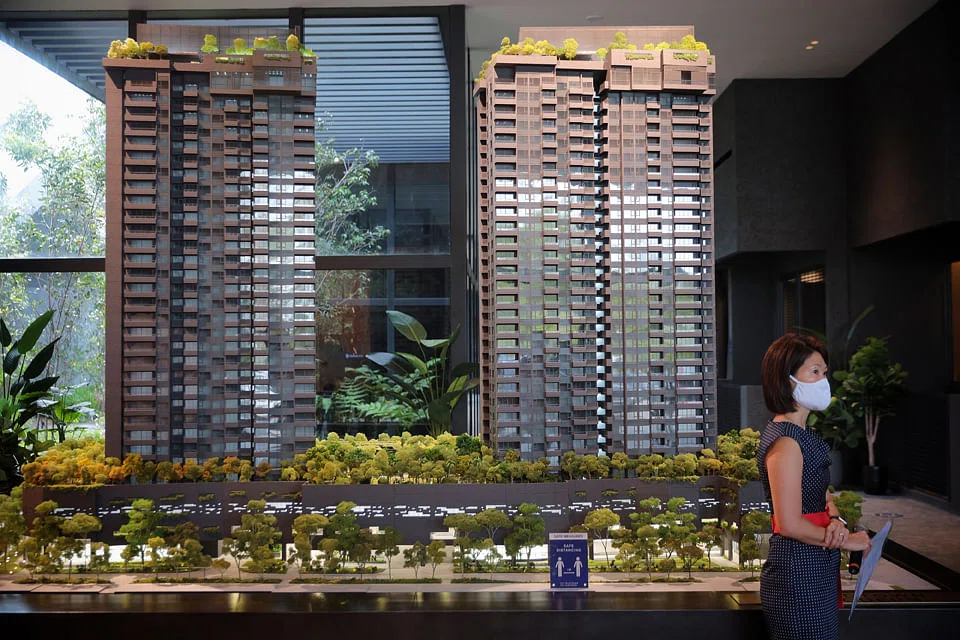
Recent launches in the central region have seen buyers flock to small units. Midtown Modern sold 340 out of its 558 units, or 61 per cent, over the launch weekend starting 19 March. Around 90 per cent of one and two-bedroom units and close to 50 per cent of three-bedroom units were sold.
Around 55 per cent of the project's units are one and two- bedroom types with size ranging from 38 sq m (409 sq ft) to 67 sq m (721 sq ft).
For comparison, a HDB three-room flat has two bedrooms and floor area of around 60 to 65 sq m.
Buyers snapped up 278 of the 540 units of Irwell Hill Residences in District 9 on its launch weekend in early April, with one-bedroom plus study and two-bedroom units the most popular. Studio, one-bedroom and two-bedroom units account for over 80 per cent of the units at Irwell Hill.
In city fringe areas, buyers have also gone for small units. Earlier in the year, all the one-bedroom units were fully sold at the weekend launch of The Reef at King's Dock.
Of the 600 residential units sold on the first day of sales for Normanton Park in January, 80 per cent were one and two-bedroom units. More than half of the 1,840 apartment units in this project are between 484 sq ft and 775 sq ft.
Smaller condominium units help keep absolute sums affordable for buyers. They also help developers achieve a high price per square foot.
A sum of S$1.5 million buys a 600 sq ft to 750 sq ft unit based on price per sq ft of S$2,500 to S$2,000.
Taking a loan of S$1 million requires monthly loan repayment of around S$4,239 assuming 2 per cent per annum interest cost over a 25 year tenor. The interest cost assumed builds in some buffer for rate increases. Loan repayment looks manageable as average monthly household income from work among resident employed households in the 71st to 80th decile was S$16,247 in 2020.
Keeping absolute sums reasonably affordable meets the needs of younger buyers who work hard and save so they can fulfil their aspiration of owning a condominium unit.
Given how pricey each square foot is, developers devote plenty of attention to ensure that not an inch of space is wasted. Typically, bay windows and bomb shelters have disappeared in small units of new condominium projects. With the ease of food delivery services, wet kitchens have also vanished.
Interior designers can make small spaces appear big and suggest furniture and fittings that allow a place to transform from a work space in the day to a relaxation spot at night.
People in Singapore may also not be staying home all that much, spending time at parks, eateries and other amenities. People also leave home for staycations and potentially overseas trips.
For investors, buying small units makes sense. Tenants may seek to keep rental costs down as companies are less likely to provide generous housing allowances for expatriate staff. Some tenants may also opt to lease a small unit on their own rather than share a larger unit with others in the wake of the pandemic.
Moreover, higher priced properties attract higher rates of stamp duty and property taxes.
Perhaps it is demographics that really drives the demand for smaller units.
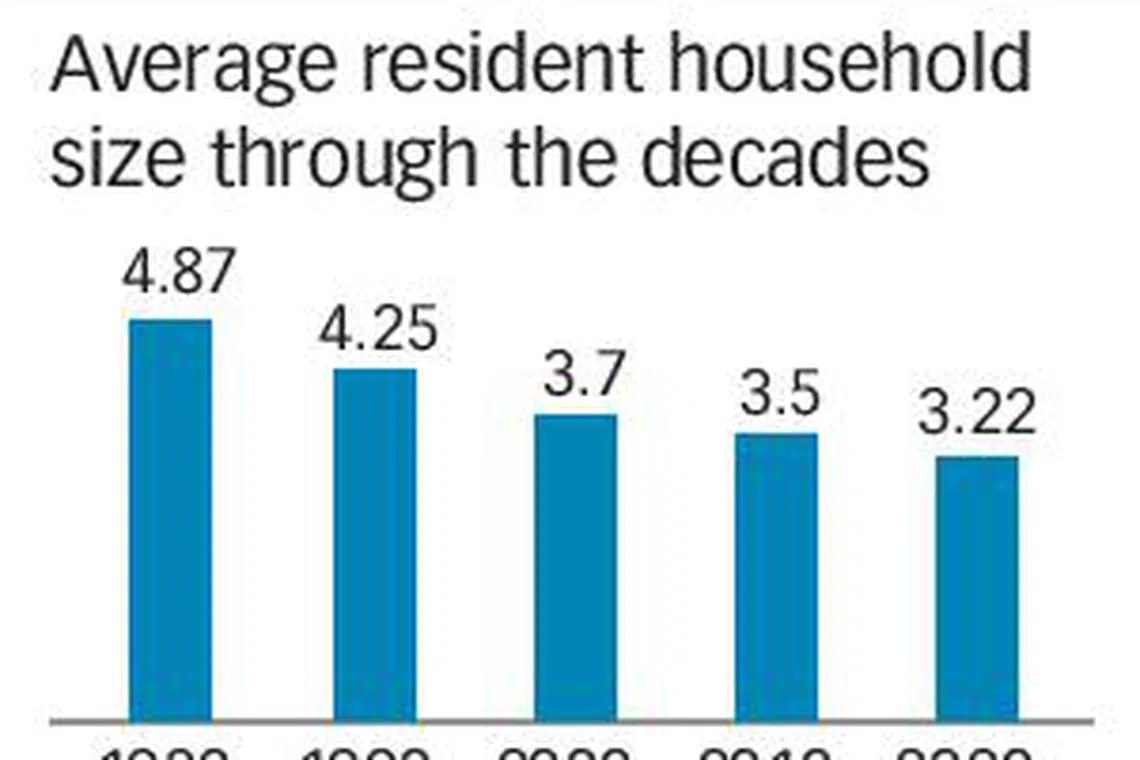
The average household size for Singapore residents has been shrinking. The average household of 3.22 in 2020 is a third smaller than that of 4.87 in 1980.
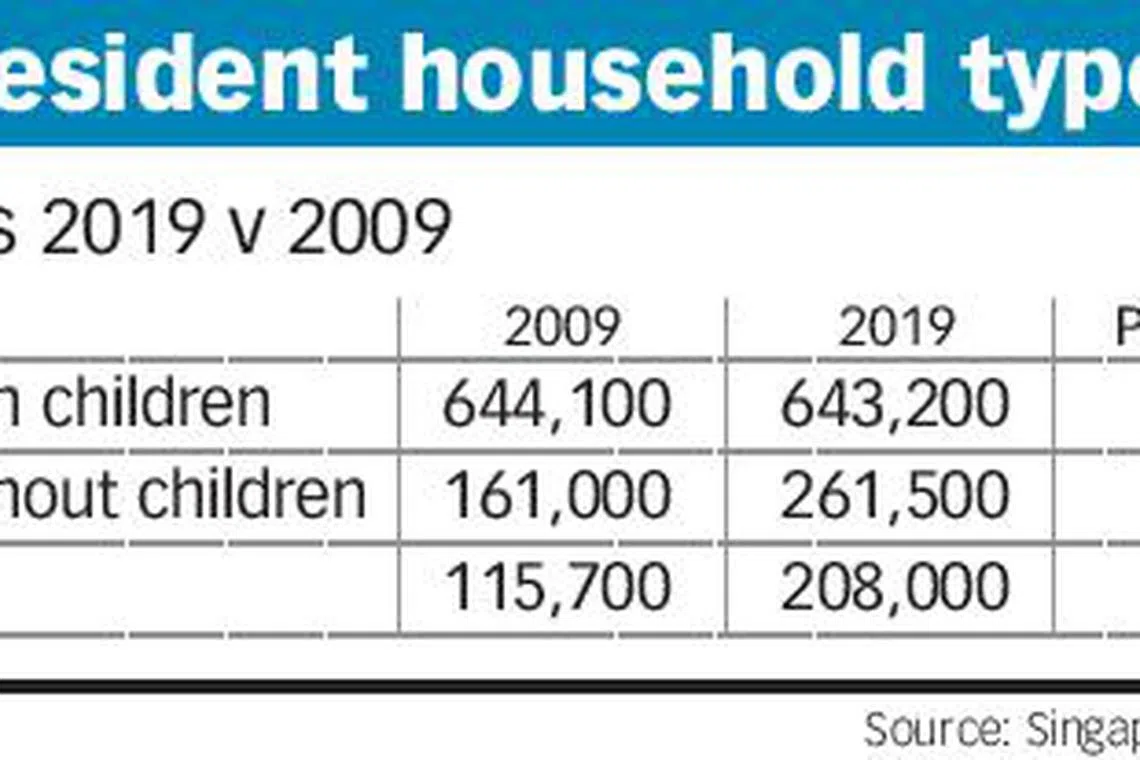
Between 2009 and 2019, the compound annual growth rate for couple-based households without children and those living alone of 5 per cent and 6 per cent respectively outpaced the growth in resident households of 2.1 per cent.
While couple-based with children households continued to be the most common living arrangement among resident households, the proportion of such households declined from 57.5 per cent in 2009 to 46.9 per cent in 2019
In contrast, the proportions rose for couple-based households without children from 14.4 per cent to 19.1 per cent, and one-person households from 10.3 per cent to 15.2 per cent over 2009 to 2019.
As the population ages, there has also been substantial growth in small households led by the elderly. The number of couple-based households without children headed by a person aged 65 and over grew from 40,600 in 2009 to 99,500 in 2019. The number of those living alone aged 65 and older rose from 25,900 in 2009 to 67,600 in 2019.
The super rich will likely go for penthouses and good class bungalows irrespective of household size. There will also be private residential buyers who want more space as they may be spending more time working from home.
Putting money into a private property to call home can bring joy. But buying a home for owner occupation generates zero income.
Hence, it may be financially prudent not to have too much money tied up in one's home. This frees up funds to generate investment income.
Buying a small unit in a well designed condominium and having access to all the accompanying common facilities could be perfect for many.
If each person needed less space to live in, more land can also be freed up for public spaces.
As Singapore moves to being car light, there will be less strain on transport infrastructure in popular residential enclaves. Might the URA possibly relax rules on total number of dwelling units in projects?
Going forward, there will likely be a few projects offering only large size units that cater to the top end of the private residential market.
In many projects, developers will probably come up with a high proportion of small units and put great thought to ensure such units maximise efficiency. Against a positive backdrop for the private residential market, buyers will continue snapping up small-sized condominium units.
TRENDING NOW

If Europe goes to war, the fallout will be felt in East Asia

Indonesia stocks suffer worst plunge in nearly 30 years as MSCI proposes standalone status

Director of PR firm sacked for secretly recording internal meeting loses wrongful dismissal claim

Firms linked to haze pledge cooperation in meeting with Shanmugam; government to table changes to haze law

