

Stable rents expected for single- and multiple-user factory space this year
Economic outlook is brighter, but manufacturing sector growth is uneven, and new supply will temper rents

Singapore
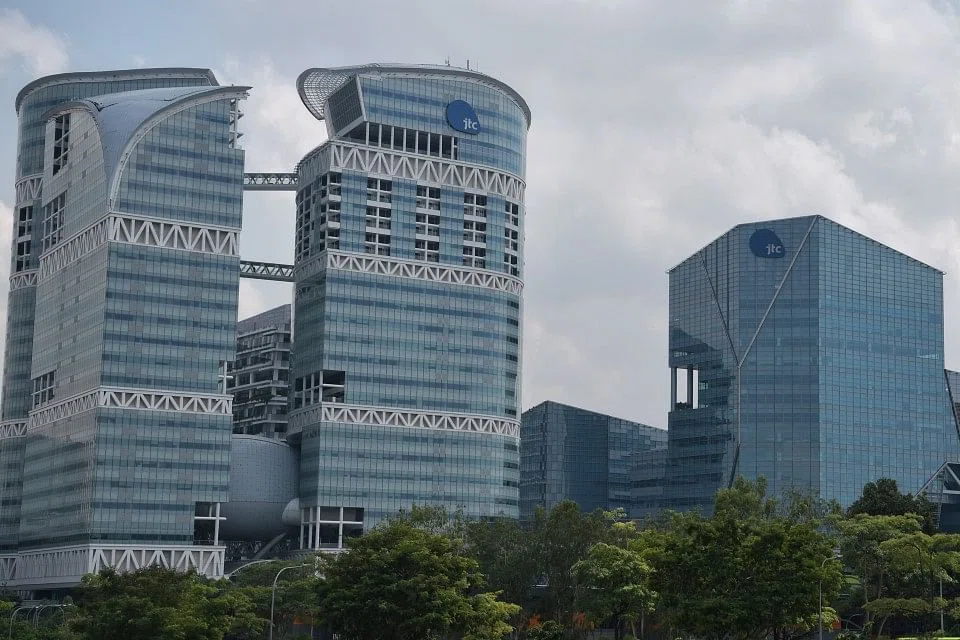
DESPITE a more sanguine economic outlook, factory space rents are expected to remain stable this year, tempered by new supply, says the National University of Singapore's Institute of Real Estate and Urban Studies (IREUS).
After the pandemic hampered construction activity last year, there will likely be a bump in supply this year: 885,000 square metres (sq m) (in gross floor area) and 1.14 million sq m of multiple- and single-user factory space respectively are poised to be added to the market.
IREUS deputy director Lee Nai Jia said: "While the manufacturing sector has been improving and the economic outlook appears more optimistic, we do not expect rental growth or yields of multiple-user and single-user factory space to go up significantly. Rather, we expect rents to stay largely stable."
As growth remains uneven in the manufacturing sector, Dr Lee reckons that the net new supply of single- and multiple-user spaces this year will take longer to be absorbed in the market than in previous years.
The government could also tweak supply to keep industrial rents stable, he went on to say.
In the past, the government has regulated the injection of fresh supply when the situation called for it, such as by scaling back the introduction of new supply via the Industrial Government Land Sales programme.
This was done in 2019, when the government moderated the net supply of multiple-user factory space amid lower output in the electronics, chemicals and transport engineering clusters, Dr Lee noted. With trade tensions running high between US and China, wary manufacturers were taking a more cautious stance at the time.
"The government uses (the) control of supply to keep industrial rents stable," he said. "Separately, the government will increase supply if there are signs that the manufacturing sector is expanding."
At the same time, manufacturing companies which are flourishing could seize this opportunity to expand their footprint in anticipation of the recovery ahead, Dr Lee added.
JTC's most recent quarterly report shows that about 0.5 million sq m in GFA of projects did not come onstream as planned last year because of the pandemic.
The new net supply of multiple-user and single-user factory space fell to 60,022 sq m and 208,966 sq m respectively in 2020, the data shows. This is sharply below the annual average net supply for 2010-2020 of 276,234 sq m and 425,833 sq m for multiple-user and single-user factory space respectively.
As net supply eased, occupancy rates went up in Q4 2020 to 88.5 per cent and 91 per cent for multiple-user and single-user factory space respectively. Net absorption outpaced net new supply, the data shows. But it is worth noting that the net absorption for both subsectors was below the 10-year annual average.
The occupancy rate stood at 87.5 per cent and 90.8 per cent for multiple-user and single-user factory space respectively in Q4 2019. For Q3 2020, the occupancy rate was 87.8 per cent and 91 per cent respectively.
TRENDING NOW
Stocks to watch: Clar, Seatrium, Sheng Siong, MPACT, NetLink NBN, Starhill Global Reit

Singapore government slaps loan curbs on individual private-hire car buyers

If Europe goes to war, the fallout will be felt in East Asia
DBS denies rumours of Indonesia unit merging with Bank Central Asia; analysts see sense in a deal

