STT tracks customers' global data expansion
The data centre provider now has more than 120 data centres across seven countries
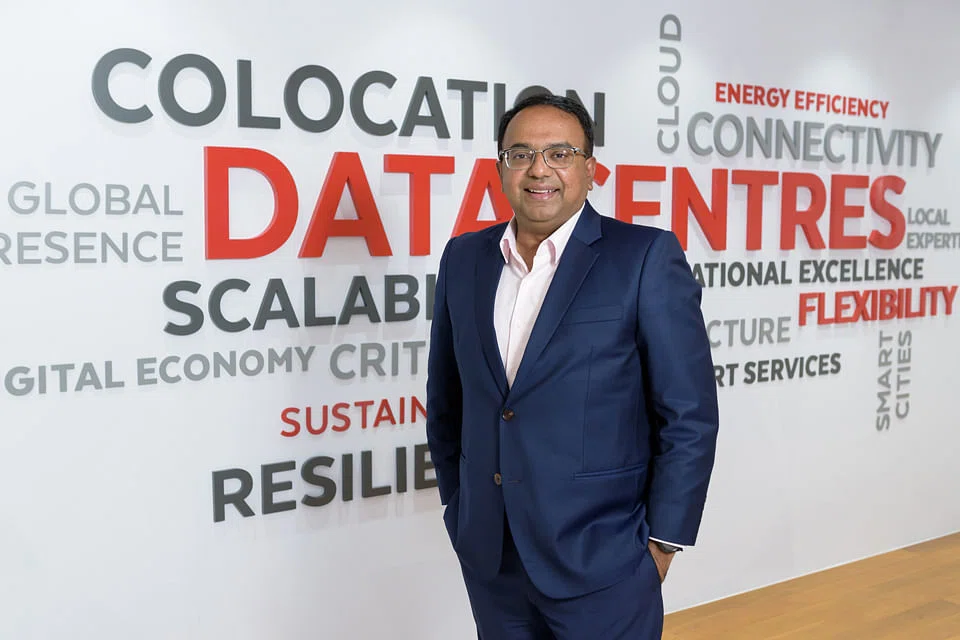
Singapore
IN JUST six months, ST Telemedia Global Data Centres (STT GDC) has announced its foray into two new markets - South Korea and Indonesia.
In January, it announced a joint venture (JV) with Hyosung Heavy Industries, a Korean high voltage electrical equipment manufacturing and construction company, on a 60:40 basis to jointly develop and operate their first carrier-neutral data centre campus in the country.
Then last month, it disclosed the entry into a strategic partnership with Indonesian conglomerate Triputra Group and Temasek, to develop a new data centre operating platform in Jakarta, Indonesia.
The pace reflects the rapid growth of STT GDC since its beginnings in 2014, and how it is growing by tracking closely its customers' global data expansion plans.
The data centre provider now has more than 120 data centres across seven countries: Singapore, China, India, Indonesia, South Korea, Thailand, and the United Kingdom.
Speaking to The Business Times, Bruno Lopez, president and group chief executive of STT GDC, said: "The nature of our business is that... our growth is underpinned really by doing the hard yards in the hard markets."
For instance, the group has a presence in China through Chinese data centre developer and operator GDS Holdings, in which it has a 32.8 per cent stake. In India, it owns a 74 per cent stake in STT GDC India, through a JV with Tata Communications. STT GDC India owns more than a third of the revenue market share for the Indian data centre market.
Expanding into these markets is no walk in the park. Some of these markets can be difficult because of their more complex regulatory framework.
At the same time, STT GDC works with its customers to understand the markets they would like to enter, and identify whether the target market is an underserved one. That also means it has to plan ahead of the demand.
Mr Lopez said: "We don't choose a market because it's difficult.
"We will build thoughtfully, in a risk-mitigated way, ahead, to some extent, (for) when the demand comes through."
Working closely with its customers to identify growth areas is one of the factors that Mr Lopez believes sets STT GDC apart from other operators. Customers that STT GDC serve include the major global US and Chinese hyperscalers, financial institutions, multinational corporations, and local enterprises from various industries, all of whom are looking to grow their footprint across all geographies, he said.
STT GDC said the strong relationship that it has with its customers led the group to see its best performing year in 2020 - where it secured several billion dollars worth of contracts from both new and existing customers.
Another philosophy that is core to STT GDC is ensuring the presence of a local partner in each of its markets, said Mr Lopez. "Besides the fact that you get a lens of all the local operational issues, regulatory issues, governmental issues that may happen... the other reason why it's also important is that the customers want to see that you know how to deliver to (them) in very difficult environments, and the local partner brings that to the table," he said.
In the UK, STT GDC operates its 11 data centres through its wholly owned subsidiary, Virtus Data Centres.
Meanwhile, in Thailand, it entered a JV with Frasers Property (Thailand) in 2019 to develop a hyperscale data centre in Bangkok.
As it looks to expand its footprint, STT GDC is also joining the ranks of other data centre operators across the globe to crack the green conundrum.
In March, it unveiled its environmental, social and governance strategy, which includes its commitment to transitioning its data centre operations to be net carbon neutral by 2030.
As it is, 43 per cent of the group's electricity consumption is derived from zero-carbon renewable sources. In the UK, the group's operations are fully powered by renewable energy, while in India, about 34 per cent of power in its facilities comes from renewable sources.
While the situation is a little trickier in Singapore due to the lack of natural resources and land constraints, Mr Lopez said that having more than 80 per cent of its business outside the Republic puts STT GDC in a "unique position".
With this, the group can explore alternative means such as purchasing renewable energy certificates from its existing partners in other countries to achieve the overall net zero outcome.
"We are basically leveraging our global platform... to rebalance the whole strategy. Because it's easier to secure renewable solutions in India, surprisingly... also for example in China, there are a lot of efforts (where) we have gone down that path as well," he said.
Meanwhile, with the local authorities expected to provide an update on the moratorium situation at the end of the year, the operator has also announced that for the next wave of its Singapore data centre build programme (pending the lifting of the moratorium), it has committed to being fully carbon neutral for both the construction process and ongoing energy consumption for new facilities.
Said Mr Lopez: "This is a natural progression of our group's commitment to being a sustainable data centre operator and fitting with our values of doing right by people and planet."