Suburban malls can still thrive despite retail disruption from online shopping
Heartland malls win from remote working trend, but should not underestimate the value of community

Singapore
RETAIL operators with physical outlets are struggling due to the relentless rise of online shopping both in Singapore and overseas.
Department store Robinsons closed its last outlet in Singapore early this year after 162 years of operations. Listed groups Isetan (Singapore) and Metro Holdings have reported losses on their retail businesses.
Retail landlords are hurting too, with retail rents falling nearly 15 per cent year-on-year in 2020, according to the Urban Redevelopment Authority (URA).
Vacancy rate of retail space in the fourth quarter of 2020 was 11.6 per cent in the Orchard area, 10.7 per cent in the Central Area outside Orchard and 7.5 per cent in the Outside Central Area.
Major plans were unveiled in 2019 by The Singapore Tourism Board, URA and National Parks Board to revamp Singapore's famed Orchard Road shopping belt and position it as a vibrant lifestyle destination that offers an exceptional experience beyond retail.
With constant enhancements in the online shopping experience and international leisure travel yet to resume, it is questionable whether the buzz in Orchard Road shopping can return.
High-end fashion brands, which are key occupiers of prime space in premier shopping belts globally, are busy looking at reducing the number of physical outlets as they calibrate for the right balance between online and offline.
Perhaps it will be a tale of two cities in Singapore's retail scene. Orchard Road, city centre and destination malls may struggle while suburban malls thrive.
CapitaLand marked down valuation of ION Orchard and Jewel Changi Airport by 8 per cent and 17 per cent respectively as at end-2020 compared with a year ago.
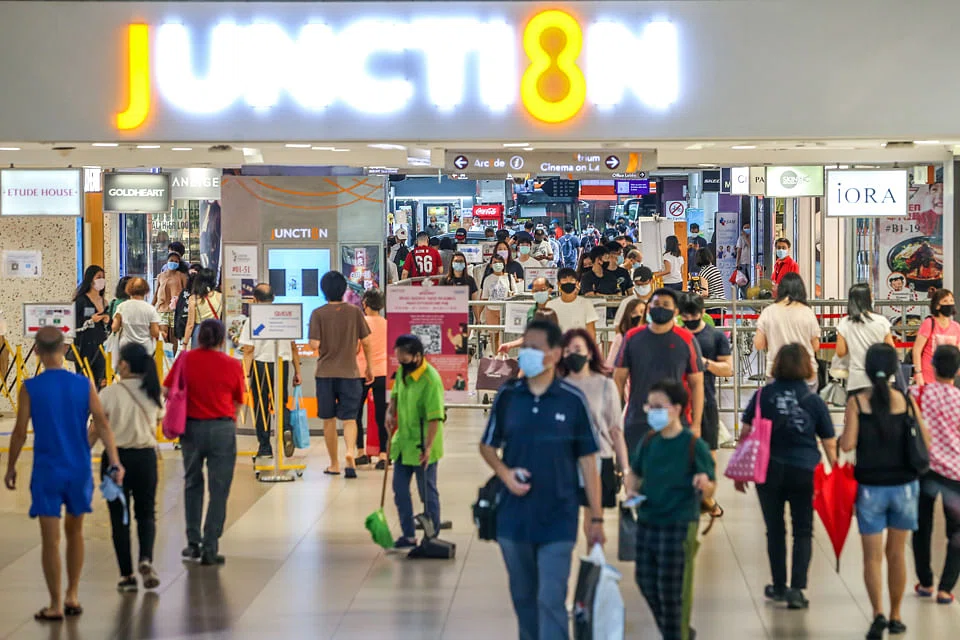
Valuation for suburban malls held by CapitaLand Integrated Commercial Trust (CICT) such as Tampines Mall and Junction 8 dipped by around one per cent over the same period, while CICT recorded steeper valuation declines for integrated developments with substantial retail component in the city area of 4 per cent and 6 per cent for Plaza Singapura and Raffles City, respectively.
Among leasehold malls with roughly similar number of years of land lease outstanding, latest valuations of Tampines Mall and Junction 8 on a per square foot basis of S$3,015 and S$3,125, respectively, exceed that of Bugis Junction's S$2,742. Plaza Singapura, in spite of its freehold status, carries a lower value per square foot of S$2,684.
In the wake of the Covid-19 pandemic, suburban malls are showing their resilience. CICT reported that tenant sales for Q4 2020 are at an average of 101 per cent of levels a year ago for suburban malls while that for downtown malls was 84 per cent. Frasers Centrepoint Trust (FCT), which is focused on suburban retail malls, reported that tenant sales for its malls in the quarter ended December 2020 were roughly stable year-on-year.
Favourable conditions
Suburban malls are often centrally located within HDB townships with good connectivity to MRT lines and bus interchanges. What this translates into is a ready catchment population for the mall.
For example, as part of the development of Bidadari estate, Singapore Press Holdings and Kajima Holdings are building the Woodleigh Mall, which is connected to an MRT station and bus interchange. Expect this mall when completed to enjoy brisk business from residents moving into new homes in the popular estate.
Also, there are strict planning guidelines in Singapore, such that it is not easy for another mall to be built near an incumbent suburban mall and draw shopper traffic away.
With the trend for a higher work-from-home component, suburban malls benefit from residents, who are living nearby, spending more time in the neighbourhood. An office worker who previously patronised food and retail outlets in the Central Business District during lunch hour may now be doing the very same activities at the suburban mall near home.
Having offices, institutes of higher learning, parks, healthcare facilities and other amenities in the suburbs also creates more human traffic for the suburban malls.
Suburban malls tend to have higher exposure to essential services such as food and beverage outlets, supermarkets and pharmacies than central malls. In FCT's case, around 45 per cent of net lettable area is occupied by providers of essential services compared with an estimated 20 per cent to 30 per cent for a central mall.
The lure of savouring freshly cooked food and physically inspecting fresh produce will probably make physical cooked and fresh food outlets less easily replaceable by online shipping.
The access to population catchments and the provision of essential services of the suburban malls are being reinforced by the inability of people to go for overseas shopping trips in the near term and the efforts by government to raise income levels for lower income earners. Successfully boosting household income of the less well-to-do will mean that such households have increased spending power that will likely be captured by suburban malls.
The move to impose goods and services tax on all online purchases could also at the margins move some purchases from cyberspace to shops at suburban malls.
Whither tomorrow
Could the suburban malls be thriving at the expense of the around-15,000 shops that the HDB has? These are spread out across town centres, neighbourhood areas and precinct shop clusters, which are either rented out by the HDB or owned by private operators. The HDB is conducting a study to look at the value of HDB heartland shops and see how they can stay viable.
In time, growing popularity of online shopping coupled with potentially refreshed and more relevant offerings from HDB shops could pose serious competition to suburban malls.
Perhaps what suburban malls can aspire to is to go beyond being a convenient place to shop and dine to forging bonds with the communities they serve.
Be the first port of call for budding entrepreneurs from the neighbourhood to set up shop by sharing risks with the new entrepreneur. Have strong public realm to support active aging in the community. Partner with schools and social service organisations to carry out activities that benefit the less privileged in the vicinity. Assume leadership in adopting environmental best practices to appeal to the climate conscious.
Ultimately, the challenge for long-term continued success of the suburban mall is to provide not just great functionality but also be a place with soul for those it serves. The more a mall convinces people in the neighbourhood that it supports jobs in the community, the greater will be the stickiness of its customers and the chances of success.
- The Level Ground is a new column looking at the ins and outs of property investments and asset plays.