Sungei Kadut to pioneer manufacturing for future: Chan Chun Sing

Singapore
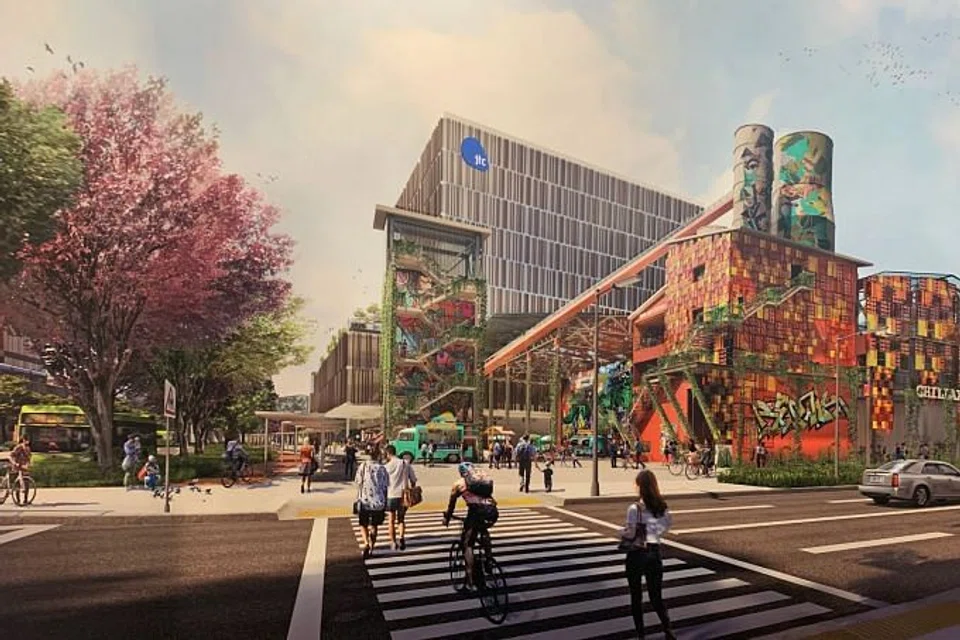
SUNGEI Kadut is set for a multimillion-dollar face-lift that will see the area transformed into an eco-district that embodies the concept of live, work and play, based on a 30-year plan to enliven one of Singapore's oldest industrial estates.
"Just as we did 50 to 60 years ago, we want Sungei Kadut to once again be the pioneer of manufacturing for the future," Chan Chun Sing, Trade and Industry Minister said on Thursday, as he announced the government's vision for Sungei Kadut Eco-District.
This will be done by transforming existing industries and anchoring new growth industries, such as agri-tech and environmental technology, in the 500 hectare (ha) estate. For example, a new 18 ha Agri-Food Innovation Park will be home to companies and research and development (R&D) centres across the entire agri-tech value chain, as well as high-tech production segments such as indoor farming, aquaculture hatcheries and alternative protein manufacturers.
Mr Chan said this will bring in higher value, knowledge-based jobs for Singaporeans such as systems engineers, plant scientists and aquaculture nutritionists. "These are a new generation of jobs that can excite another generation to go into manufacturing once again," he added.
To ensure Sungei Kadut remains ready to capture new opportunities, 200 ha of land have been reserved for new industries and uses, he noted.
In the meantime, existing industries - which include timber, construction, furniture and waste management - will be consolidated in JTC Corporation's specialised buildings, JTC said in a statement.
The shared facilities and economies of scale would help defray business costs, Mr Chan said.
While the revamp will take up to 30 years to complete, the first phase is already well underway, starting last year with the relocation of furniture and related industries into JTC's S$121 million Trendspace.
Later this year, timber, metal and machinery industries will move into a S$286 million facility called TimMac, while waste management and recycling firms are set to shift next year into Kranji Green, which costs S$242 million to build.
Some companies that have been in the industrial estate for some 30 to 40 years say having to move into a new facility creates a good opportunity for them to digitally transform their businesses. One such company is wood processing firm LHT Holdings. Its chief executive May Yap said the company began looking into ways to keep up with Industry 4.0 after it was notified by authorities about the need to move. This includes retrofitting older machines with sensors and automating some of its processes.
"It's hard to find workers, especially young people, in Singapore who are willing to join our trade. That's why we're looking into automation and ways to improve efficiency and cleanliness," Ms Yap said in Mandarin.
Waste management firm Wah and Hua is moving into Kranji Green next year, and its general manager Melissa Tan sees an advantage in being neighbours with related businesses in the industry. For example, when the facility receives one load of recyclable items, it would be easy to distribute items such as paper, metal and plastics to the respective firms handling the recycling.
"With all this easy accessibility, it actually reduces the carbon footprint and also the time, and it's actually more efficient and more productive for the workers," Ms Tan said.
Other than industry use, Mr Chan also outlined plans to transform Sungei Kadut into a vibrant lifestyle destination, especially in the evenings and weekends.
"Sungei Kadut will become a place for residents and public to relax, with farmers' markets, farm-to-fork restaurants serving produce from our Agri-Food Innovation Park and waterfront park trails," Mr Chan said.
Wong Xian Yang, senior research manager at Cushman & Wakefield, compared the plans for Sungei Kadut to that for one-north.
"Plans for Biopolis at one-north and Science Hub in Buona Vista were conceived in the 1990s and there are still further phases to be added," Mr Wong said, adding that the 30-year time frame is a reasonable one. "The work-live-play approach for Sungei Kadut is in line with the government's efforts to decentralise commercial activities in Singapore. These efforts will likely take off."
If plans to transform a brownfield site like Sungei Kadut are successful, Mr Chan said this would be an opportunity for Singapore to pioneer new capabilities in estate rejuvenation.