

With red-carpet treatment, Singapore hotels may just nip through this crisis
The post-pandemic traveller seeks luxury, space and tip-top hygiene, and hoteliers must adapt to survive

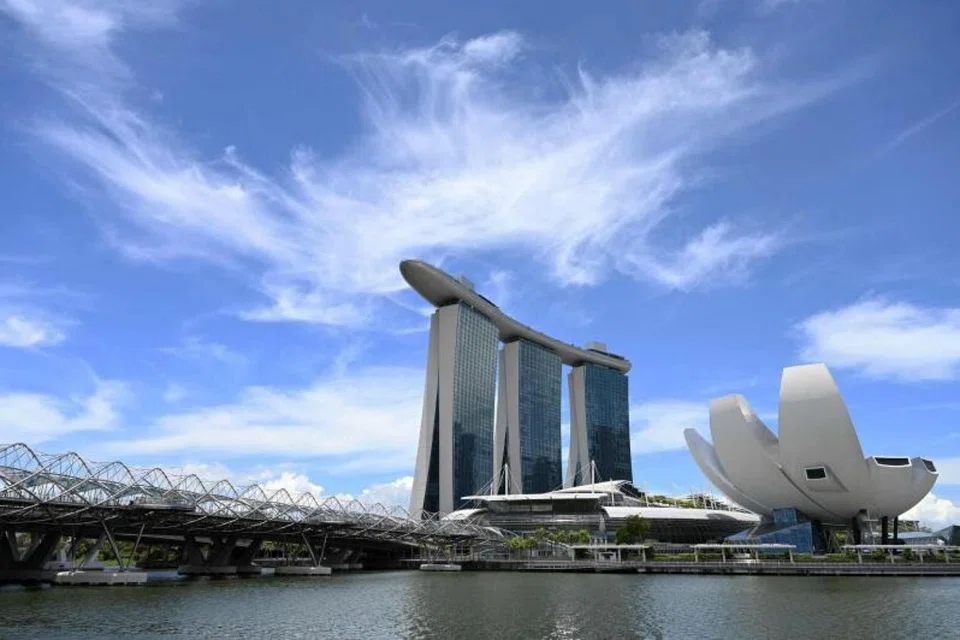
EYES will once again be on the Singapore-Hong Kong air travel bubble, with it now expected to start on May 26. After a few false starts, hope still remains that the roll-out of travel bubbles - whether with Hong Kong, New Zealand, Australia or Taiwan - could soon pave the way for higher international visitor arrivals here.
Singapore also overtook New Zealand to lead this month's Bloomberg Covid Resilience Ranking, which measures the best and worst places to be during the Covid-19 pandemic.
The holy grail for the domestic lodging industry remains the return of international visitors. And certain segments of the lodging trade, such as serviced residences and luxury hotels, could outperform when international visitors return.
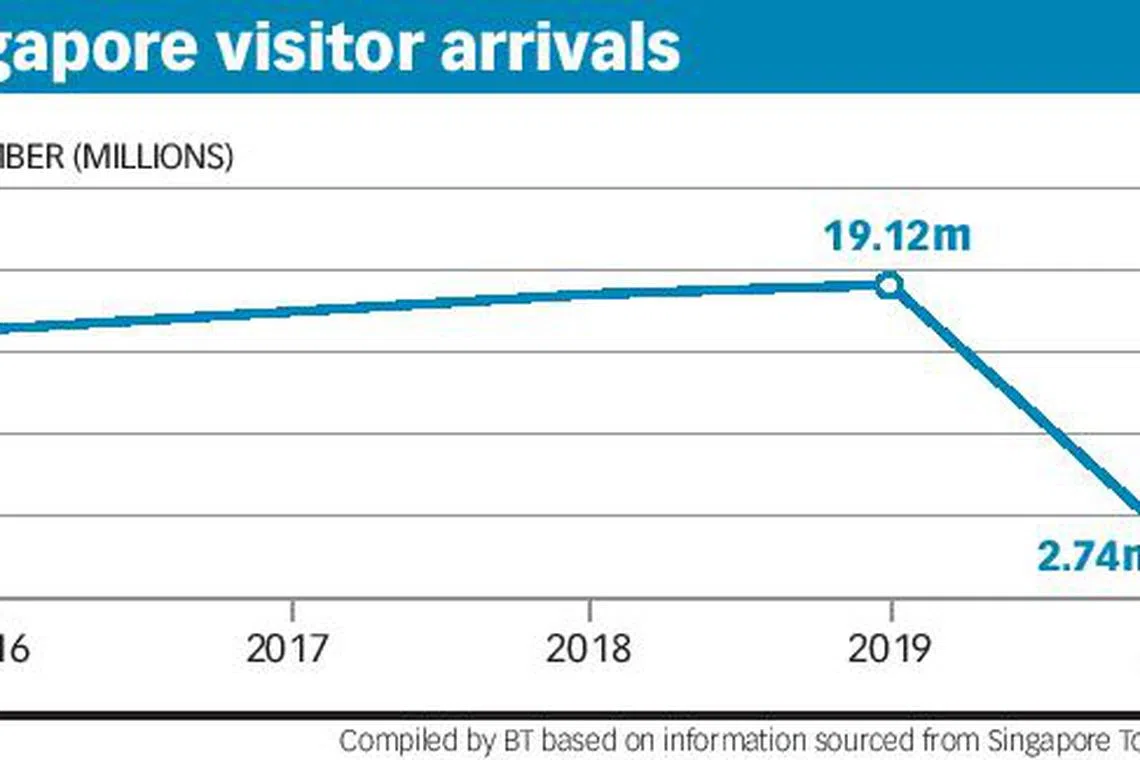
International visitor arrivals in Singapore plummeted 86 per cent from 19.1 million in 2019 to 2.7 million in 2020, and many of them arrived in the first two months before restrictions on international travel tightened.
By keeping the Covid-19 situation under control, Singapore is well-positioned as a choice destination for travellers when international travel is allowed to resume relatively freely.
The Republic's holding of the World Economic Forum Special Annual Meeting 2021 will be a major boost to Singapore being a choice venue for hosting meetings, incentives, conventions and exhibitions (MICE).
With Singapore's handling of the Covid-19 situation and hosting of major events, leisure travellers will be assured that this is a safe place to visit.
Efforts to strengthen the tourism offering be it from the opening of Jewel Changi Airport in 2019 or local hawker culture making it to the Unesco Representative List of the Intangible Cultural of Humanity last year plus various ongoing initiatives could make Singapore attractive to visitors.
Hotels here have also enjoyed support from the staycation market. The government has given eligible Singaporeans S$100 worth of tourism vouchers that can be used to pay for hotel stays, though the take-up rate for the use of such vouchers suggests a lukewarm reception.
As it is, global investors are pencilling in a recovery. Shares of leading international lodging groups such as Marriott International and Hilton Hotels are up by over 70 per cent from a year ago.
With vaccination programmes being rolled out in various countries, investors see the hotels and lodging business recovering from a year that had been hammered by the global outbreak of Covid-19.
In City Developments' latest annual report, veteran hotelier Kwek Leng Beng noted too: "There is pent-up demand as people are eager to regain their freedom to travel."
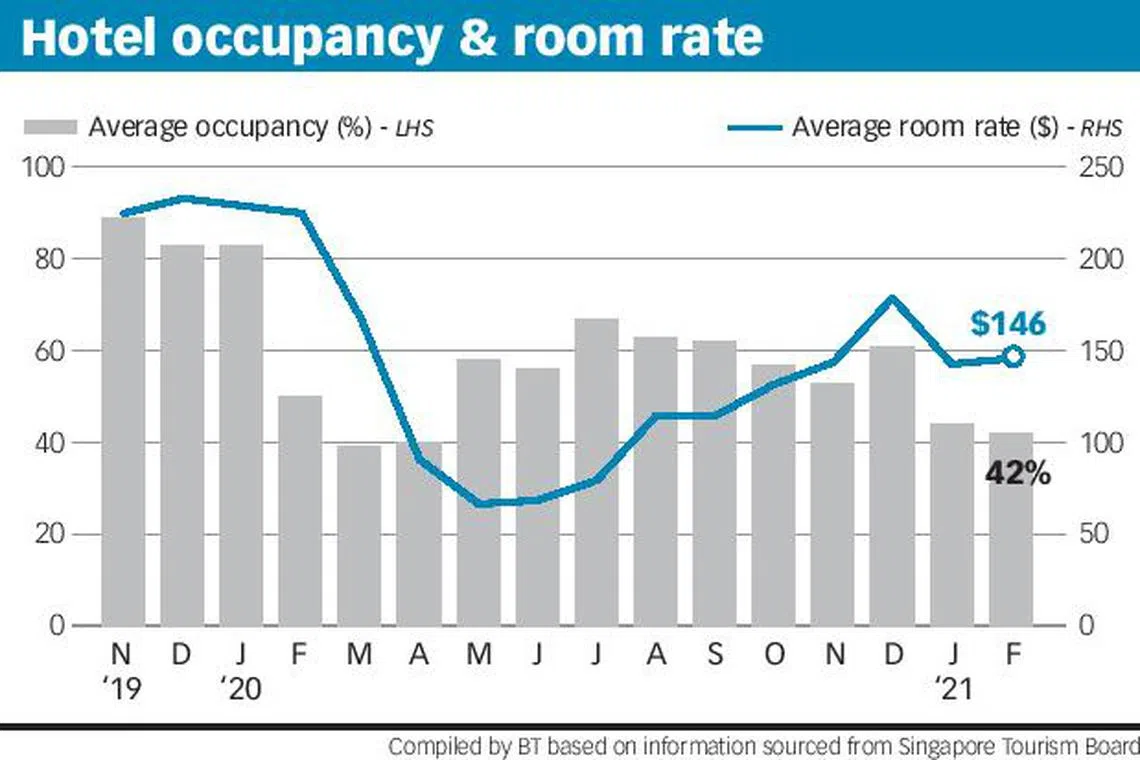
But will hotel occupancy and room rates bounce back to pre-pandemic levels? Average room rate per day was at S$221 with occupancy at 87 per cent in 2019. In the first two months of this year, average room rate and occupancy stood at S$144 and 43 per cent respectively. In February this year, average room rate in luxury hotels was S$289 or 40 per cent below that of S$479 in February 2019.
Travel could become more inconvenient and flying potentially more expensive in the aftermath of the pandemic amid capacity limits in planes, reduction in the number of flights and higher insurance costs.
To add, both business and leisure travellers may pay greater heed to the environmental damage from flying.
So people may make fewer trips, stay longer per trip and spend more per trip. Well-heeled travellers are likely to lead the way when travel returns.
Longer stays favour more spacious accommodation typically offered by serviced apartments and luxury hotels. Use of a kitchen in a serviced apartment could be handy for longer trips.
If guests stay longer, serviced apartments in Singapore will not be constrained by the need to host guests for a minimum of seven days.
Pent-up demand from revenge travellers who want to splurge to make their trips memorable, and the return of well-heeled travellers suggest support for luxury hotels.
The post-pandemic traveller is likely to place a big premium on safety and well being, wanting peace of mind.
As an example, Far East Hospitality Trust which owns nine hotels and four serviced residences in Singapore, saw serviced residences performing more resiliently in 2020. Revenue per available room was down 13 per cent year-on-year compared with a 50 per cent drop for its hotels.
Hotels run by big chains may have an edge too as tetchy visitors could be more comfortable with bigger groups when it comes to being assured on hygiene standards and ability to deal with potential public health scares.
CapitaLand's lodging arm The Ascott has partnered with Bureau Veritas to provide independent audits and certification for the hygiene and safety standards of its properties worldwide.
The pandemic has reminded people of the value of open spaces and fresh air. Hotels in Sentosa or Shangri La Hotel, with its large grounds, could be appealing.
Through the Job Support Scheme and other measures, the Singapore government is helping lodging owners and operators navigate the pandemic-induced fall in business.
Wherein distress?
To date, there has been hardly any distressed sales of hotels in Singapore. When international travel bounces back, could hotel valuations hold steady or even increase?
Hard assets here have continued to attract buyers, albeit in the residential space at this point.
Large-size deals in recent weeks, such as the sale of all 20 residential units of Eden, at 2 Draycott Park for S$293 million and the sale of a bungalow on Nassim Road for S$128.8 million, fetched lofty per square foot pricing.
Liquidity chasing physical assets in Singapore, be it from funds or family offices, can be expected to pursue quality lodging assets.
Still, there are challenges for lodging players. Running costs could increase amid enhanced protocols to ensure the safety of guests.
Hotels may have to limit the number of guests they can take in and MICE events may be smaller in scale as they incorporate a mix of in-person and virtual components.
Critically for a major international business city like Singapore, international business travel is likely to recover to a scaled-down level compared to pre-pandemic days.
Companies will still require staff to travel for key business meetings but trips will be reduced as many cross-border meetings move to the virtual realm.
Government bodies are working hard to ensure Singapore is attractive to visitors. Changi Airport will be back at its best to welcome passengers.
The post-pandemic traveller may seek luxury, space and high standards of hygiene. Travellers are also likely to be more sustainability conscious.
While lodging owners can look to brighter days ahead, they will have to reinvent to meet changing needs. Those unable to do so may put their assets for sale and therein lies the opportunity for monies waiting to buy big-ticket lodging assets in Singapore.
READ MORE:
TRENDING NOW
China Investment Corp, PGIM’s 50% stake in Nex mall up for sale; asking about S$1.2 billion

Higher rates, weaker spending: Is the Philippines entering stagflation?
Singapore tech stocks plunge as Nasdaq bloodbath spills into region
OCBC wealth clients turn defensive amid market volatility as Q3 profit rises 3%

