

Age not a barrier to tech adoption in managing health and wealth: Survey
According to a report commissioned by Prudential Singapore, non-digital natives are just as proficient in using physical fitness and financial management apps
 Add BT as a preferred source
WE often presume that the elderly are more likely to feel lost in a digital world, but age is becoming less of a differentiator where personal financial technologies are concerned.
A recent study commissioned by life insurer Prudential Singapore (Prudential) has found that Singaporeans across all age groups consider themselves adept at using mobile devices and apps. Eighty-two per cent of respondents in the oldest age group (55-65 years old) and 89 per cent in the youngest (25-34 years old) say they are adept at mobile banking apps. When it comes to online banking websites, 84 per cent of respondents in the oldest age group and 91 per cent in the youngest say they are proficient in using it.
The Digital for 100: Harnessing technology for longer lifespans study conducted by The Economist Impact surveyed 800 Singapore residents aged 25 to 65 to assess how Singaporeans are using digital tools to maintain a healthy lifestyle and build financial resilience.
Overall, respondents have indicated that digital tools are helpful to them in managing their bank accounts, Central Provident Fund (CPF), investments and insurance needs better.
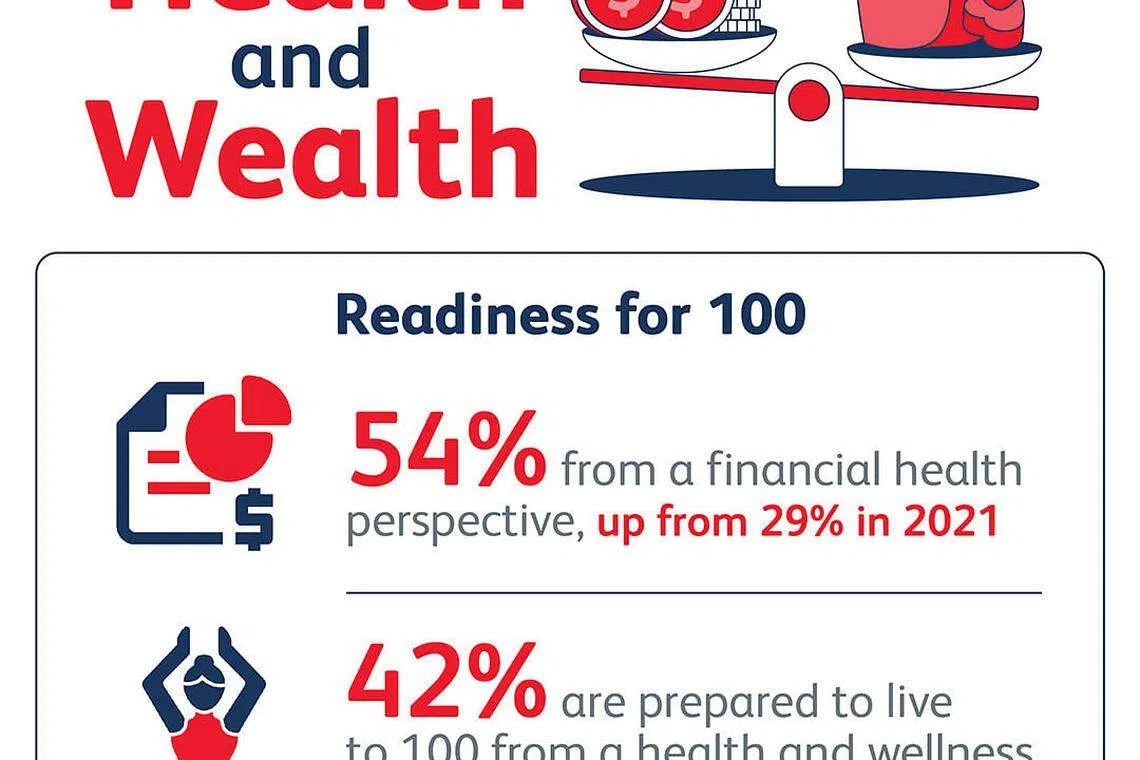
Fifty-four per cent of the respondents say they expect their finances to be able to fund longevity. From a health perspective, 42 per cent of the respondents say they are prepared to live to 100 years old.
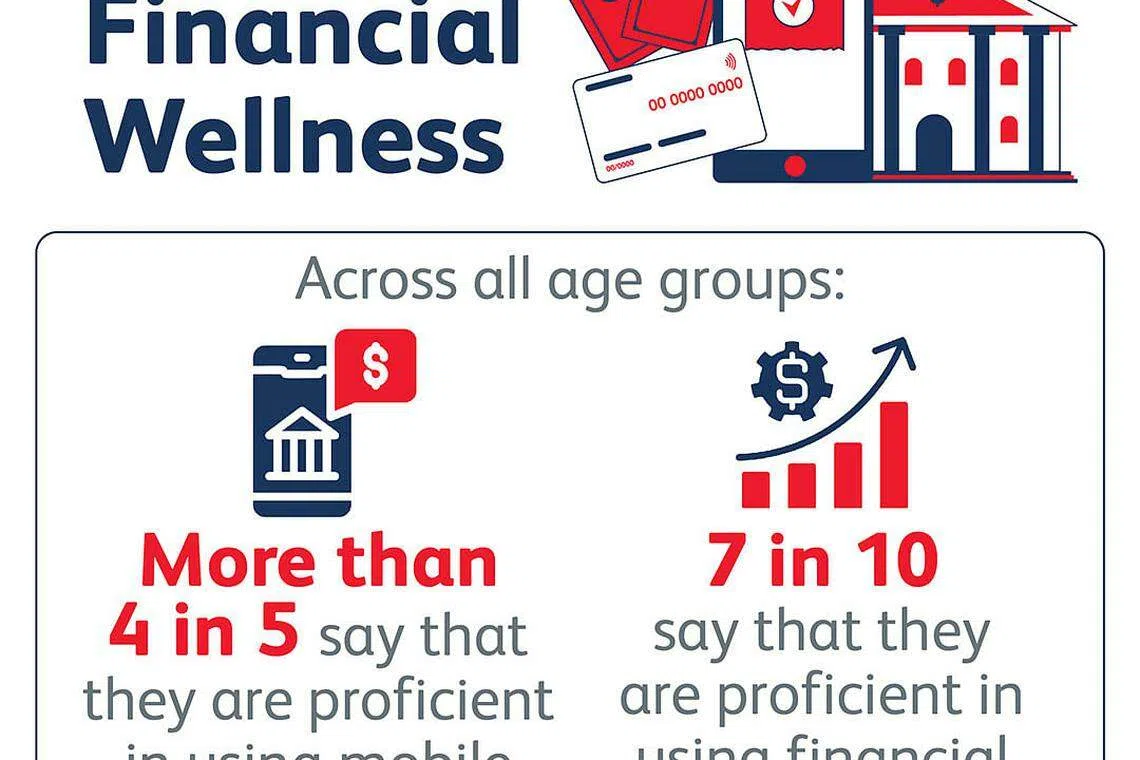
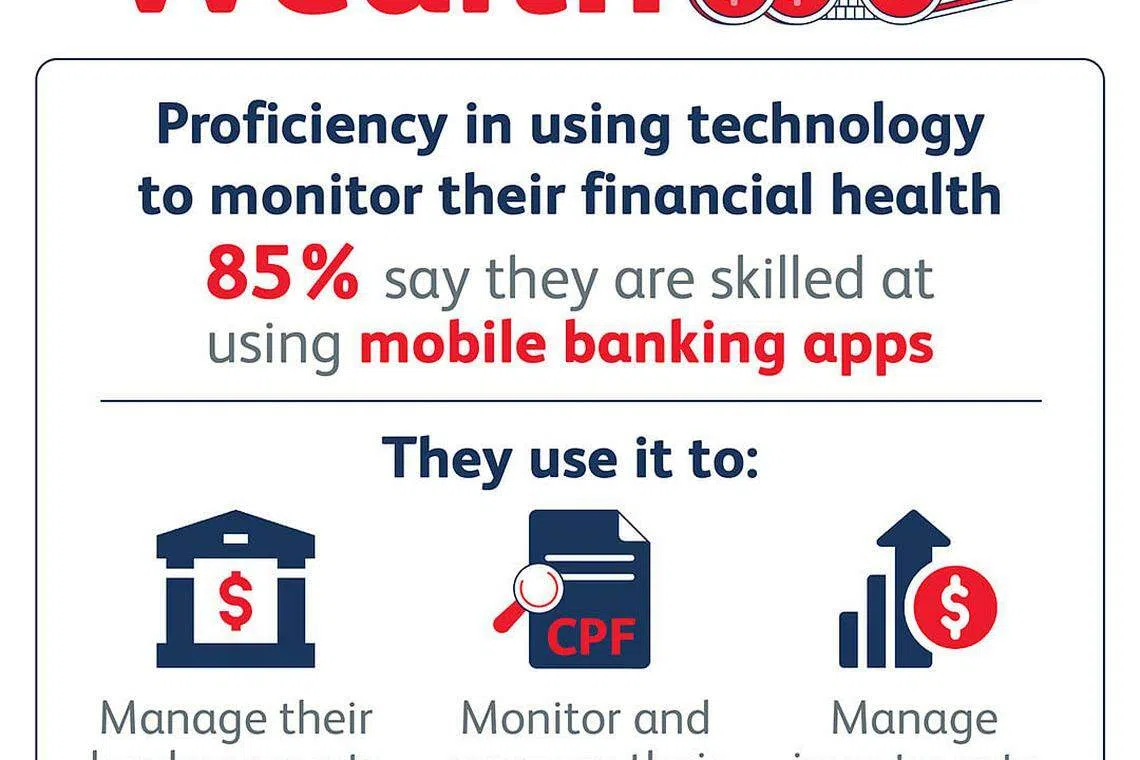
Eighty-five per cent of respondents consider themselves proficient with mobile banking apps, 70 per cent of respondents also consider themselves proficient with financial management apps.
Sixty-one per cent of respondents say technology has been most helpful in managing their bank accounts. Thirty-six per cent use technology to manage their CPF account, while 33 per cent use technology to manage their investments.
Among those aged 55 to 65, almost two-thirds (64 per cent) say financial technology is important for managing their bank accounts while 42 per cent use it to manage and monitor their CPF accounts.
The push for digitalisation has clearly benefited the wider population, and both young and old Singaporeans have been able to use mobile apps to manage their health and fitness, Prudential notes in its study.
Dennis Tan, Prudential Singapore's chief executive officer, says the pandemic has made technology more central in people's lives.
"We need to build on this momentum by ensuring that digital technologies are simple by design so that everyone can use them easily. This will encourage individuals to continue using technology to take charge of their health and wealth as they get ready for a longer life," he says.
Age is a differentiator, however, when it comes to which financial technologies respondents find most important. For example, respondents closest to retirement age are more likely than others to value technology in managing their CPF accounts, a compulsory savings and pension plan for working Singaporeans; while apps that help manage personal investment portfolios are more important to mid-career individuals.
More than seven in 10 among those in the 25-34 and 35-44 age brackets consider themselves proficient in navigating interactive financial advice websites, as compared to 54 per cent in the 55-65 age bracket.
The 35 to 44 year-olds also claim more proficiency with novel and niche tools, such as robo-advisors and digital asset trading platforms.
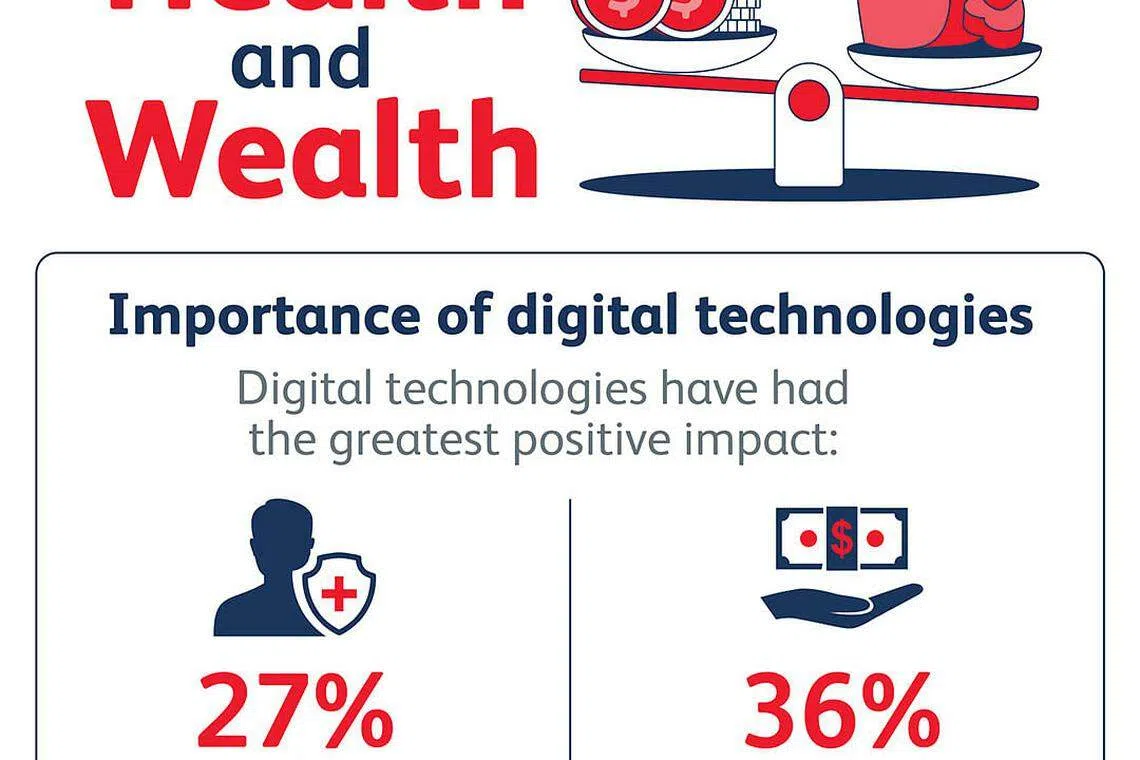
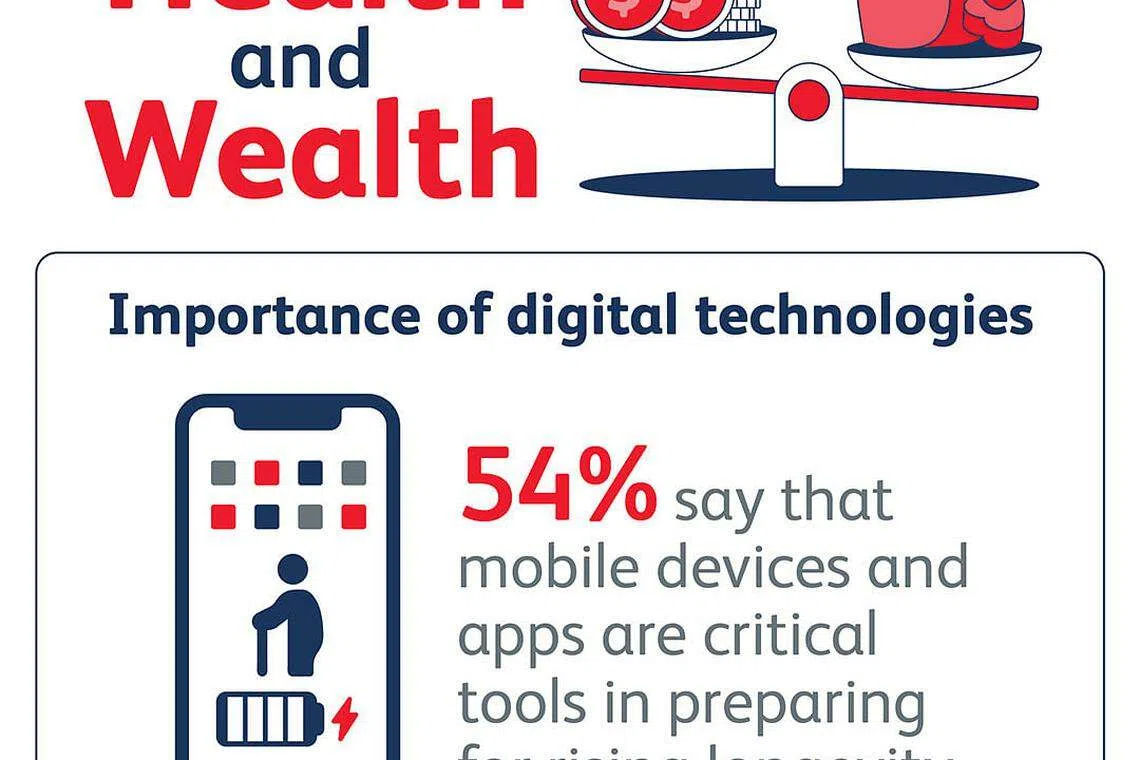
About a quarter, or 27 per cent, of the respondents say digital technologies have had a positive impact on their personal health, while 36 per cent say digital technologies have had a positive impact on their financial situation. About half, or 54 per cent of them, say that mobile devices and apps are the most important tools they have to help them live well for longer.
When asked about their proficiency with different health tools, 73 per cent of respondents rate themselves as good or excellent at using mobile health apps, such as those that monitor their calorie intake or physical activity levels. Seventy-six per cent say they are proficient with using fitness trackers.
Most of the respondents (72 per cent) also make good use of wearable monitors that gauge their heart rate, oxygen levels and quality of sleep. Overall, 43 per cent of respondents found technology most helpful in monitoring their physical fitness, 40 per cent in monitoring their blood pressure and 35 per cent in monitoring their sleep.
Just over two-thirds, or 67 per cent, also consider themselves proficient users of tools relating to mental health, such as apps that measure stress and anxiety levels and monitor moods.
Respondents in the oldest and youngest age brackets claim similar levels of aptitude with different health technologies.
Barriers to wider adoption of tech
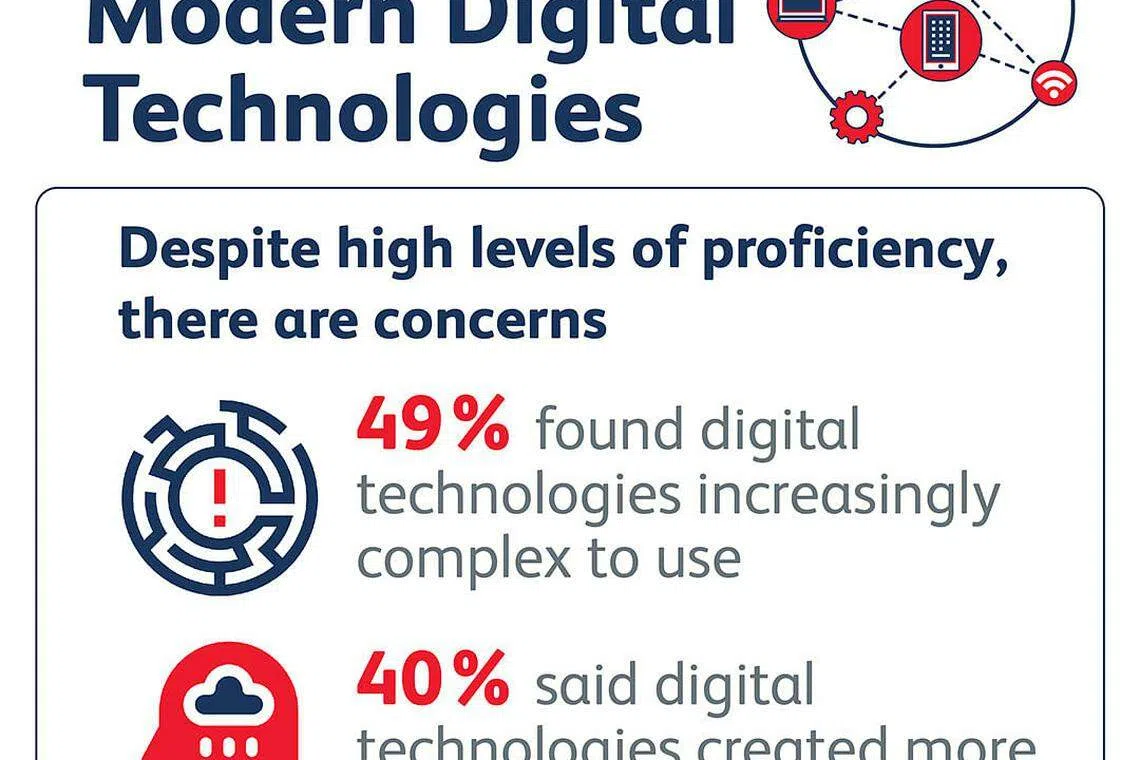
Just under half of respondents, or 49 per cent, say that modern digital technologies are becoming increasingly complex for them to use, which may hinder its wider adoption. For 40 per cent of the respondents, using digital technologies has created more anxiety than enjoyment.
Whether it's finance or other apps, complexity hinders wider adoption among Singaporeans, said Sopnendu Mohanty, chief fintech officer at the Monetary Authority of Singapore, in Prudential's report.
"It is incumbent on technology companies and service providers to construct their solutions in the simplest possible design," said Mohanty.
Have your Pulse on health and wealth
In April 2020, Prudential Singapore launched Pulse by Prudential (Pulse), an artificial intelligence (AI)-powered mobile app that enables everyone to manage their health and wealth.
When it comes to health, Pulse offers features that are designed to support users in their health journey to prevent, postpone, and protect against the onset of chronic diseases. For instance, Pulse users can make use of the AI-powered Symptom Checker to get insights into possible health conditions based on the symptoms experienced. They can also tap on the Healthcheck feature to better understand their overall health status and long-term disease risks. Other features include a video consultation with a doctor, a clinic locator, and health awareness content.
To promote physical health and encourage people to maintain healthy habits, Pulse also runs challenges that reward users for adopting a healthy lifestyle. Users can accumulate reward points that can be redeemed as vouchers with selected merchants.
For instance, it launched Challenge Your Pulse - a series of walk, run, and ride geolocation-based challenges - from August to September 2022. Individual users were required to check in at various checkpoints along one of the five curated routes to complete a weekly challenge. Users were rewarded with points which could be instantly converted to retail vouchers. They can also look forward to challenges that will be run periodically throughout the year.
Pulse will continue to connect with users and empower them to take charge of their health journey through innovative engagements.
Pulse also offers a mental wellness feature comprising a mood tracker, self-awareness quizzes, and curated content related to mental wellness, to provide users with tools and information to better understand and manage their mental health.
To help Singaporeans better plan for rising longevity - and to help them do that with greater ease - Pulse offers wealth solutions such as a wealth score assessment, an overview of Prudential's policies, a budget planning tool, and a dashboard that provides a single view of the user's insurance plans.
Wealth@Pulse has an AI digital assistant named Ruby designed to support users in their financial planning journey. For more in-depth financial planning advice, users can also connect with a Prudential financial consultant via Pulse.
Easy access to medical and company benefits through Business@Pulse
Employees of Prudential's group insurance customers are also able to easily access their employee benefits and wellness needs through the Business@Pulse section on Pulse. Users can get a consolidated view of their group insurance benefits such as the types of coverage they are entitled to, and the benefits and their coverage for specific items, such as annual limits for surgery and hospitalisation.
They can also submit claims on-the-go by uploading a photo of their medical bill on Pulse and change their contact details easily. This digital solution streamlines the insurance and claims experience, and provides access to health and wealth resources within the Pulse app.
Pulse user Goh GQ, 30, values the app for allowing her to sign up for simple insurance plans as well as access policy information promptly. "It integrates many useful features such as a clinic locator which I found very helpful. I am able to access my corporate benefits, such as my medical benefits, on the same portal too," said Goh.
Download the Pulse app on Google Play or Apple Store.

Decoding Asia newsletter: your guide to navigating Asia in a new global order. Sign up here to get Decoding Asia newsletter. Delivered to your inbox. Free.
Share with us your feedback on BT's products and services
TRENDING NOW

Lamborghini-driving boss of Eminent Frog Porridge charged with S$3.8 million tax evasion, money laundering

Not in education, employment or training: Why more Hong Kong youths are opting out of work

Vietnam workers keenest on AI in South-east Asia; Singapore employees among most sceptical: survey

Grab completes US$425 million acquisition of US-based Stash Financial

