

Anduril Industries founder Palmer Luckey sees strong trajectory for the defence tech company in Asia-Pacific
The AI-focused drone maker has recently upped its regional presence in Japan, South Korea, Taiwan and Australia
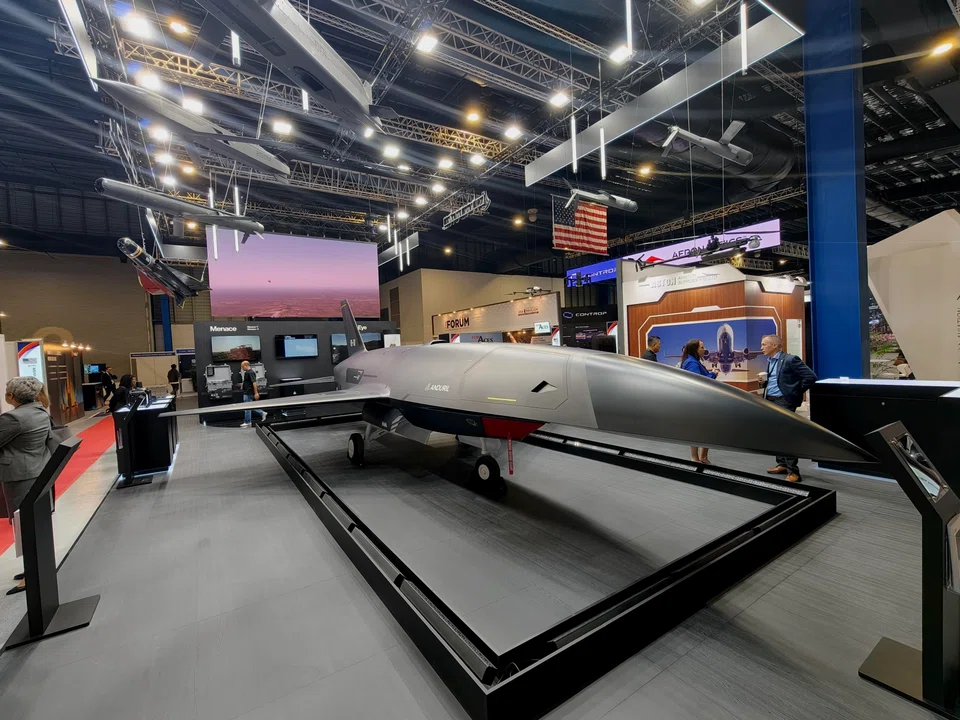
[SINGAPORE] US-based defence technology company Anduril Industries (Anduril) made its debut as an exhibitor at the Singapore Airshow on Tuesday (Feb 3).
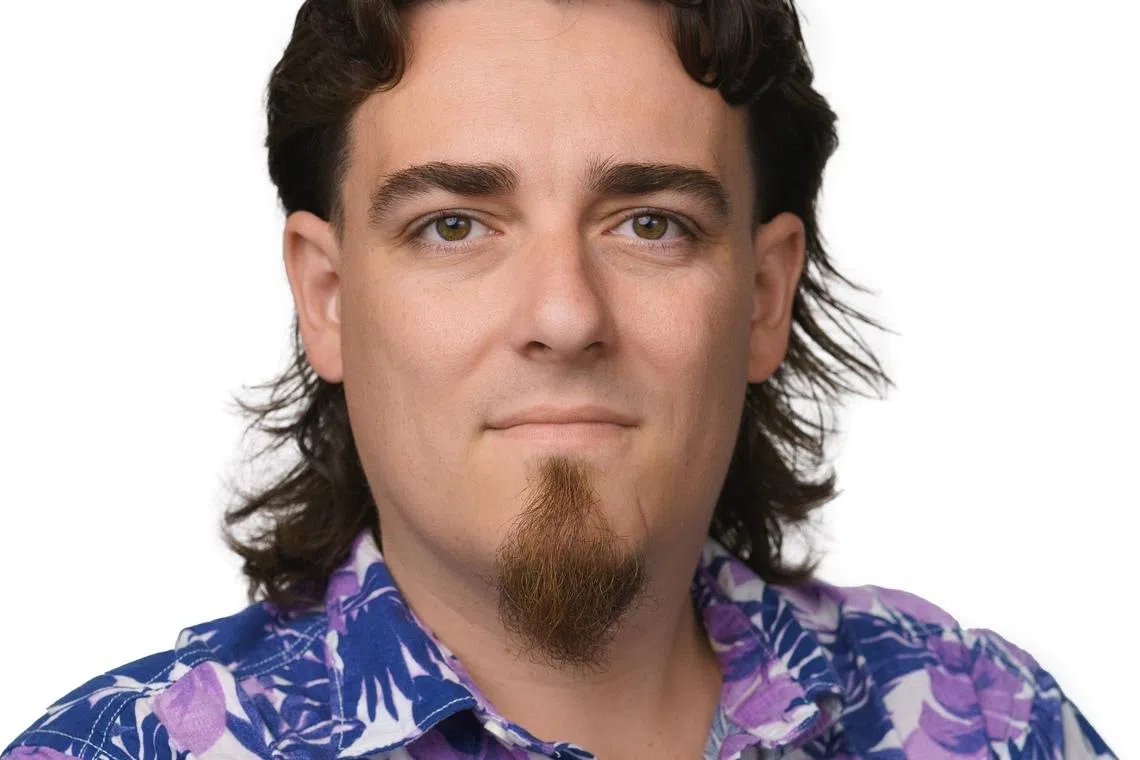
Founder Palmer Luckey told The Business Times that while Anduril has attended the event over the past five years, it chose to exhibit this time simply because it now has enough finished products with relevance to the region to showcase.
“Products we’ve been working on for a number of years are now at a mature enough point where there’s a lot of people in the region who are interested – things with range that’s relevant to the Pacific, things that are relevant to potential threats in the Pacific,” he said.
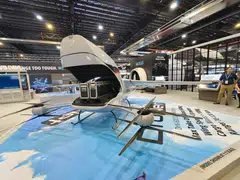
On display were its Fury autonomous fighters alongside other drones, as well as communications and electronic warfare solutions and digital systems for soldiers.
Anduril has been increasing its presence in Asia-Pacific, establishing offices in South Korea, Taiwan and Japan in 2025, ahead of production. It also set up a submarine manufacturing facility in 2025 in Australia, after opening an office there in 2022.
The regional success has been boosted simply by Anduril proving its autonomous systems work.
“From (Fury’s) very first flight, it was fully autonomous. You told it what to do, you pushed one button, gave it permission to take off – and it went and executed the mission.”
Move fast, make things
Luckey founded Anduril in 2017 with four other people, including current CEO Brian Schimpf and Trae Stephens, who were both ex-employees of data integration and analysis company Palantir Technologies.
Anduril brings a tech company approach to the defence industry: It uses software, artificial intelligence (AI) and autonomous drones, and develops its products before a contract is signed.
SEE ALSO
“We don’t wait for people to ask us to build something or pitch something… We use our own money to decide what to build, how to build it, when it’s done, and then we sell it to customers.”
In traditional military procurement in the US and many countries, contractors bid on tenders and work with the government on development. The process is highly regulated because it uses public funds and takes years or even decades.
By developing first, Anduril claims to be faster and cheaper.
In April 2024, Anduril was named alongside General Atomic, as contractor to build and test prototypes for the US Air Force’s Collaborative Combat Aircraft, beating Boeing, Lockheed Martin and Northrop Grumman.
“We went from winning that contract to delivering the first of several vehicles and flying them in 556 days, which is a very fast fighter development programme,” said Luckey.
Anduril had leapfrogged traditional contractors by beginning production of Fury even before winning the contract and was “very competitive” on cost, though he did not provide specifics.
But he admitted that this approach requires plenty of capital, something exacerbated by the fact that Anduril puts all its revenue back into research and development (R&D).
“Everything we make goes back into R&D. I’m also very successful at raising money from private investors to fund even more R&D. So we’re actually investing over 100 per cent of revenue back in R&D year after year,” he said.
In its latest fundraising round in June last year, Anduril raised US$2.5 billion for a US$30.5 billion valuation.
Before Anduril, Luckey founded virtual reality headset startup Oculus VR in 2012, which was sold to Facebook for US$2 billion in 2014.
No Terminators?
The company plans to go public in the next few years, he said, so this capital-intensive approach may not continue in the long term. But in the meantime, he is happy to attract investors that believe in Anduril and push away those who do not.
“Anduril has a long period of growth ahead of us where we can continue to invest in these new platforms. So if we go public, I’m trying to attract the people who believe in that vision and simultaneously repel the people who don’t believe in that vision,” he said.
Luckey cited divisive Tesla and SpaceX CEO Elon Musk as an example of this tactic in attracting equity.
“This may not be the perfect example, but Elon Musk has done a really good job of this with Tesla. Maybe you believe their valuation is crazy, maybe you don’t, but separate from the question of whether it is crazy – it’s very clear that his investors believe,” he said.
Anduril is not alone. Also debuting at the Airshow were competing companies such as Helsing and Atreyd (both from Europe) and US company Shield AI, while established defence companies also showed off autonomous and AI-infused systems.
These companies are also making inroads to Asia with Helsing having recently acquired an Australia drone maker, while Shield AI has announced partnerships with Singapore, South Korea and Taiwan.
Their rise has been followed by concerns about the ethics of autonomous weapon systems, especially those embedded with AI, and letting them autonomously target and fire weapons without human oversight.
Luckey argues that “fire and forget” weapons have already existed for decades, for example in cruise missiles.
In addition, autonomous weapons systems are usually applied in cases where mistaking the target is unlikely, and various data points – thermal signature, its motion, comparing other intelligence sources – help reduce such errors.
Ultimately, he said, we should judge systems by their effectiveness and keep human accountability as key.
“I think that when it comes to matters of life and death, the only moral thing to do is apply the very best technology to that… Whatever provides for the least civilian harm, the least collateral damage, the most precise application of force is what we should use… The key is that we have to hold a person accountable for the use of these systems.”
On public fears of killer AI weapons that could threaten humanity, such as Skynet in the 1984 film The Terminator, Luckey said he has more immediate concerns.
“I don’t want to say (Skynet is) impossible because it’s not. I actually think it’s absolutely technologically feasible… within our lifetimes,” he said.
But more pressing threats, to him, include advanced biological weapons, chemical warfare agents that cannot be filtered, and neutron bombs which kill people but leave infrastructure intact.
“But if we ever get close to the point where Skynet is coming, I will be the first person to raise my hand and point out that we’re too close to the line,” he said.
Decoding Asia newsletter: your guide to navigating Asia in a new global order. Sign up here to get Decoding Asia newsletter. Delivered to your inbox. Free.
Copyright SPH Media. All rights reserved.
TRENDING NOW

First Resources blames El Nino, outside fires for Kalimantan hotspots amid haze scrutiny
High Court rules against Julius Baer’s Singapore trust arm in US$50 million family trust dispute
Singapore key exports jump by higher-than-expected 68.4% in September, led by non-electronics
MSCI proposes downgrading Indonesia to standalone market status

