

Autobahn group fallout tightens private-hire car financing, but COE premiums unlikely to fall
Increased scrutiny by banks and finance companies may not have a big impact on the larger, market-moving players

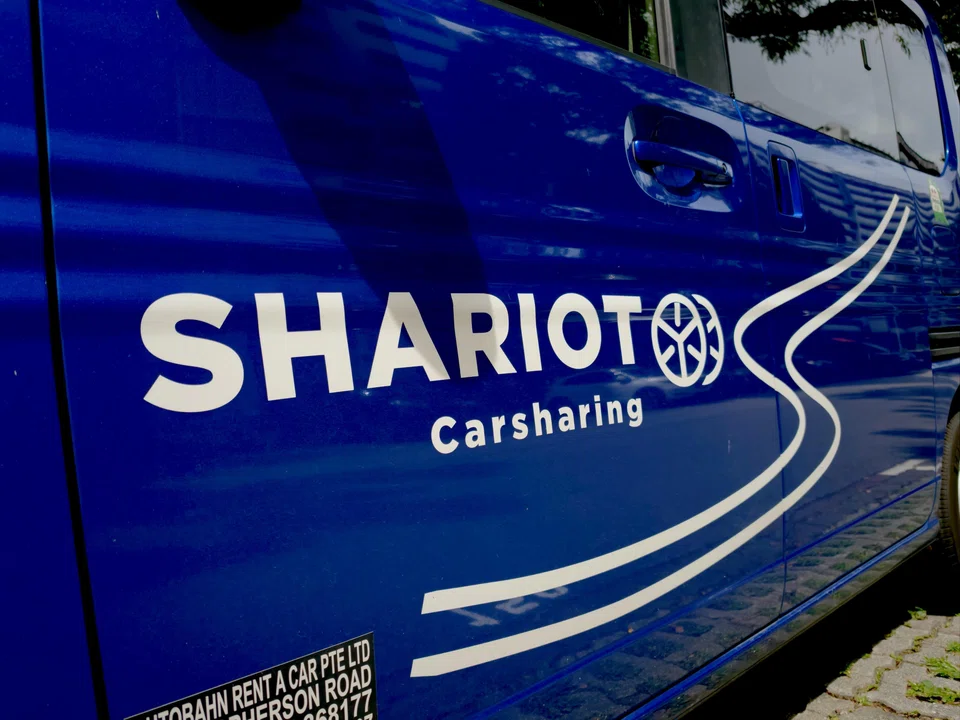
[SINGAPORE] The after-effects of the Autobahn-Shariot group’s financial difficulties are unlikely to decrease Certificate of Entitlement (COE) premiums or affect the prices of new cars in the near term, said industry observers.
Previously, some had suggested that the increased scrutiny on lending and tightened credit lines for private-hire car (PHC) rental companies could reduce COE demand and thus lower premiums.
Also, the potential influx of 1,700 PHCs of Autobahn’s fleet might boost the supply of used cars, thereby lowering the demand for new cars and COEs as well.
But industry experts that The Business Times spoke to largely disagreed.
“(These effects) won’t have a material impact on COE prices unless cases like Autobahn’s are rampant across the industry, which they aren’t,” said Say Kwee Neng, an automotive consultant.
The group of 19 companies, including private-hire vehicle (PHV) rental firm Autobahn Rent A Car and car-sharing outfit Shariot, reported financial difficulties in November last year after defaulting on insurance payments.
It emerged that the group had incurred debts of more than S$300 million, most spent acquiring around 1,700 vehicles through financing. Creditors included the three major banks – DBS , OCBC and UOB – as well as automotive financial companies including Toyota Financial Services and Teck Wei Credit.
On Wednesday (Jan 14), Senior Minister of State for Transport Sun Xueling said that PHC drivers for Autobahn “will face difficulties getting their deposits back” because they are unsecured creditors. However, tighter regulation of the sector could increase compliance burdens and ownership costs, which would likely be passed on to drivers and passengers.
Credit hard
Six industry observers BT spoke to, from PHC rental companies, automotive distributors and consultants, said that some financial institutions were increasing scrutiny on lending and reducing loans for PHCs.
Most spoke on the condition of anonymity and declined to name specific institutions because of commercial sensitivities.
Say noted: “I think there are signs that financial institutions are tightening their risk exposure, in the wake of these developments in the marketplace. Creditors appear to be thinning their loan books, preferring proven and more reliable credit lines.”
In response to BT’s queries, Eric Ong, head of enterprise banking, global commercial banking in OCBC, said: “We continue to support auto-fleet owners and operators leasing vehicles for either commercial or private-hire purposes, based on established procedures and requirements. Businesses applying for loans with OCBC will have to meet certain eligibility criteria and provide supporting documents for the bank to assess their financial strength and viability.”
Eric Lian, head of group commercial banking at UOB, said: “We are committed to supporting SMEs (small and medium-sized enterprises), including those in the PHC sector, that demonstrate sustainable and resilient business models. We assess financing requests based on prudent credit evaluation and long-term viability, with the aim of helping businesses navigate challenges and adapt to changing market conditions.”
DBS did not respond in time for publication, and Toyota Financial Services declined to comment.
Industry observers have noted that burgeoning PHC numbers may have contributed to higher COE premiums over the past decade.
As at November 2025, Singapore’s PHC population reached 94,711, an all-time high, from 29,369 in 2015.
But tightening credit on PHCs will not affect COE premiums as larger, established PHC rental companies are unlikely to be affected.
Ng Lee Kwang, the managing director of Octagon Motors Group, said: “Banks and financial institutions are pulling back on PHC financing. This impact will affect smaller players, but not the big boys.”
These larger players, with stronger financials and proven track records, are less likely to have their credit lines affected. The same may not be true for smaller outfits, but these do not have a major impact on COE premiums because of their bidding behaviour.
“With (the bigger fleets), the assumption is that the cars are used purely to generate revenue and not for personal use. They can buy cars with a higher COE premium, as they have the financial power to sustain and maintain their fleet value,” added Ng.
Major players are those with fleets of a significant size – typically more than 1,000 cars – and have an established reputation. These include listed companies such as Grab, and private companies such as Lumens Group, Lion City Rentals and Prime.
Say pointed out: “Small PHC players, like marginal car brands, have little say in determining final COE premiums because the big players will be the ones affecting premiums with high bids in larger quantities.”
Wheel and deal
With Autobahn’s cars mostly financed through hire purchase or flooring loans, it is likely that the 1,700 strong fleet will be repossessed and liquidated by creditors to serve the firm’s debts.
Daniel Tan, director at Providence Law Asia and head of its restructuring and insolvency practice group, noted: “Right now, the secured lenders have appointed receivers for the vehicles, which will likely be sold off.”
Autobahn group’s application for a court moratorium failed on Dec 28, 2025, and creditors have been repossessing cars from the firm’s fleet.
On Jan 6, Autobahn Rent A Car ceased operations, although it has not commented on whether the group will be wound up.
The potential liquidation of the fleet is not likely to have a major or lasting effect on new car prices or COEs.
Octagon’s Ng said: “Honestly, even if all 1,700 cars entered the market, there would be no impact. At present, used-car bidding platforms are already crowded with other PHV cars.”
He added that not all the cars can be sold on the open market. Due to regulations, chauffeured PHCs registered from Feb 19, 2025, can be sold only to other companies.
Say noted: “These developments should have minimal impact on demand for new cars, and also little impact on COE prices. That’s because new car buyers are operating in a different category entirely, and are not materially affected by these developments in the used-car sector.”
There would be some short-term impact on new car demand if all the cars flooded the market at the same time, but this is not likely.
The director of a major East Asian car distributor said: “If the used cars all enter the market at around the same time, potential buyers (will consider) if they wish to purchase a brand-new car or used car, subject to low mileage and condition. But this is not likely to happen since repossessions will not take place all at once.
“However, if the cars are let into the market progressively, COE may not be affected as much. One consideration for the cars to be let into the used-car markets depends on the repossession rate as well.”

