

Base salary under food services Progressive Wage Model to rise to S$2,220 from Jul 1
This baseline monthly gross wage requirement for workers in the sector will be raised again in 2027 and 2028

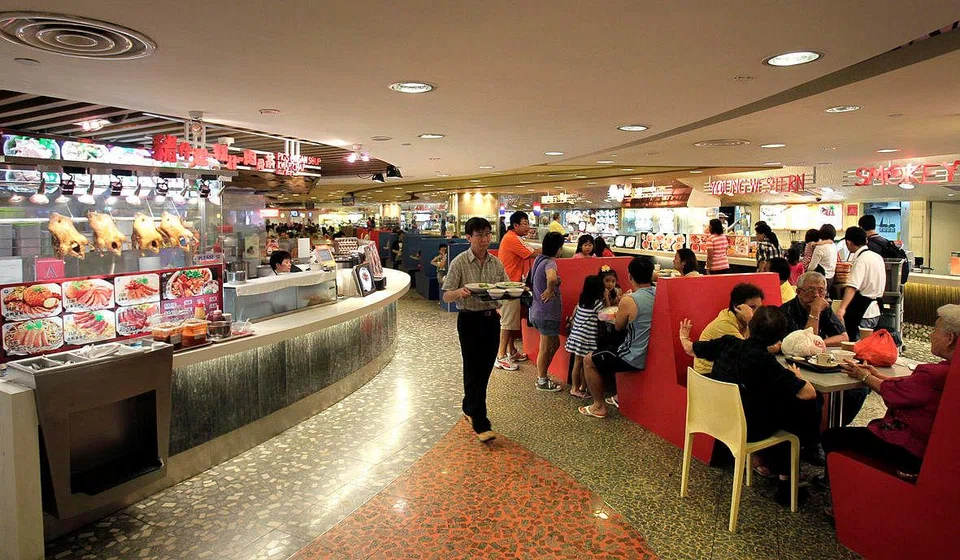
[SINGAPORE] The government will raise the entry-level Progressive Wage Model (PWM) wage requirement for food-services workers to S$2,220 from Jul 1, 2026, from the existing requirement of S$2,080, the Ministry of Manpower (MOM) announced on Monday (Mar 16).
Thereafter, in 2027 and 2028, the baseline monthly gross wage requirement will go up on Jul 1 to eventually reach S$2,500. MOM said the food-services PWM currently covers more than 53,000 full-time and part-time workers.
The upcoming pay raises follow previous rounds of wage increases, which followed a three-year schedule from 2023 to 2025 after the industry’s PWM was launched on Mar 1, 2023.
With the latest updates, food-services workers earning a monthly salary can expect a year-on-year increase of between S$140 and S$145 for the next three years. Hourly gross wages, which are applicable to part-time workers who work under 35 hours a week, will also be raised.
These will apply to roles ranging from food-stall assistants at quick-service establishments such as kiosks and supermarkets with ready-to-eat stations, to waiter supervisors at full-service establishments such as restaurants, caterers and central kitchens.
The increases were set out in recommendations by the Tripartite Cluster for the Food Services Industry (TCF), which the government accepted after they were released on Monday.
Tripartite representatives spoke to to the media during a company visit to Swensen’s Unlimited at Changi Airport Terminal 2.
The higher salaries are particularly significant for workers considering the “challenging economic times we are going through”, said National Trades Union Congress assistant secretary-general Yeo Wan Ling.
In 2024 and 2025, eligible workers received a monthly salary increase of S$165 per year, compared with the S$140 to S$145 amount in the Monday update.


Minister of State for Manpower Dinesh Vasu Dash said the government, businesses and unions felt that the amount was reasonable, given the current economic environment.
The full impact of the Middle East conflict on costs in Singapore is still unclear, he added, noting that “some degree of inflation” may be possible.
These factors need to be accounted for, he said, adding that Singapore “has the mechanism to do so”, and some time. It is also watching the situation closely to move as needed.
He reiterated that the government will extend the Progressive Wage Credit Scheme – which supports employers as they adjust to voluntary or PWM-mandated wage increases for of lower-wage workers – for two more years.
Benjamin Boh, Singapore National Employers Federation council member and TCF co-chair, said employers will worry as they assess their productivity and “do their sums” to ensure profitability amid wage increases – but they must still pay workers better.
The Jul 1 wage increase implementation date is set to align with the timeline for other PWM sectors and occupations.
MOM said: “Employers who employ workers in multiple PWM sectors can streamline their administrative processes, with lead time to adjust and comply with the new food-services requirements.”
The PWM is a wage structure that ties wage increases to skills upgrading and productivity improvements. Under the PWM, employers must pay at least the PWM wages and meet PWM training requirements.
The food-services PWM is enforced through employers’ eligibility for work passes such as Work Permits, S Passes and Employment Passes.
As at December 2024, there were about 53,912 food-retail establishments in Singapore holding SFA licences, data from the Singapore Department of Statistics indicated.
Around 111,600 resident employees were employed in the food-services sector, making up 5.5 per cent of all resident employees, the TCF noted. The number includes workers in non-food services roles, such as administrative jobs.
The TCF will review the PWM again in 2028.
Decoding Asia newsletter: your guide to navigating Asia in a new global order. Sign up here to get Decoding Asia newsletter. Delivered to your inbox. Free.
Copyright SPH Media. All rights reserved.
TRENDING NOW

Two Singapore-listed palm oil firms named in Greenpeace report on Indonesian plantation fires
Singapore Airlines flight returns to San Francisco after ‘unruly’ passenger incident

Singapore looking into which companies responsible for haze-causing fires: PM Wong
Deluge IPO 3.86 times subscribed ahead of SGX debut

