

Empowering a financial future for Southeast Asian investors
Strategic partnerships in Singapore and the region help to create a virtuous cycle for families and the wider society
 Add BT as a preferred source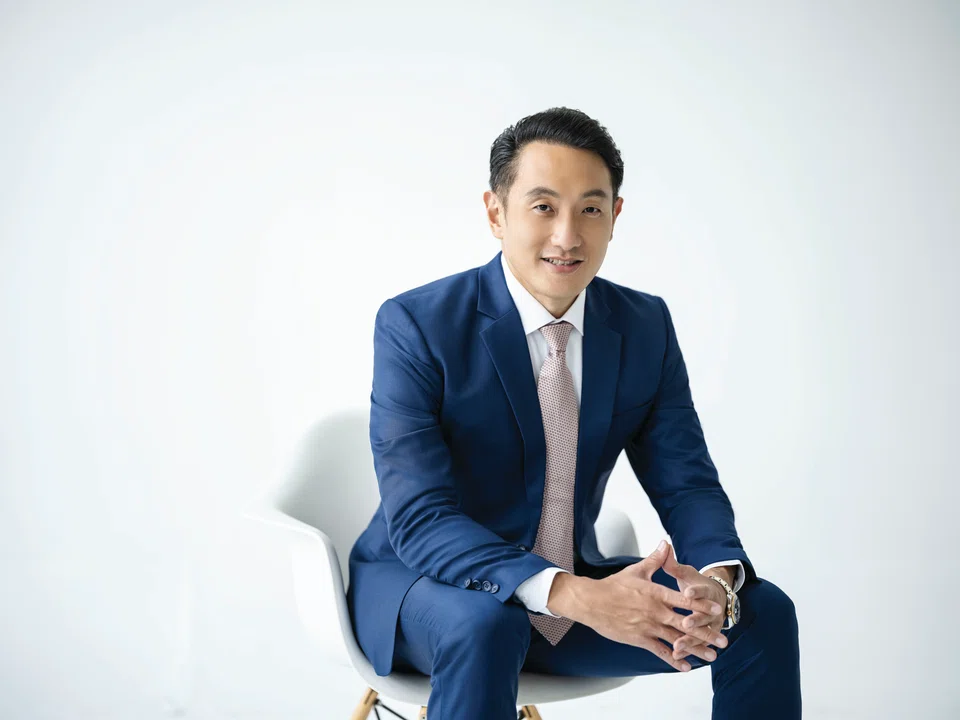
DeeperDive is a beta AI feature. Refer to full articles for the facts.
THE desire to empower individuals in Asia to create a “meaningful financial future” for themselves is a mission that drives Fidelity International towards strategic partnerships and solutions. Wildon Goh, Fidelity’s head of Southeast Asia and Singapore country head, hopes the firm’s efforts will help create a virtuous cycle for families, communities and the wider society.
Goh says: “Our mission is about putting our clients at the centre of everything we do, and more so in building a meaningful financial future for them. The key is this – how can we empower people to shape their future rather than just being a part of that journey?”
“Financial planning is not just a means to accumulate more money. It’s also about achieving goals that affect aspects of our lives such as wellness, happiness and the well-being of families. We play a very meaningful role for families.
“For the financial industry we’re also able to create impact through innovation and growth, to help our partners grow and to develop products and services that can change the world in a meaningful way.”
Singapore, where Fidelity has had a presence for over 20 years, plays a central role in its ambition: It offers a well of expertise and experience that Fidelity can draw upon for its regional efforts.
In recent years, the efforts have come to fruition in major partnerships. In Thailand, it was appointed by Krungthai Bank as a strategic partner to help enhance the bank’s wealth management capabilities.
Navigate Asia in
a new global order
Get the insights delivered to your inbox.
In Singapore, it was also appointed by Moomoo Financial to develop a suite of risk-based model portfolios. In 2024, it partnered Maybank Singapore to develop a solution to provide both income and capital growth. And, it has partnered fintech firm Revolut Singapore to launch a US-dollar money market fund to enable customers to avail of a higher-yielding option to beat inflation.
Drawing on Singapore’s experience
Goh says Fidelity’s deep experience in Singapore, which has long faced twin challenges of an ageing population plus an extremely competitive wealth management landscape, has helped to strengthen and sharpen its efforts in both the domestic market and the region.
“Our neighbouring markets want to raise the financial literacy of their customer base. They are also more receptive to foreign managers and investments because their customers need to diversify out of local securities if they are to generate a meaningful return for their portfolios. This means they need a solid wealth management and advisory framework. The experience and learning we’ve gained in Singapore and globally – we’re able to localise that and work with partners to create a bespoke solution.”
Singapore, he says, has been “very instrumental”. “We have a very robust framework when it comes to wealth management advisory. We’re able to bring many best-in-class ideas to clients in the region.” The partnership with Krungthai Bank is a case in point. Fidelity was engaged in 2023 to provide support in terms of delivering investment products, asset allocation views, insights and market commentaries, and developing education and training in investment and portfolio management.
To date, its first multi-asset fund has attracted more than US$330 million since its launch in 2023.
The issues confronting the region are likewise those that Singapore grapples with, such as anxiety about retirement adequacy and the need to instil confidence in investing.
In the latest Fidelity International Sentiment survey for 2025, around 60 per cent of workers in Singapore feel optimistic about the near future, a drop from 75 per cent in the previous year. Nearly half of the adults cited the need to increase savings and investment as the most pressing financial need. But only 22 per cent felt confident about their ability to invest their money.
Goh says: “Data has shown that people overlook the longevity risk that exists in today’s environment compared to decades ago. People also realise it’s not about saving itself, but about not saving enough. If you can’t save enough – is it a case of not saving earlier?
“Education is one aspect, and we’ve seen success because people are changing their perspective on retirement with the concept of Fire (financial independence, retire early) that resonates well with younger people. Because of this mindset shift, they’re more willing to delay gratification and start to plan for their future earlier.”
Bespoke solutions
Even with the broad and deep resources that Fidelity boasts globally, Goh says it’s important to tailor solutions to domestic markets. Target-date or lifecycle funds, for instance, are a mature and thriving option in the US for retirement savings. But they have not taken off in a similar way in Singapore.
“There are proven solutions for retirement but not everything can be replicated because of considerations relating to regulation and pension structures. A key driver is education. At the end of the day, a lack of knowledge and understanding will deter people from putting funds into an investment that is locked up for 30 years. Singapore has been doing a good job to educate people on the ground.”
The ability to design bespoke solutions is vital for successful partnerships, he says. “Traditionally distributors come to us for standardised products, but today they look for more bespoke solutions. The reason is that their clients have different needs. We need to make sure that while we have standard products, we are also able to customise according to their needs and preferences.
The ability to customise is helping Fidelity stay ahead of rising pressures in the market, including stiff competition and fee compression. “Our clients – the large institutional banks – and asset managers are consolidating. They look for fewer partners; we need to stay even closer to our clients. Gone are the days when we can assume that we know what they want.
“Differentiation is easier said than done because the mutual fund business has become very commoditised. You have to be very innovative to have first-mover advantage, or you need a proposition that’s so strong and good that people are willing to pay for it.”
In its quest to stay ahead, innovation is a key strategy to enable it to expand its offerings and capabilities. In Singapore, Fidelity has partnered Citi in a joint effort under the Monetary Authority of Singapore’s “Project Guardian”, to explore using blockchain infrastructure to price and execute bilateral spot foreign exchange trades.
This is part of Fidelity’s efforts to explore real-life applications of asset tokenisation, including for funds and securities, to promote efficiency and democratise access to financial services.
Project Guardian is a collaborative initiative between policymakers and the finance industry to enhance financial markets efficiency through tokenisation.
Milestones
- Appointed by Krungthai Bank to enhance Krungthai’s wealth management capabilities by acting as an investment manager for its series of Thailand domiciled multi-asset funds, which have raised US$330m since 2023.
- Partnership with Moomoo Financial Singapore to develop a suite of risk-based model portfolios to cater to its Singapore clients’ investment needs and risk appetites.
- Partnership with Maybank Singapore to launch a multi-asset solution. This solution, which focuses on capturing capital and income opportunities in global markets, raised more than US$150 million in Singapore and Malaysia.
- Appointed investment partner for Revolut’s Flexible Accounts, where monies from these accounts can be invested in Fidelity’s USD-denominated money market fund. This is Revolut’s first interest-bearing product in Singapore.
- Launched a new global equity solution in Asia that is managed by US-headquartered Fidelity Investments. This solution takes an all-market-cap approach with an emphasis on quality companies.
- Participant in MAS’ Project Guardian to use blockchain infrastructure to price and execute spot forex trades.
- US$900.7 billion assets under management and administration
- Coverage of 25 markets in Apac, Europe, Middle East and South America
- More than 16,000 meetings with companies annually
- Established office in Singapore 2003
Source: Fidelity International as at March 31, 2025.
Singapore workers top global peers on optimism about the near future
WORKING Singaporeans are more optimistic than their global peers about the near future, the latest Fidelity International Global Sentiment Survey has found. But optimism has decreased from last year.
The Global Sentiment Survey is conducted annually and involves 37,000 respondents in 34 markets, including 1,000 Singapore adults. It aims to analyse the attitudes and actions of working adults towards their finances, retirement and work. The survey was conducted in 2024 between 28 June and 2 September.
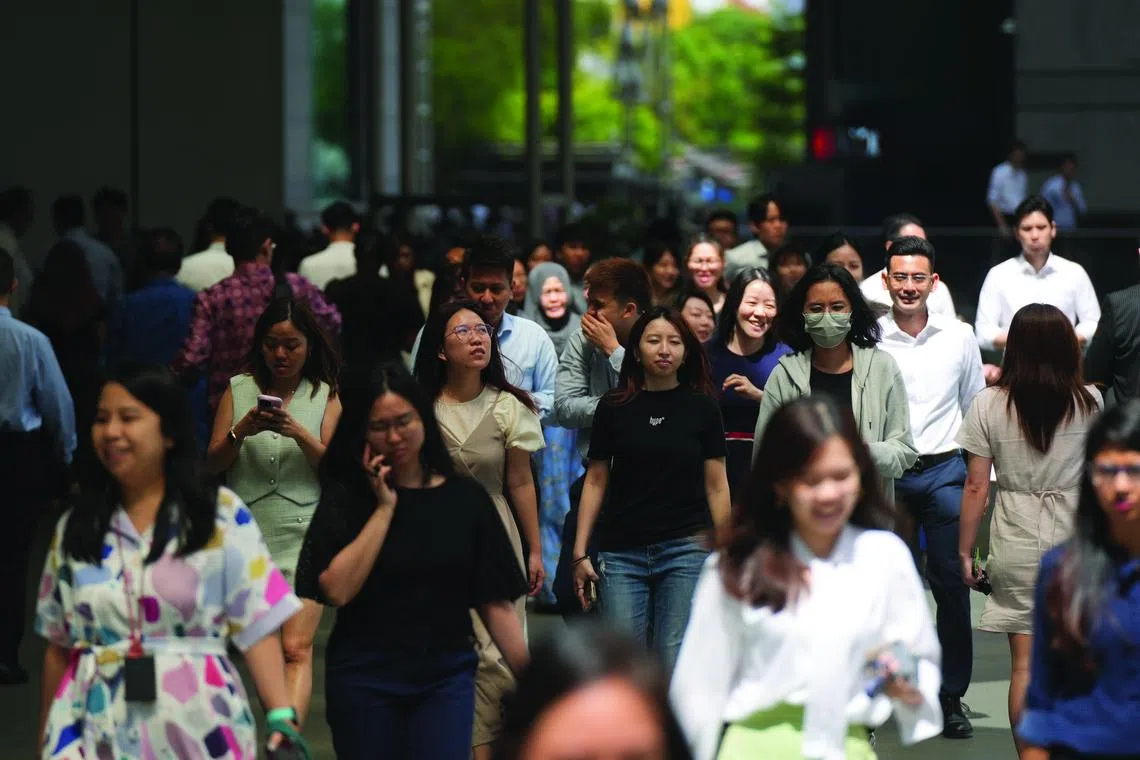
This year, 60 per cent of Singapore workers feel optimistic about the near future, compared to 56 per cent globally. Last year, 75 per cent in Singapore felt optimistic.
But when it comes to finances, only 49 per cent felt good about their day-to-day finances, savings (44 per cent) and retirement planning (37 per cent). They were also less confident than their global peers in their ability to manage day-to-day money, pay down debt and invest their money. The most common financial goals were to be financially comfortable in retirement, financially prepared for an emergency and to maintain their current lifestyle or income. Thirty-eight per cent were not confident they would be financially comfortable in retirement.
The most pressing financial need was saving and investing (49 per cent), followed by budgeting (20 per cent). But two in five did not seek advice or help in financial planning. In terms of savings, 33 per cent said they were saving less than six months ago, due to an increase in household expenses, and higher transport or commuting expenses.
Wildon Goh, Fidelity International head of Southeast Asia and country head of Singapore, said that as the cost of living continues to rise, people are waking up to the importance of saving through investments. “The best way to future-proof your savings and achieve your lifestyle and retirement goals is through consistent investments.
“However, less than a quarter of adults feel confident in their ability to invest their money. Financial institutions have a part to play by staying close to the evolving needs of investors and providing timely education and engagement to help them achieve their lifestyle and retirement goals.”
Copyright SPH Media. All rights reserved.
TRENDING NOW

Shelving S$5 billion office redevelopment plan proved ‘wise’ as geopolitical risks mount: OCBC chairman
Why where you park your joint venture matters: Lessons from a US$689 million shareholder dispute

China pips the US if Asean is forced to choose, but analysts warn against reading it like a sports result

Singaporeans can now buy record amount of yen per Singdollar

