

Shaping districts and lives
GuocoLand has played an important role in transforming Singapore’s built environment by balancing commercial goals with thoughtful designs
 Add BT as a preferred source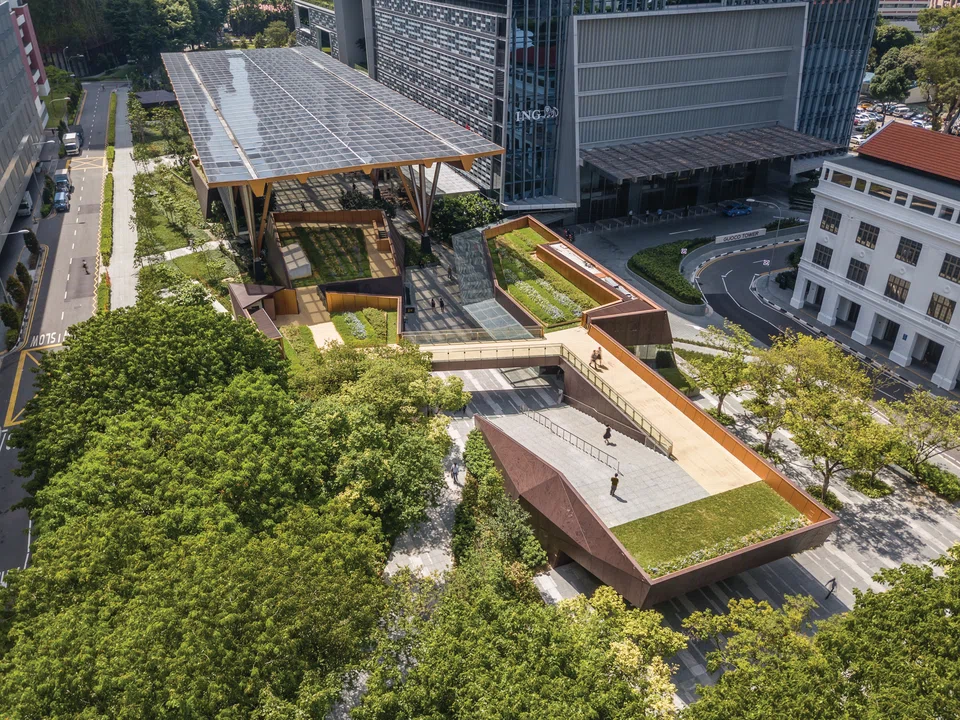
FEW companies have changed the face of Singapore’s urban landscape like GuocoLand has. While many know the real estate group through landmark projects such as Guoco Tower and Guoco Midtown, fewer are aware of its origins. Formally established in 1976, the company’s trajectory shifted significantly when it became part of Malaysia’s Hong Leong Group in the late 1980s. This affiliation gave GuocoLand a unique edge.
“Being part of a conglomerate with businesses including finance, manufacturing, hospitality and healthcare enables us to consider strategic issues across a broader spectrum of perspectives,” says Cheng Hsing Yao, Group Chief Executive Officer of GuocoLand.
This approach has supported GuocoLand’s evolution from a mass-market residential developer to a real estate company with two strong growth engines: residential property development and property investment anchored in commercial and mixed developments. The strategic shift began in the 2000s, as the company acquired prime district land for high-end condominiums such as Goodwood Residence and Leedon residence. It then expanded its portfolio to include large-scale integrated mixed developments.
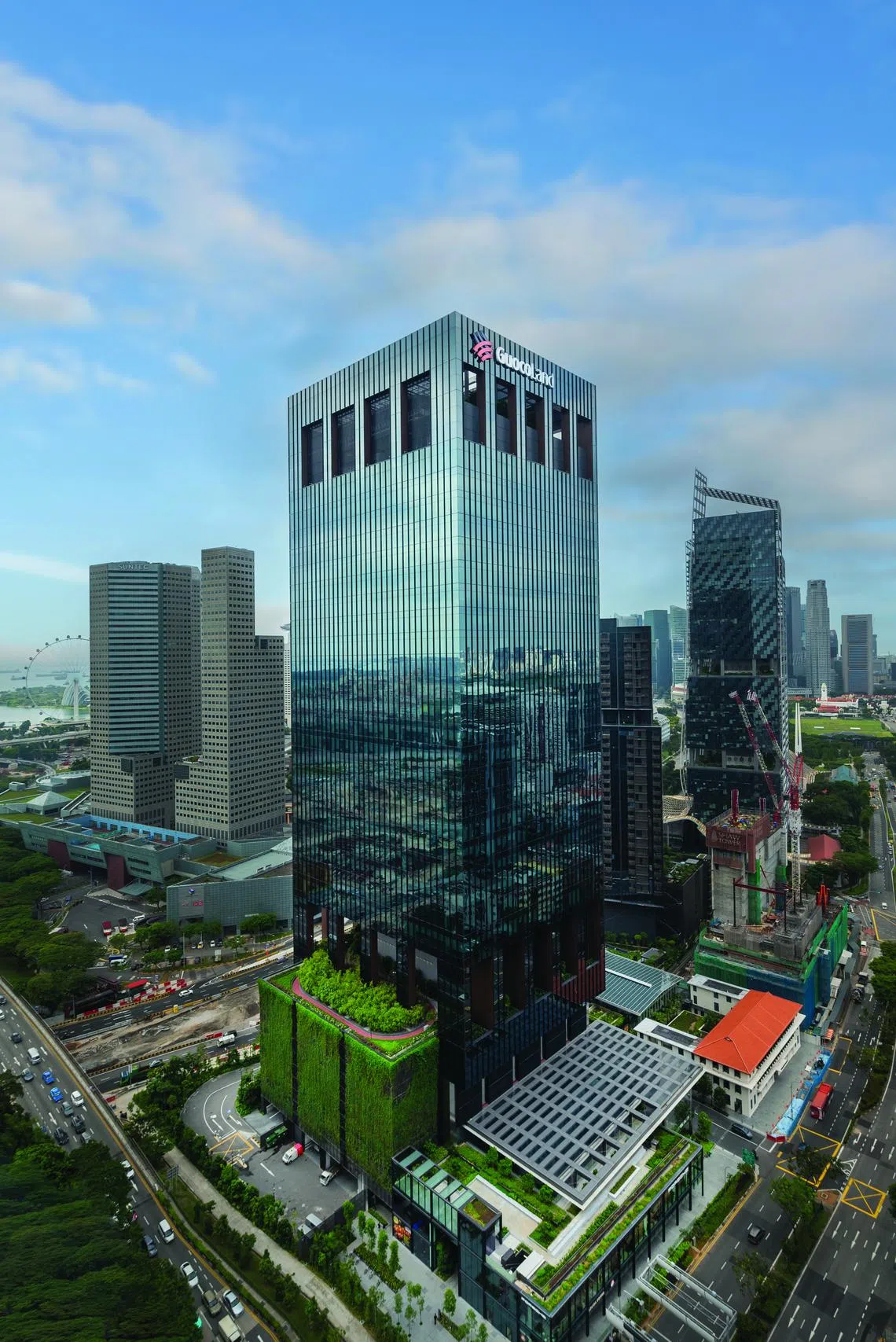
One of GuocoLand’s most transformative projects is Guoco Tower, which saw GuocoLand reimagining a long-vacant parcel above Tanjong Pagar MRT station into one of Singapore’s landmarks. The mixed development combined Grade A offices, luxury residences, retail shops, a five-star hotel and a 150,000-square-foot public urban park.
However, the true transformation extended beyond its architecture. “Rejuvenation goes beyond the hardware. The more important part is the kind of companies and communities you are able to bring into the district,” says Cheng. GuocoLand successfully attracted tenants including global banks and tech firms to set up offices in Guoco Tower, which dramatically changed the workers profile of the district. At the top of Guoco Tower, Wallich Residence welcomed high-net-worth individuals as its residents, and established Tanjong Pagar as a new prime residential district.
Guoco Midtown, located in the Beach Road-Bugis area, tells a different story. Rather than sparking the area’s transformation, Guoco Midtown served to complete it. Developed on two of the last remaining plots in the district, it was envisioned as a connector that would link together existing landmarks across the three key micro-markets of City Hall, Marina Centre and Bugis.
Navigate Asia in
a new global order
Get the insights delivered to your inbox.
The result is a vibrant, accessible, and sustainable integrated development with Grade A offices, two luxury residences, three retail clusters, multiple public plazas, a heritage conservation building, and seamless connectivity to several major MRT lines. Guoco Midtown also includes the Network Hub with its on-demand meeting facilities, areas for networking, and recreational facilities including a lap pool for office tenants. The Network Hub was conceptualised pre-Covid when GuocoLand anticipated increasing hybrid work arrangements.
Guoco Midtown reflects the company’s belief in creating more than just living and working spaces, but also uplifting locations through placemaking initiatives. By offering spaces that can host community events including markets that support local small businesses and social enterprises, and public art exhibitions by local artists, the development adds intangible value to the wider area by fostering a sense of place and identity and building a community that would enjoy visiting the district even outside of work hours.
Shaping new neighbourhoods
GuocoLand has played a pivotal role in helping shape new residential precincts in line with the government’s urban plans. Lentor Hills estate is a notable example. When GuocoLand made its first bid there, the precinct was a quiet residential enclave, unfamiliar to many Singaporeans. Despite being a brand-new residential area, the company and its partners, particularly Hong Leong Holdings, foresaw the potential of the location and moved forward with confidence, securing multiple sites. GuocoLand also developed the area’s only mixed development which comes with a shopping mall and seamless connection to the MRT network.
“The first project in a new area is very important because it sets the tone for the rest that follow,” Cheng explains. The launch of Lentor Modern proved a success, catalysing interest and shaping the area’s identity. The precinct has since become known as a highly sought-after residential district, and will eventually grow into a thriving neighbourhood when more than 3,000 households move into the estate as the new developments are completed.
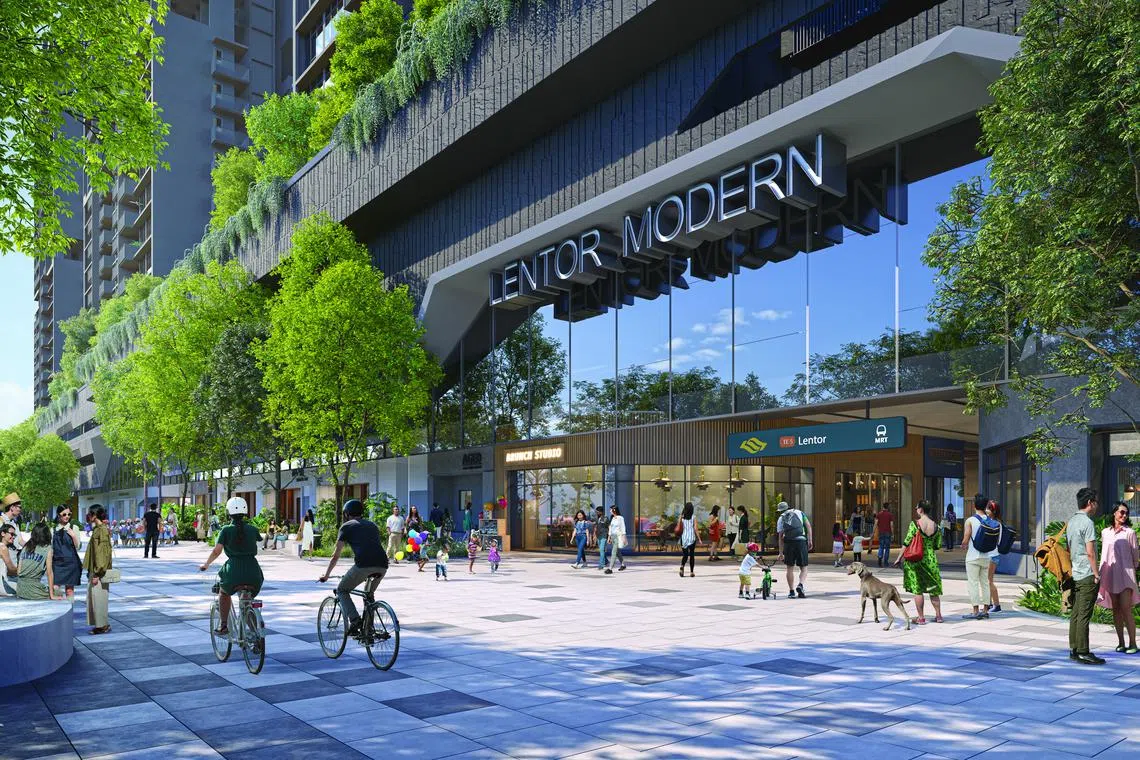
GuocoLand’s success in Lentor also demonstrates its ability to anticipate and navigate consumer preferences. By strategically differentiating each project in the precinct through varying design concepts, unit mixes, and the facilities and amenities each offers, the developer provided consumers with more choices and raised the overall appeal of the estate.
Springleaf Residence, GuocoLand’s latest residential development, marks a different kind of milestone. Located next to a rare swamp forest and near the Central Catchment Nature Reserve, it will be Singapore’s first biodiversity-sensitive residential development. The project demanded a new level of design and construction sensitivity.
“Managing this project was a steep learning curve for us. We had to learn a lot about animals, plants, water tables and methods of construction that minimised disturbance to the forest and the wildlife,” says Cheng. Much design thinking went into the project, including carefully calibrated lighting, limited use of reflective glass, and thoughtful landscape design that brings back native species and attracts pollinators.
Springleaf Residence will also feature rewilded areas with native plant species and signage with information on the flora selected, turning the estate into a rare blend of urban living and ecological awareness. Cheng adds: “When we learn to live in harmony with nature, we will also improve our own well-being.”
Design that reflects purpose
What sets GuocoLand apart is not just where it builds, but how it approaches development. The company adopts a user-first design philosophy, creating spaces from the inside out, which results in buildings with design that enhances the quality of life and architecture that endures the test of time.
“We don’t let the shape of the building dictate the space. We prioritise the people who live and work there, then let the function inform the form,” explains Cheng. This thinking is reflected in how its integrated developments balance different uses, ensuring synergy between residential, office and retail elements, while maintaining privacy and exclusivity for each.
GuocoLand’s design thinking extends to heritage conservation. In Springleaf, the former Upper Thomson Secondary School, first opened in 1965, will be retained and repurposed. Parts of the old school building will be adapted into residential units as well as communal facilities, allowing residents to experience conserved architecture as part of everyday life. This approach reflects the developer’s belief that architectural history can be both honoured and reintegrated into modern living.
Giving the land what it deserves
This approach of balance and responsibility runs through GuocoLand’s work. “We must give the land what it deserves. If the land is rare and beautiful and you do a great project, it uplifts the whole neighbourhood. But if you don’t do it well, you short-change the land,” says Cheng.
Looking ahead, GuocoLand remains deeply committed to Singapore. Despite global uncertainty, the company sees long-term strength in the nation’s fundamentals. “Every time the world goes through disruption, Singapore makes a leap,” Cheng reflects. The company intends to keep playing its part in that trajectory through upcoming projects which will continue to introduce wellness-centric living.
Ultimately, GuocoLand wants to be known not just for its buildings, but for its contribution to the evolution of Singapore itself. Says Cheng: “We challenge ourselves to do the best that we can, every time we take on a project. It’s not just an ambition, but a mission.”
What makes Springleaf Residence biodiversity-sensitive?
GuocoLand’s Springleaf Residence is designed with nature in mind. Built next to a freshwater swamp forest, the development carefully preserves the water table and surrounding ecosystem. Lighting is soft and low glare to minimise disruption to nocturnal wildlife, while the use of less reflective glass helps prevent bird collisions.
Native plant species will be reintroduced to support pollinators and birdlife, and landscape features such as ponds mimic the natural habitat. Walking trails and interpretive signage will promote ecological understanding among residents, especially younger ones.
Springleaf Residence represents a pioneering approach to development in land-scarce Singapore, where future homes may increasingly be built near, or within, green buffer zones. It reflects GuocoLand’s intent to lead by example and to show that urban growth and biodiversity can coexist harmoniously.
How integrated developments create vibrant urban hubs
GuocoLand’s signature developments – Guoco Tower, Guoco Midtown, and Lentor Modern – are more than a mix of buildings. They’re carefully designed ecosystems where work, life and leisure intersect seamlessly.
1. Smart land use By integrating residential, commercial, and retail components within a single development, GuocoLand maximises land efficiency in a land-scarce city while enhancing convenience for residents and workers alike.
2. Synergy, not congestion Each component is designed to complement, not compete. Offices bring weekday footfall, while residences and public spaces ensure vibrancy after hours. Thoughtful circulation plans maintain exclusivity for residents while enabling community interaction.
3. Amenities that anchor communities From retail and F&B clusters, to five-star hotels, wellness facilities and urban parks, these developments offer lifestyle amenities that attract a broad range of users.
4. MRT connectivity Every major GuocoLand integrated development is directly linked to an MRT station, enhancing convenience and reducing reliance on private transport.
5. Future-proofing through flexibility Guoco Midtown’s well-designed office spaces and purpose-built Network Hub offer flexibility for companies embracing hybrid work.

Share with us your feedback on BT's products and services
TRENDING NOW

The retirement advice that worries me the most
Haidilao co-founder’s family buys second bungalow in Cluny Hill for S$85 million
From hawker stall to Enterprise Award winner: How Han Keen Juan scaled the Old Chang Kee empire

Yeo’s, Tiger Beer and now Gardenia – flight of food manufacturing from Singapore might be just as planned

