

Building tomorrow on the pillars of yesteryear
For Perennial Holdings and Far East Organization, conservation is not about preserving history under glass but about creating new possibilities from inherited strengths
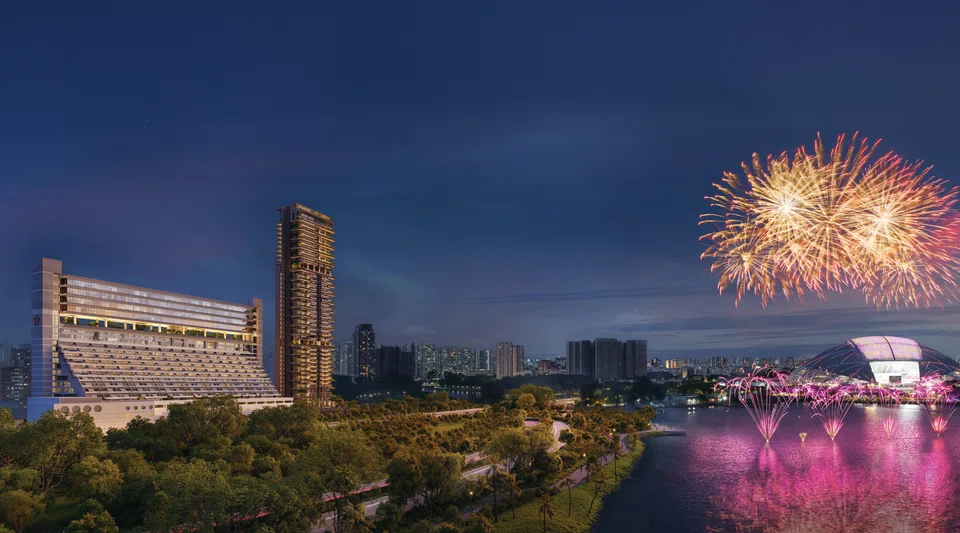
WHEN the Urban Redevelopment Authority (URA) gazetted Golden Mile Complex (GMC) for conservation in 2021, it marked a watershed in Singapore’s architectural and urban planning history – the first large-scale strata-titled development in Singapore to receive conservation status.
Any successful proposal would have to demonstrate commercial vision, as well as the ability to sensitively restore and adapt a landmark of this scale and complexity, for which there was no established blueprint to follow.
For Perennial Holdings and Far East Organization, this was precisely the kind of challenge their combined decades of conservation experience had prepared them to undertake. Today, Golden Mile Singapore (GMS) embodies that ambition. Comprising the conserved commercial development, The Golden Mile, and Aurea, a new residential tower alongside it, the project represents one of Singapore’s most thoughtful exercises in adaptive reuse.
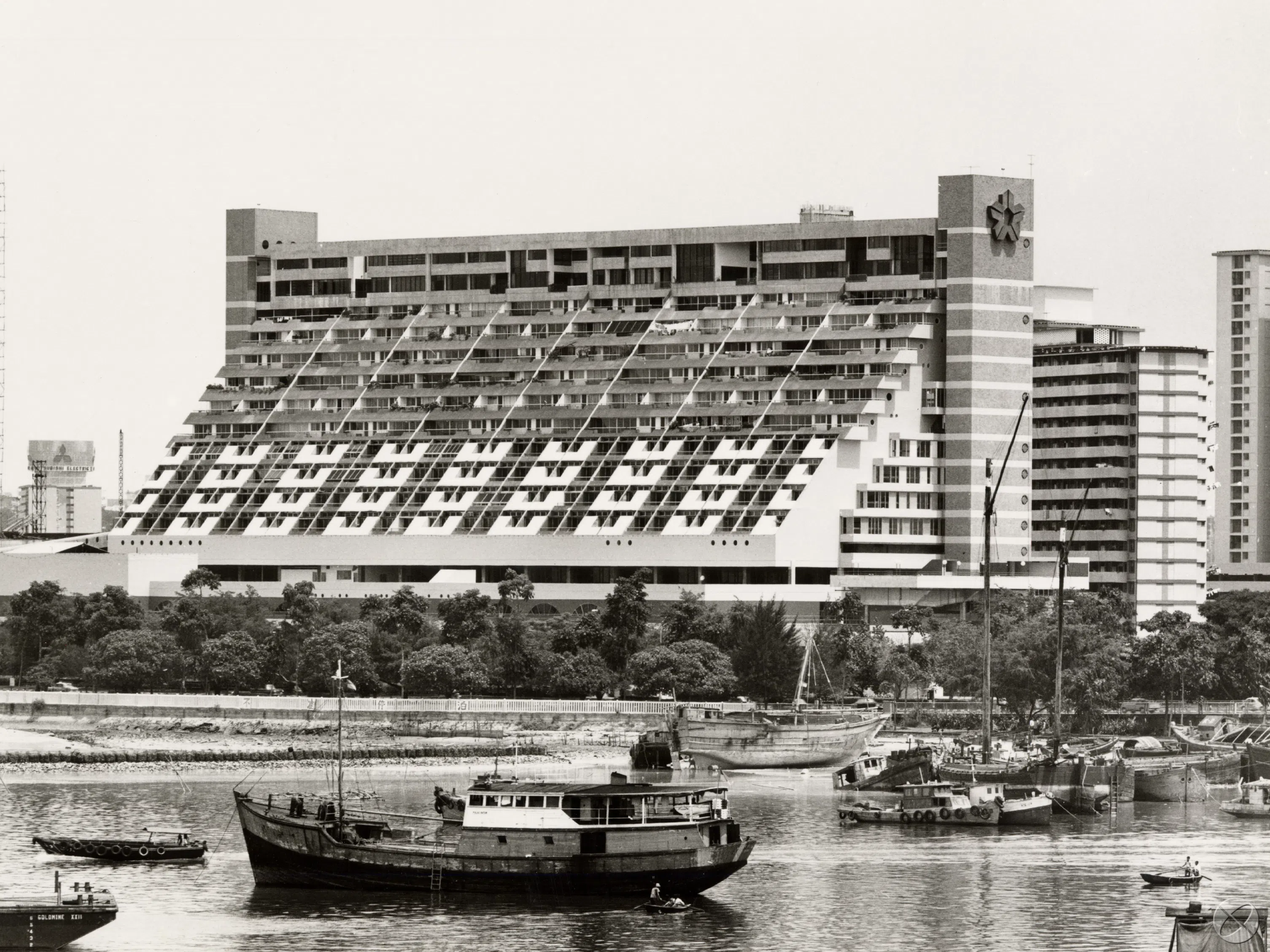
Sold in 1967 under the nation’s first Sale of Sites programme and completed in 1973, GMC was conceived as Singapore was defining its own future as a newly independent nation. Unlike many conserved landmarks, GMC is a homegrown creation, born of the nation’s own ambitions.
The building’s dramatic terraced floor slabs, slanted beams, towering columns, floating staircases and distinctive oculus windows established it as an icon of modern tropical architecture.
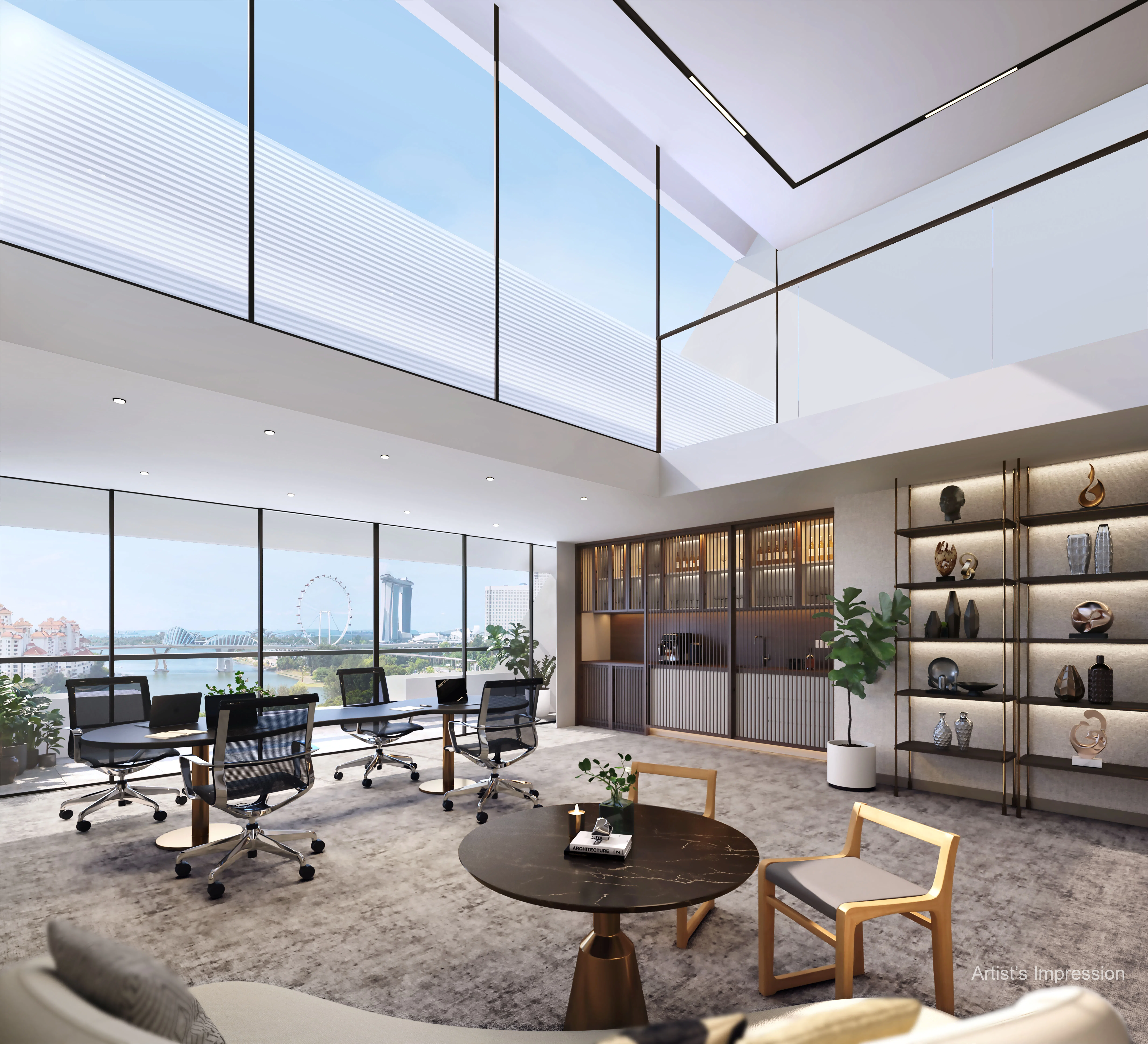
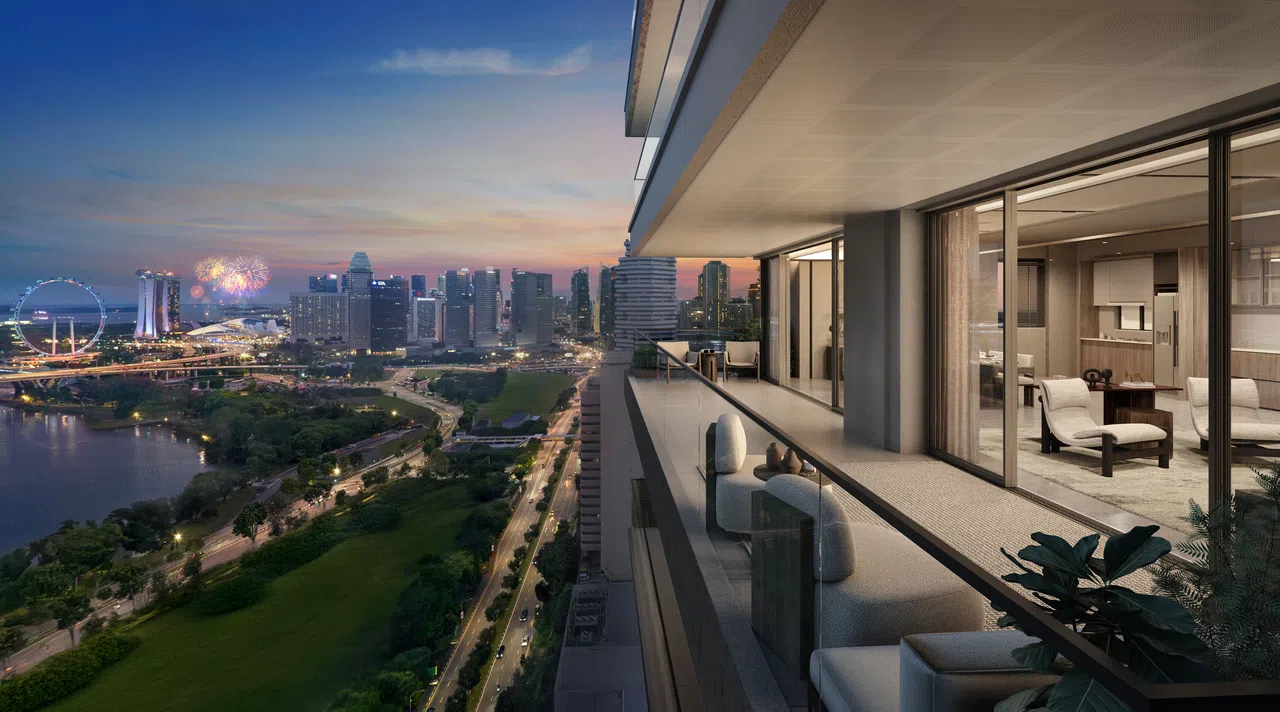
The Golden Mile retains these defining architectural elements while introducing a new commercial extension above the conserved structure. Aurea rises alongside as a contemporary 188-unit residential tower connected by an elevated bridge, while former residential apartments within the conserved building will be transformed into distinctive Loft and Enterprise offices.
As Seah Chee Huang, chief executive officer of DP Architects observes, “The goal was never to choose between heritage and function. It was to strike the most meaningful balance between celebrating the building’s unique cultural legacy and adapting it for the future, with greater connectivity, usability and liveability for generations to come.”
For Marc Boey, Far East Organization’s executive director for property services division, that balance lies at the heart of meaningful conservation.
“Conservation is not the easier path, it never has been,” Boey says. “When GMC came to market, we saw an opportunity to demonstrate that a building of this architectural and historical weight – one of Singapore’s most significant post-independence buildings, could be given a future as bold as its past, so that new generations of users can live, work and find inspiration within it.”
Conservation, then, is also a leadership model for navigating change without losing what makes a place distinctive. Perennial Holdings and Far East Organization share that same conviction: that heritage assets can remain commercially vibrant while retaining their architectural and cultural significance.
“Every conservation project is unique, imparting distinct wisdom and insights, unmatched by the last,” says Pua Seck Guan, Perennial Holdings’ executive chairman and chief executive officer.
“Transforming the historic GMC is in a category of its own. We are creating a modern commercial hub with medical suites, strata offices and a retail mix tailored to Beach Road’s unique culture, all while paying homage to its legacy as a brutalist landmark and Singapore’s original pioneer of the integrated ‘Live, Work, Play’ concept. There is no precedent for what we are doing here. That is precisely why it matters.”
This extends to how the building will serve the public. As part of the URA’s Community/Sports Facilities Scheme, an Architecture Centre within The Golden Mile will showcase Singapore’s past, present and future, fostering public appreciation for the nation’s design legacy.
GMS’s significance also extends to the wider urban fabric, as the Beach Road Urban Corridor evolves alongside new neighbourhoods at Tanjong Rhu and Marina East, and the rejuvenation of the Kallang River reshapes the eastern gateway to the city.
Conservation leadership is not defined by a single bold decision but by decades of experience, sound judgement and the willingness to embrace complexity. It is the foundation on which GMS stands today.
Re-inventing Live-Work-Play
GOLDEN Mile Complex invented live-work-play in 1973. The original concept is further transforming the city half a century later.
Aurea: The Residential Component Reimagined ■ Prestige Collection: 2 to 3-bedroom. City views. ■ Signature Collection: 4-bedroom. Private lift. Bay-view balconies. ■ Sky Villa Collection: 5-bedroom residences, 6-bedroom duplex & triplex penthouses. Private lift. Panoramic bay or urban skyline view. ■ Infinity pools. Sky Gym. Dining facilities. Across 3 floors. ■ Elevated link bridge at level 2 to The Golden Mile.
The Golden Mile: Commercial Spaces Reinvented ■ Premium Offices: Single & double-floor. Garden or atrium views. ■ Loft Offices: Double-height ceilings. Bay view balconies. ■ Enterprise & Crown Offices: High floors. Panoramic views. ■ Medical Suites: Boutique and large-scale practices. Ensuite washrooms. Layouts support clinical synergy. ■ Retail: Curated F&B & retail mix. Light-filled atrium. Amphitheatre-style event space.

Share with us your feedback on BT's products and services
TRENDING NOW

Once staunchly pro-China, Malaysian Chinese businesses are now distancing themselves from Beijing

Looking beyond looming CEO succession, should UOB potentially pursue a transformative merger?

Could stablecoins be the future of money?

Grab CEO’s wife Chloe Tong on life with Anthony Tan and finding her purpose

