

CWT turns to AI for its next growth chapter
Home-grown logistics provider is building a smarter, more resilient global business
ORIGINALLY set up to serve Singapore’s container ports, integrated logistics provider CWT has come a long way from its initial business scope.
Since the 1970s, it has expanded its global footprint to include wine and coffee storage, property and vehicle maintenance, financial brokerage services, and even commodity marketing as well.
No stranger to business transformation, CWT, whose parent company is listed in Hong Kong, is now tapping into new digital opportunities such as artificial intelligence (AI) to fuel its journey into the future.
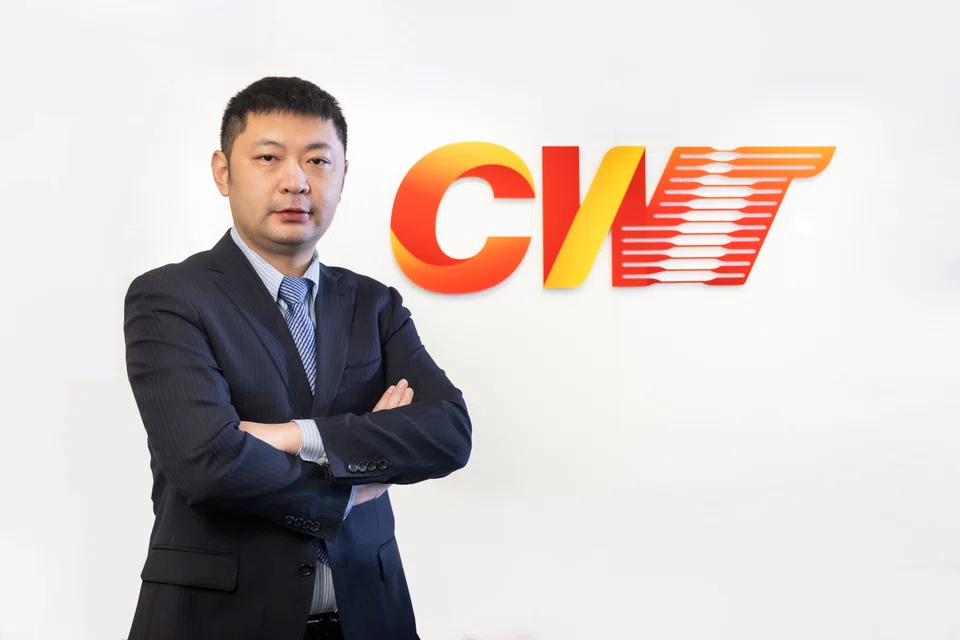
“CWT’s journey demonstrates how a legacy enterprise can continue to evolve by combining deep industry expertise with new capabilities,” says executive chairman and group chief executive Michael Wang, adding that sets the group up for long-term growth.
Pointing to CWT’s decades of investment in infrastructure, operations, and diversification, Wang notes: “CWT has consistently evolved in response to changing market conditions.”
Indeed, he sees an ongoing emphasis on technological innovation at the company as in line with these earlier strategic growth decisions: “Today, the focus is on harnessing data, AI, and digital capabilities to improve decision-making and operational performance.”
Tapping tech to stay smart
Intelligent use of technology is baked into CWT’s groupwide operations and processes.
“Businesses must navigate increasing complexity, rising customer expectations, and growing pressure to improve productivity and responsiveness,” says Wang. “As a result, the next phase of innovation is increasingly focused on intelligence rather than infrastructure alone.”
For example, CWT’s commodity marketing unit has an information monitoring system that can detect early signals of mine developments and closures to guide strategic decisions.
Similarly, the financial services business uses automated risk management systems to watch margin requirements and generate alerts, and the engineering services division deploys smart facilities management for predictive maintenance of equipment with minimal downtime.
CWT launched a dedicated office in June to combine AI with other technology capabilities. Its wholly owned subsidiary Prism AI Studio aims to build a “scalable and modular AI platform” to develop intelligent business solutions for groupwide implementation.
“Our AI strategy is focused on using data and automation to improve visibility, efficiency, and decision-making across our operations,” Wang tells The Business Times. The aim is “a more connected and responsive platform” to support customers and enable global trade.
CWT has begun developing in-house AI solutions for practical business applications – to improve operational workflows, enhance decision-making, and boost productivity.
It plans to tap AI for low-value and repetitive tasks, allowing manpower to be shifted towards roles such as client engagement, market analysis and strategic planning.
For instance, freight forwarding tenders traditionally require teams to manually review shipment requirements, check capacity, compare pricing options, and put together proposals.
But the Singapore headquarters is pioneering the use of AI for faster and more consistent responses in the process, with this technology to be eventually rolled out at its regional offices too.
Prism AI is working with the freight logistics business to create a flagship pricing solution that can tackle challenges like volatile market cycles and help staff focus on strategy. The initiative has seen “measurable early-stage results”, according to a bourse filing from CWT.
AI technology is also being used to analyse routes, truck movements, and driver behaviour, which helps CWT optimise its inland fleet operations and asset utilisation.
Indeed, the logistics sector has come under stress from geopolitical events in recent years.
Tariffs imposed by the United States hit global cargo volumes and supply chains hard. The global industry has also seen serious disruption from conflict in the Middle East, as attacks in the Red Sea increase transit times by forcing carriers to take alternative routes, even as tensions in the Strait of Hormuz create fuel price uncertainty and push up shipping costs.
When asked how CWT is responding to this volatile business climate, Wang says that “it’s about building capabilities that keep us resilient through different types of disruption”.
“We continue to invest in our global network, supply chain visibility, and operational flexibility,” he tells BT, noting that tech solutions such as digital freight management and real-time shipment tracking play a key role in improving efficiency and reacting to changing conditions.
The goal of the ongoing push for digitalisation “is not simply automation, but enabling smarter operations, faster decisions, and better customer outcomes”, Wang adds.
While infrastructure and scale have long been crucial to maintaining a business advantage for CWT, he says that “future competitiveness increasingly depends on data, technology, and the ability to respond quickly to changing market conditions”.
Innovating for change
Cutting-edge tech is in line with the company’s ethos of standing out through innovation.
Founded in 1970 as part of the then Port of Singapore Authority, CWT has since undergone several ownership changes while continuing to evolve.
In 2025, it reported a full-year net profit of HK$405.99 million (S$65.9 million) on revenue of HK$46.6 billion.
Over time, the group has built up industry expertise while acquiring an engineering business that maintains facilities and vehicles, as well as provides design-and-build solutions for logistics properties.
According to Wang, CWT has nurtured a reputation for solving practical business challenges – such as ramp-up warehouses and other large-scale logistics infrastructure that is engineered to help its customers maximise operational efficiency in land-scarce Singapore.
TransHub, which opened in 2014, is a multimodal transport hub that allows hauliers to consolidate operations at a centralised facility, with features such as a high-density vertical chassis parking system to enhance fleet productivity and industry efficiency.
Meanwhile, the 2.4-million-sq-ft Mega Logistics Hub in Jalan Buroh, which boasts an automated container storage and retrieval system, serves as its flagship logistics property.
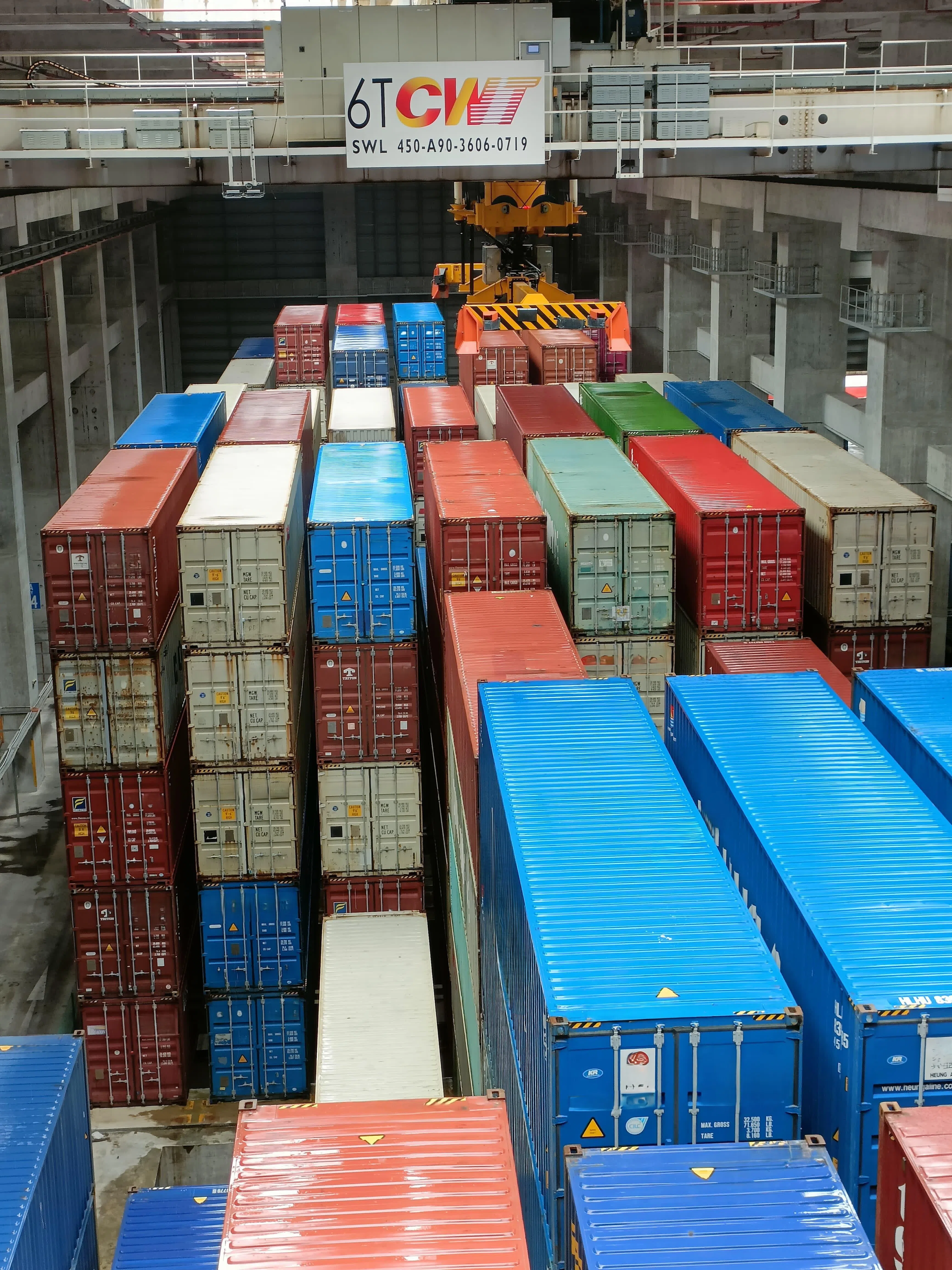
The integrated warehouse and container depot facility, which incorporates rooftop solar panels into its design, combines warehousing and container storage in one location to optimise operational efficiency.
CWT’s logistics assets support its broad logistics capabilities, with its core logistics services pillar spanning warehousing and integrated logistics, commodity logistics, and freight logistics.
These include Singapore Wine Vault, a specialised wine storage facility that boosts CWT’s access to a niche market while also housing other cold chain operations for the food industry.
The group also entered the financial services sector in 2010 with its trading and brokerage arm Straits Financial, and expanded into commodities marketing the next year, when it acquired MRI Trading, which deals in copper, other base metal concentrates, and energy products.
Observes Wang: “Together, these businesses create a diversified platform supporting customers across multiple stages of the global trade value chain.”
From supporting the Republic’s warehousing container shipping terminal needs at the outset, CWT has grown with Singapore’s trade networks to achieve a worldwide business presence.
Mainland China is already a key market for the group, contributing to more than 69 per cent of the top line in 2025. CWT has set its sights on commodities marketing and freight forwarding logistics business opportunities at the newly opened Hainan Free Trade Port.
At the same time, CWT also does business throughout the Asia-Pacific region, as well as in Europe, North and South America, and Africa.
Freight logistics saw strength in Asian trade to the Middle East and Latin America in 2025, while expansion in Africa and South-east Asia is a key focus for commodity marketing.
In its latest outlook statement, CWT named deeper internal synergy, network expansion, and growth opportunities in China and elsewhere as avenues of interest for the business.
“Our businesses complement one another in supporting global trade. We move goods and resources, enable capital flows, and maintain infrastructure,” Wang tells BT.
“We are focused on building a leading global trade and supply chain platform, and we are investing in our network, technology, and capabilities to support that growth while continuing to add value to our stakeholders.”
With operations across six continents, he views the group as having “a truly international presence” that offers integrated solutions across markets and industries.
Emphasising that CWT “has repeatedly adapted to new realities” since its inception, he concludes: “Our current focus on AI and digitalisation is not a standalone transformation initiative, but the latest chapter in a much longer journey.”

Share with us your feedback on BT's products and services
TRENDING NOW

Once staunchly pro-China, Malaysian Chinese businesses are now distancing themselves from Beijing

Looking beyond looming CEO succession, should UOB potentially pursue a transformative merger?

Could stablecoins be the future of money?

Grab CEO’s wife Chloe Tong on life with Anthony Tan and finding her purpose

