

A legacy secured, a future ignited
Hi-P International went from near-bankruptcy to S$2 billion in annual revenue; visionary founder Yao Hsiao Tung now banks on the Artificial Intelligence of Things in pursuit of a S$50 billion dream
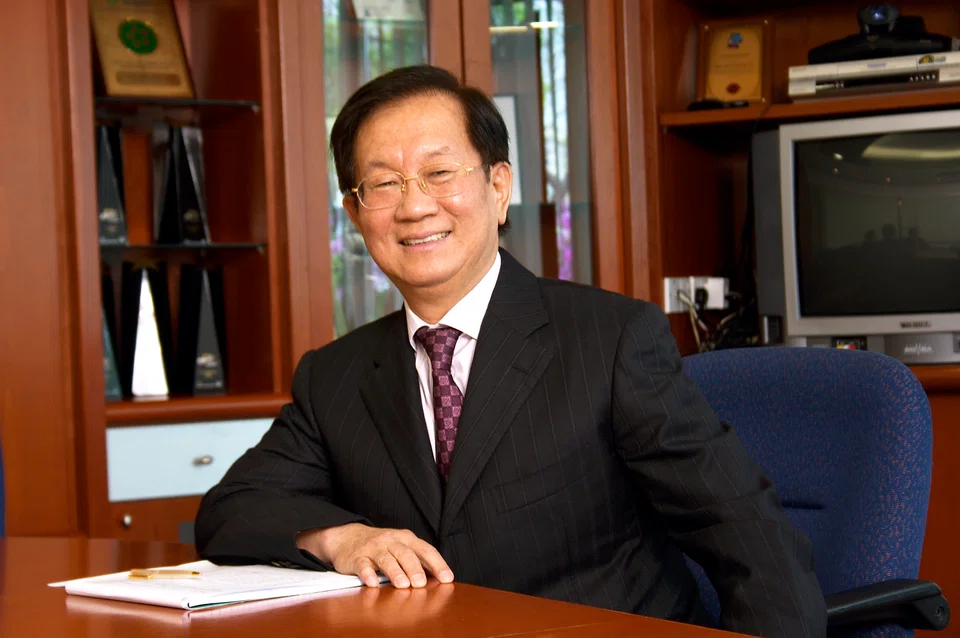
IN THE fast-paced, ever-evolving landscape of global technology and manufacturing, maintaining the status quo is simply not an option.
For Hi-P International, a leading contract manufacturer, the imperative to innovate is not merely a business strategy – it is a founding philosophy.
With S$2 billion in revenue and a blue-chip clientele that includes Amazon, Meta Platforms, Colgate-Palmolive, Dyson, Keurig, Procter & Gamble, and Logitech, Hi-P has already achieved what many manufacturers only aspire to.
Yet for Yao Hsiao Tung, the visionary founder and executive chairman of the Singapore-headquartered group, these milestones are stepping stones, not destinations.
At 86, Yao’s ambition burns as brightly as ever. He is now firmly focused on the next frontier: the Artificial Intelligence of Things (AIoT).
Forged in the fire of adversity
Today’s billion-dollar success stands in stark contrast to Hi-P’s early years.
When the company was founded as Hi-P Tool & Die in 1980 with a team of just six, it was not a story of overnight success – it was a story of survival.
Yao had arrived in Singapore a year earlier, posted from Taiwan by his employer DuPont as a technical support manager. Sensing an opportunity in the city-state’s thriving manufacturing scene, he joined several fellow Taiwanese as a sleeping partner in the new venture.
The venture, which manufactured moulds for plastic components, had been set up to capitalise on Singapore’s booming manufacturing scene after Yao observed multinational corporations like General Electric and Philips setting up factories in the city-state.
“Hi-P” stands for “high-precision” in short. Its Chinese name, transliterated as “He Bi”, is the abbreviation of “xian he wu bi”, or “unparalleled super-eminence” in meaning.
The early years were brutal for Hi-P, however.
Profitability proved elusive, and the business struggled to gain traction.
Three years after its founding, the partners tasked Yao to turn around the floundering company.
It was a pivotal moment.
Giving up a stable position at a US conglomerate – along with a monthly salary of S$6,000, a housing allowance, and a company car – he threw himself into the challenge at the age of 43.
What followed was a gruelling test of his resolve.
Hi-P remained deep in the red, burdened by bad debts over the next five years. It was battered further by Singapore’s first post-independence recession in 1985.
At its lowest point, even the utilities provider threatened to cut off the company’s power supply.
Yao was the only one holding the fort after all his partners exited the sinking ship.
Determined to see it through, he says: “I never thought of calling it quits unless and until the creditors wound up Hi-P.”
Hi-P’s big break came when Molex threw it a financial lifeline. The American electronic component manufacturer had taken note of the exceptional quality of Hi-P’s moulds and the depth of its manufacturing capabilities.
Impressed by what it saw, Molex invested S$140,000 for a 35 per cent stake in the company – a lifeline that would change everything. It also became a key customer as well.
Hi-P’s fortunes took a dramatic turn for the better from then. Revenue increased exponentially – by 10-fold every seven years – surging from S$1 million in 1987 to S$10 million in 1994, S$100 million in 2001, and soaring past S$1 billion in 2008.
Yao had engineered this trajectory with precision, targeting a 40 per cent annual increase in turnover to sustain the momentum.
Starting as a producer of plastic mould components, the company broadened its capabilities over the years until it was manufacturing complete products from scratch for half of its customers.
The value it delivered rose in tandem.
Igniting the next wave: the AIoT revolution
With Hi-P’s legacy firmly established, Yao is now focused on writing the next chapter – and he believes AIoT will be its defining theme.
AIoT brings together artificial intelligence and the Internet of Things (IoT) to produce intelligent, interconnected systems that do far more than collect data.
This capability empowers IoT devices – such as sensors and cameras – to move beyond mere data collection, utilising AI algorithms to autonomously make decisions, automate tasks, and optimise processes.
It is a technological leap that is reshaping industries, and Hi-P intends to be at its forefront.
While Yao acknowledges the challenges it brings, he believes the strategic pivot toward AI and AIoT will propel Hi-P to new heights.
For the company, this is not merely a technological trend to observe from the sidelines. It is an arena in which it is uniquely equipped to compete. Yao points to its renowned high-quality precision moulding and its mastery of system flow as its edges.
“Hence, we should play to our strengths,” he says.
The Meta AI glasses offer a vivid illustration of Hi-P’s capabilities.
Hi-P’s injection moulding expertise underpins the frames of this cutting-edge wearable, produced by Meta Platforms – the parent company of Facebook, Instagram, and WhatsApp.
The glasses bring together built-in cameras, open-ear audio, and artificial intelligence to enable hands-free media capture, seamless communication, and real-time visual assistance.
Investing in tomorrow
To accelerate its AIoT ambitions, Hi-P is committing significant resources to research and development. A dedicated AI-focused R&D team will be established in the United States, enabling closer collaboration with its major customers.
A new R&D centre in Singapore will anchor the group’s innovation efforts closer to home.
Yao recognises that this level of investment demands substantial support, and he is calling on the Singapore government to play a more active role – through targeted AI R&D grants and support for foreign talent acquisition.
The benefits, he argues, would extend well beyond Hi-P, energising the broader local manufacturing and technology
ecosystem and reinforcing Singapore’s standing as a global innovation hub.
Hi-P’s strategy also extends to building out its own portfolio of AI-related components – connectors, relays, switches, sensors, antennas, and cooling systems – to deepen its value to customers and strengthen long-term relationships.
Acquiring minority stakes in R&D-intensive companies is another avenue being actively explored, offering access to new capabilities and strategic partnerships.
Smart factory of the future
No aspect of its business is spared from the AI transformation.
The company plans to scale up AI-aided automation across its production facilities, evolving them into smarter, more efficient factories capable of meeting the demands of next-generation manufacturing.
However, technology is only part of the equation.
Speed, agility, and operational discipline are equally vital. Hi-P strives to respond swiftly to market trends and bring products to market faster than its competitors.
And in an industry where margins are hard-won, staying lean is non-negotiable.
“You just can’t have redundant staff; no one is going to pay for that for you,” Yao says.
A legacy of greatness
“Hi-P is not for sale,” Yao says without hesitation, “although I could easily sell it for S$2.5 billion or S$3 billion”.
The company he built from nothing, steered through near-collapse, and bloomed into a global force is not a transaction to be completed.
It is a legacy to be continued.
“I want to leave behind a legacy,” declares Yao, who was named Businessman of the Year 2023 in an award organised by The Business Times and DHL – recognition of his outstanding leadership and achievement.
His vision is for Hi-P to endure well beyond his own tenure, flourishing into its 100th year and beyond.
For now, it is laser-focused on at least quintupling its turnover to S$10 billion or more by 2030, the year it will commemorate the 50th anniversary of its inception.
However, that milestone is merely the floor to Yao.
“We want to achieve S$50 billion in revenue eventually. That’s truly greatness,” he says – words that carry the full weight of a man who has spent five decades proving that the most audacious ambitions are the ones most worth pursuing.
For Hi-P International, the legacy is not a chapter that has been written. It is one that is still being created.

Share with us your feedback on BT's products and services
TRENDING NOW

Grab CEO’s wife Chloe Tong on life with Anthony Tan and finding her purpose

He built the Vingroup empire. Now South-east Asia’s richest man is handing some key roles to his sons

Singapore’s S$80 million vertical farm must pass the 50-cent test to succeed
Data centre energy demand from Asean telcos not a ‘big risk’, says industry group

