

Wealth advice is becoming more human, not less
AI alone was never going to be enough. Citibank Singapore is investing in both

MORE information was supposed to make wealth clients feel more certain. For a lot of them, it’s done the opposite. Markets move faster than they used to. Headlines contradict each other within the same news cycle. And there is more data available now than one person can take in. More data does not mean a better decision.
What clients are asking for, in nearly every conversation Citibank Singapore has with its wealthiest clients, is clarity. Not another dashboard. Not another report to skim before bed. Someone who can look at everything happening in a client’s financial life and cut through the clutter, and tell them plainly what it means for them and their family.
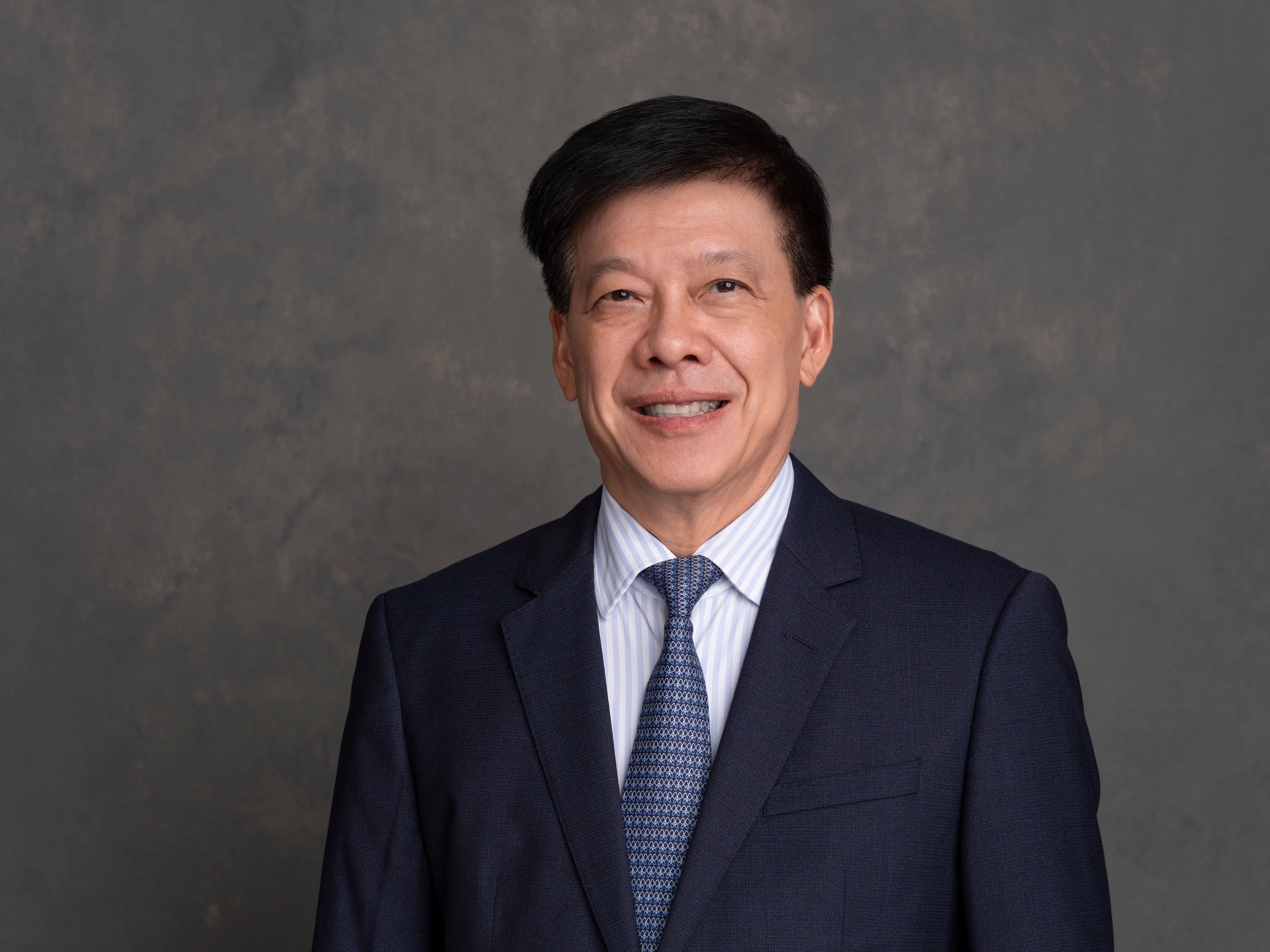
“Today, most clients come into a meeting having already consulted an AI tool or consumed a significant amount of information online. That’s a positive development because they’re leveraging technology to help them analyse more information,” says Yeo Wenxian, Citi’s head of wealth for Asia South and Citibank Singapore CEO. “But wealth decisions are rarely about information alone. Often, the real question may not be the one being asked, but uncovering the main concern behind it. AI can help us process information at scale, but understanding context, exercising judgement and building trust remain fundamentally human. The role of AI in wealth management is to enable our people to deliver deeper advice, better conversations and more meaningful outcomes for our clients.”

This synergy is at the core of Citibank Singapore’s approach, delivering the power of a global financial institution, offering market-leading research, access, and capabilities, without sacrificing the human-led understanding essential for bespoke wealth management service.
AI is central to how Citibank Singapore’s wealth management business operates and delivers for its clients. It’s not a nice-to-have or a pilot project. It can surface a pattern across a portfolio that would have taken hours to spot by hand, pull together research in seconds instead of days, and flag something worth a closer look while there’s still time to act on it.
But the bank is equally clear about AI’s role in the wealth conversation. Wealth decisions are rarely just financial. For many of Citibank Singapore’s wealth clients, a single family might run a business in Singapore, hold property in another country, and have ambitions for the next generation that stretch across several markets at once.
A growth plan in one country affects tax exposure in another, and a long-term ambition in a third market needs its own careful groundwork. These decisions often involve multiple generations, competing priorities, and different regulatory and tax regimes. AI can quickly surface information and model different scenarios, but deciding which path best serves what a family is actually building toward still depends on understanding the people behind the numbers.
Where the investment really goes
Between July and September this year alone, Citibank Singapore has committed 2,600 hours to training every client-facing employee. The training is delivered by people. This investment reflects a broader shift in wealth management. Technical expertise is increasingly expected. What distinguishes an adviser is the ability to navigate emotionally charged conversations, whether it’s helping a family align on a long-term ambition, preparing the next generation to take on more responsibility, or recognising when concerns about markets are really concerns about protecting what a family has spent years building. Those conversations can’t be reduced to prompts or algorithms.
Every Citibank Singapore person on the phone or in the room matters as much as the one giving investment advice. The training is workshop-based and delivered through a train-the-trainer model. The programme, “Client First, Building Trust Through Empathy”, is built around Citibank Singapore’s H.E.A.R.T. framework, Hear, Empathise, Acknowledge, Resolve and Track, giving staff a structured approach to handling difficult conversations while building trust with clients. It teaches advisers to notice what a client’s ambitions really are, and know when to slow down a decision instead of speeding it up.
“We could have chosen to compete purely on speed once the AI was in place,” Yeo says. “We chose not to. If anything, the AI raised the bar on what we ask of our people, because clients can get speed anywhere now. What they can’t get anywhere else is someone trained to notice what a client isn’t saying. That’s not a soft skill. That’s the actual advice. So we invest in teaching it deliberately, at real scale, the same way we’d invest in any other capability.”
That philosophy shapes how Citibank Singapore develops AI. Rather than replacing conversations with technology, the bank focuses on removing repetitive tasks that distract advisers from clients. Every tool is aimed at automating the work machines do well, so people can spend more time on the work only people can do. AI is used across the business, in the tools client advisers and market managers use, in how new products and platforms get built, and in the real-time intelligence put directly in front of frontline staff who deal with clients every day. Among these, four show what this looks like for the people who use them every day.
“AI can process a portfolio in seconds. But it can’t sense when a client goes quiet because they’re worried, or know when to slow down because they need a moment before they’re ready to talk numbers,” says Edmond Ng, head, Asia South client advisory, Citigold Private Client & Citigold. “Wealth is deeply personal. Often, the most important conversations touch on things clients may not even have shared with their own families. That takes empathy, patience and trust and an adviser who genuinely cares and understands the person behind the portfolio. AI can enhance the advice we provide, but it cannot and will not replace the human connection.”
This is the seamless integration that sets Citibank Singapore apart, where the power of a global bank is delivered with the heart of a personal adviser.
Smarter tools for advisers and market managers
A market manager overseeing a large book of client portfolios used to find out about a problem after it had already grown. An AI-powered dashboard now surfaces performance across asset gathering, asset allocation and asset management as it happens, flagging what needs attention while there’s still room to act. An underperforming team or a missed opportunity shows up this quarter, not at the next review, by which point the moment to help a client has already passed. Managers overseeing dozens of client relationships at once can now see, exactly where their attention is needed most.
An AI-guided offer simulator changes the conversation itself, not just how long it takes to prepare for one. Client advisers can model different ways to structure a client offer, testing fund combinations, investment amounts and existing assets against each other, and walk into a meeting already knowing which option genuinely fits that client, rather than working it out at the table while the client waits. The conversation stays on the client’s goals instead of drifting into the arithmetic behind the proposal. For a client, that shift is easy to feel even if they never see the tool behind it because the adviser across the table already has an answer instead of building one on the spot.
Real-time intelligence for the frontline
“AskWealth” changes what a frontline conversation feels like from the client’s side of the table. A conversational assistant delivering instant answers to service teams, advisers and managers across the wealth ecosystem, “AskWealth” enables staff to stay in a client conversation while gettiing answers, instead of stepping out to find the information. It’s already running across teams in Singapore, Hong Kong and the UAE, supporting more than 1,100 frontline staff a day, answering in an average of five seconds regardless of the language the conversation is happening in.
A real-time voice AI tool solves a different problem of what gets lost between one conversation and the next. It transcribes client conversations as they happen, in English, Mandarin, Cantonese and Arabic, and produces a summary of what was discussed and what needs to happen next. Advisers spend less time on paperwork after a call and more time actually present for the next one. It also means a client doesn’t have to repeat themselves if their case gets picked up by a different colleague down the line, the context travels with them.
None of this is about the tools themselves. It’s about what a client feels on the other end. A digital experience, product update or phone call arrives faster and fits their situation more precisely, without ever having to see the engineering underneath it.
All of it comes back to the same idea. Clients don’t need more information thrown at them faster. They need someone who can cut through the noise and clutter and tell them what matters, and that still takes a person, not just a model.
“Fifty years from now, nobody will remember which dashboard we used,” Yeo says. “What clients will remember is whether we got the big decisions right, and whether someone was actually listening when it mattered. That’s the bet we’re making. Not AI instead of people. Both, because our clients deserve both.”

Share with us your feedback on BT's products and services
TRENDING NOW

Once staunchly pro-China, Malaysian Chinese businesses are now distancing themselves from Beijing

Looking beyond looming CEO succession, should UOB potentially pursue a transformative merger?

Could stablecoins be the future of money?

Grab CEO’s wife Chloe Tong on life with Anthony Tan and finding her purpose

