Budget 2023: Singapore expects second straight deficit, narrowing to S$0.4b in FY23

- Budget’s S$10.2 billion basic deficit reflects expansionary stance
- Government also plans to reduce size of the Contingencies Funds via a Constitutional amendment
THE Budget for the 2023 financial year is expected to run Singapore’s second consecutive deficit as the government shifts from dealing with the pandemic to addressing concerns about the cost of living and global uncertainties.
It also marks the sixth planned deficit in consecutive years – with the last planned surplus being in FY2017.
This is as FY2021’s actual fiscal position recorded a S$1.9 billion surplus, rather than the revised estimate of a S$5 billion deficit that was previously reported.
For the 2023 financial year beginning April 1, the Budget’s overall fiscal deficit – which represents the Budget’s cash and non-cash impact on Singapore’s reserves – is estimated at S$0.4 billion, or about 0.1 per cent of gross domestic product.
This includes the non-cash addition – or capitalisation – of S$3.5 billion from the value of newly built significant infrastructure under constitutional rules, as well as the removal of interests costs and loan expenses amounting to S$0.3 billion to facilitate borrowing for these builds.
Operating revenue for FY2023 is expected to be S$96.7 billion, 7.1 per cent higher than FY2022’s revised S$90.3 billion of takings. The goods and services tax (GST) – which was increased to 8 per cent from 7 per cent at the start of 2023 – is expected to bring in S$17.4 billion in revenue in FY2023, up 20.2 per cent from FY2022.
Net investment returns contribution (NIRC) from Singapore’s invested reserves – capped at 50 per cent of long-term returns – for the year is estimated to be S$23.5 billion, up 8.7 per cent from the previous year.
Total expenditure is expected to come in at S$104.1 billion, 2.6 per cent or S$2.8 billion less than the S$107 billion spent in FY2022.
Social development spending will continue to rise, edging up 0.7 per cent from FY2022 to S$52.8 billion in FY2023, and remains the largest part of expenditure, at 50.7 per cent.
Allocation for education will increase by 10.2 per cent to S$14.6 billion, on the back of salary revisions, the resumption of school activities post-Covid, and improvements to the quality of education.
This will be partially offset by reduced spending by the Ministry of Culture, Community and Youth (MCCY), which expects to cut expenditure by 40.5 per cent to S$2.4 billion this year.
It will provide lower grants to Sport Singapore this year, as the termination sum for the Singapore Sports Hub – about S$1.4 billion in total, as MCCY minister Edwin Tong told Parliament earlier this month – that was spent in FY2022 was a one-off.
Healthcare spending, which remains the key contributor to social development expenditure, will also fall 1.9 per cent to S$16.9 billion.
Economic development spending will shrink 19.7 per cent to S$20.6 billion as Covid-19 expenditure tapers off. Manpower spending in this sector is slated to drop 56.4 per cent to S$2 billion as the Jobs Growth Incentive ends in March 2023.
The Budget will also include S$19.6 billion of special transfers – one-off initiatives by the government to businesses and households and top-ups to endowments and trust funds for specific objectives.
Excluding the height of the pandemic in FY2020, this is the largest allocation for special transfers since at least FY2005, the earliest for which data is available.
The Budget’s basic deficit of S$10.2 billion reflects an expansionary stance that puts more into the Singapore economy than it takes out.
However, with the inclusion of contributions from invested reserves, the Budget’s overall balance – representing its cash impact on the country’s reserves before non-cash adjustments for newly built significant infrastructure – narrows to a deficit of S$3.6 billion.
Budget 2023’s fiscal position was “spot on” for OCBC chief economist Selena Ling’s forecast. It may be challenging to balance the budget for this term of government, even with hikes in taxes, such as those for higher-value property, luxury cars and tobacco, since the onus will fall on FY2024, she said.
Maybank economist Chua Hak Bin noted that the cumulative fiscal deficit for the first three years of the current five-year term of government is about S$11.7 billion.
Lower top-ups to endowments and trust funds may be recorded in FY2024 than in FY2023, he said, adding this year’s top-ups saw a marked increase from the preceding year, which was constrained by Covid-19 relief measures.
The actual 2023 Budget may turn in a small fiscal surplus, considering that revenue projections are “historically quite conservative”, he said.
Ling added that the government could introduce further hikes to income taxes (corporate or personal), wealth taxes or even GST – since 8 per cent or 9 per cent is still low relative to many other countries – to balance the Budget in this term. Alternatively, though these “are probably not preferred”, NIRC may be raised, or a capital gains tax could be introduced.
Chua said that, with the next general election due only by November 2025, “this existing five-year government term could span six Budgets (rather than five)“.
“All said, there could be more limited fiscal space for a generous ‘election’ budget in FY2025 compared to past election cycles.”
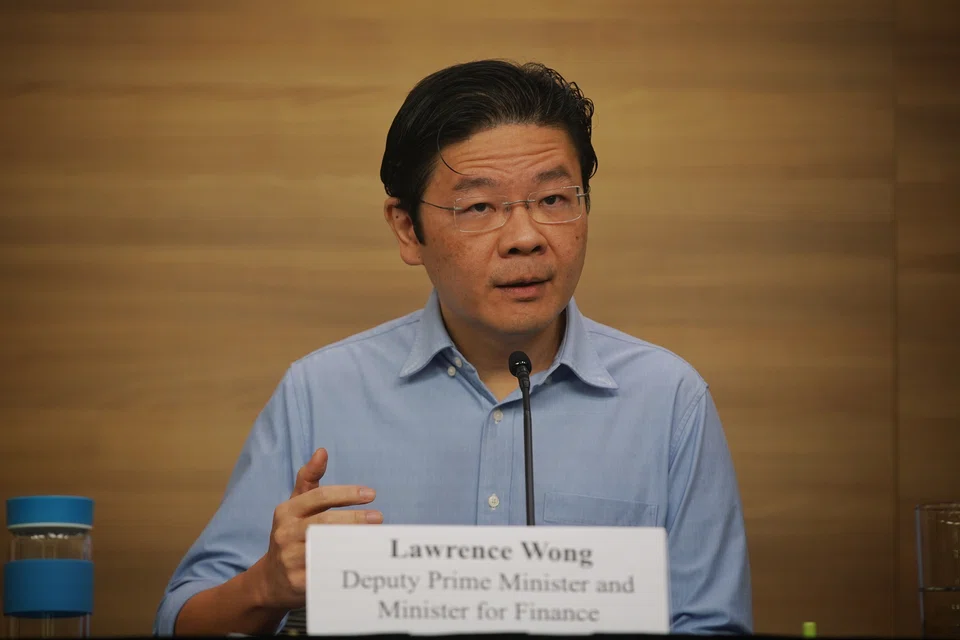
In his Budget speech on Tuesday (Feb 14), Finance Minister Lawrence Wong also said that the government now plans to reduce the balance of the Contingencies Funds to S$6 billion, after it was raised to S$16 billion from S$3 billion in May 2020, to meet any urgent and unforeseen need for funds due to the pandemic.
It will introduce a bill later this month to amend the Constitution and create a legal mechanism for this purpose.
“Our economy has recovered back to pre-Covid levels. But we continue to be in a tight fiscal position,” said Wong, adding that it is important to live within our means, contribute our fair share of revenues, and be good stewards of our reserves.