

Budget 2025 likely to invest in keeping workforce competitive, attracting talent: observers
They believe that while Singapore may aim to woo expatriates, it is unlikely to loosen its broader foreign worker policy
AS DOWNSIDE economic risks loom, manpower-related moves in Budget 2025 should aim to keep Singapore attractive to foreign talent, while boosting skills and wages of local employees, watchers told The Business Times.
Prime Minister and Finance Minister Lawrence Wong has said that training, skills and jobs will be a major theme of Budget 2025 – a stated priority which “goes beyond simply addressing unemployment”, said OCBC chief economist Selena Ling.
Employers expect better access to manpower and support for wages and training, while workers are concerned about job security and wage growth, she said.
Budget 2025 could offer “greater help to overcome wage volatility, especially during periods of involuntary unemployment”, and make artificial intelligence (AI)-related training more accessible, she suggested.
Open to the world
Adrian Sham, an employer solutions partner at Grant Thornton, said the Budget “should pre-empt potential shifts in the global landscape” – not least as US President Donald Trump’s planned tariffs and tax breaks could slow global trade while making the US more attractive to global talent.
Singapore might thus need to improve its attractiveness to talent, who might enter on an Employment Pass (EP); the Tech.Pass for entrepreneurs and experts in technology-related roles; or the Overseas Networks and Expertise Pass for top talent.
To this end, expatriate tax breaks that were previously pared down could be reinstated, said Sham. To encourage top talent to put down roots, the government could also allow Central Provident Fund (CPF) contributions.
Budget 2025 could introduce more talent-facilitation schemes to attract in-demand specialists from overseas, suggested Deloitte Singapore business tax leader Rohan Solapurkar, and global investment and innovation incentives leader Yvaine Gan.
Eugenia Tay, a personal tax and global-mobility services partner at KPMG, suggested corporate tax breaks for companies that bring in overseas professionals, to encourage such postings.
Better access to niche foreign talent in fields with a local shortage, such as the green economy, would help firms plug skill gaps, she said. “Additionally, these overseas professionals can help develop local employees, contributing to workforce growth and expertise.”
More broadly, labour shortages remain a common complaint. Faizal Yahya, senior research fellow at the Institute of Policy Studies, said: “Businesses want the government to review labour market flexibility, including foreign worker quotas and work permit regulations, to address manpower challenges.”
Yet few observers expect a general loosening of policy. A higher salary threshold for new EP applicants just took effect on Jan 1, while the minimum qualifying salary for S Passes is being increased in stages.
Singapore had 202,400 EP holders in mid-2024, down 1.5 per cent from six months prior; the mid-skilled S Pass headcount fell 1.2 per cent to 176,400, going by the latest statistics.
This is a “stable” pool, said Terence Ho, an associate professor at the Singapore University of Social Sciences, who does not expect major changes to foreign workforce policy.
Care must be taken in this area, especially in an election year, said Singapore Management University law associate professor Eugene Tan. As immigration remains politically sensitive, the government is unlikely to relax Work Permit or S Pass quotas, he said.
Independent political observer Felix Tan expects neither tightening nor loosening of the foreign worker policy, saying: “The government will need to find the balance between attracting global talents and ensuring that Singaporeans get a fair chance to compete in a more competitive environment.”
Uplift for the bottom
While real incomes are rising and joblessness remains low, the domestic labour market may be cooling. Budget 2025 should continue to support the employability of lower-wage workers, suggested watchers.
Ling expects “sustained or even increased support for the low-wage workers, even though inflation is abating”.
The long-running Progressive Wage Model (PWM) – which sets salary floors for eligible resident workers in certain sectors and roles – has been having an impact, noted Prof Ho. The income gap narrowed further in 2024, with real incomes rising 4.6 per cent at the 20th percentile, outpacing the 3.4 per cent increase at the median.
“There is scope for the PWM to be expanded to more sectors, though this would depend on the progress of discussions among the tripartite partners,” he added.
Employers themselves could get help here, said Maybank economist Brian Lee.
The Progressive Wage Credit Scheme co-funds wage rises, but its support level is set to taper to 30 per cent in 2025, from 50 per cent now. Lee said that Budget 2025 could cancel this planned taper, maintaining the support level at 50 per cent.
Ling proposed extensions for the Senior Employment Credit and Part-time Re-employment Grant, which cater to senior workers and are due to expire in 2025.
But as the payouts and income caps for the Workfare Income Supplement scheme – which provides cash and CPF top-ups for lower-wage workers – were raised just last year, an update to this scheme “may not come so soon”, said Prof Ho.
OCBC’s Ling, however, thinks that a change in 2024 may not preclude one in 2025 – at least for the Local Qualifying Salary (LQS). This is the minimum that locals must be paid to be included in calculations of their employer’s foreign worker allowances.
Last year, the LQS was raised to S$1,600, from S$1,400 before. One question for Budget 2025 is whether this will be raised further, said Ling.
Gaining skills
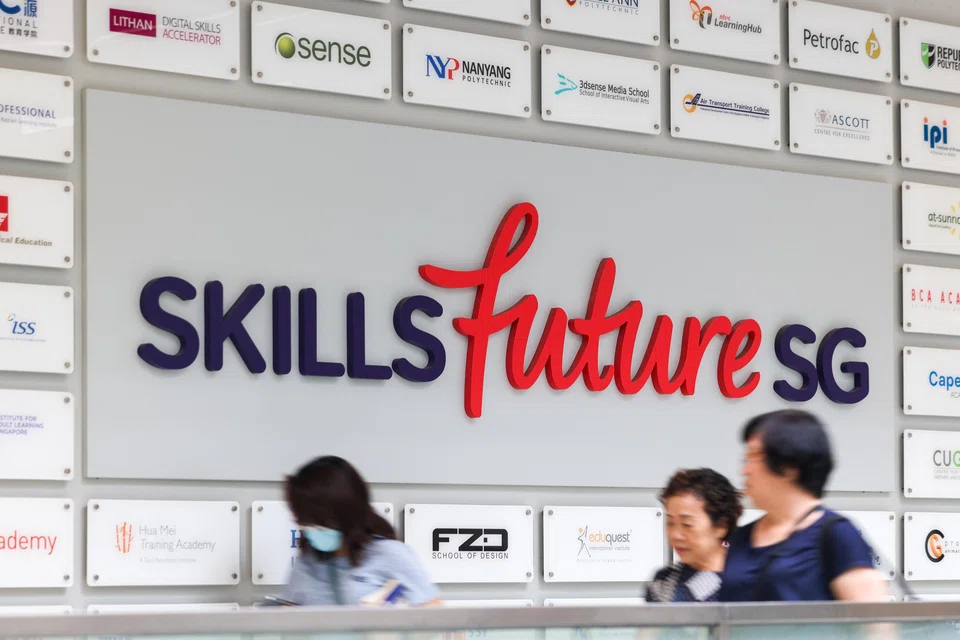
The new fiscal year will also see the start of the SkillsFuture Jobseeker Support scheme, which gives payouts to the involuntarily unemployed. Feedback received since the scheme was announced last year may push planners to make “further tweaks”, said Ling.
The scheme offers up to S$6,000 over six months, and assessing whether this is adequate will be key, she added.
More broadly, Budget 2025 should place a continued emphasis on helping mid-career workers to retrain or reskill, said Prof Ho, who is also deputy executive director at the Institute for Adult Learning.
Following Budget 2024’s SkillsFuture Level-Up Programme for mid-career workers, Prof Ho expects Budget 2025 to focus on “encouraging take-up of training and utilisation of skills acquired in the workplace”.
Lee Chew Chiat, government and public services industry leader at Deloitte, proposed a tiered funding model in which more grants are given for training in high-demand or emerging fields, such as sector-specific AI applications.
Separately, graduates could benefit from “more practical programmes, such as apprenticeships or project-based work” in areas such as cybersecurity, said KPMG corporate transformation principal adviser Nicki Doble.
“Upskilling programmes like SkillsFuture could be steered towards providing broader access for greater impact, for example, through increased investments in key growth areas such as digital technologies and caregiving,” she added.
Tay from KPMG also suggested expanding programmes that let Singaporeans gain international experience, and granting tax credits for companies with training in fields such as AI and sustainable technology.
TRENDING NOW

Once staunchly pro-China, Malaysian Chinese businesses are now distancing themselves from Beijing

Looking beyond looming CEO succession, should UOB potentially pursue a transformative merger?

Could stablecoins be the future of money?

Grab CEO’s wife Chloe Tong on life with Anthony Tan and finding her purpose

