

Budget 2026: Merged statutory board Workforce and Skills Singapore to be formed in Q3
The merger recognises that the operating context has changed significantly since 2016, when SSG and WSG were formed

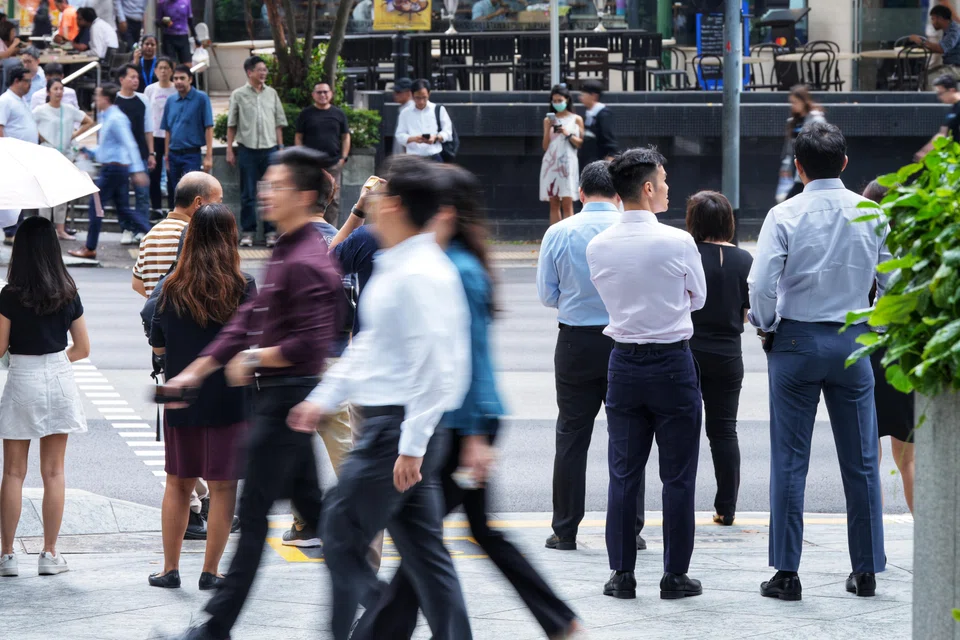
[SINGAPORE] The Republic’s new jobs and skills statutory board, Workforce and Skills Singapore (WSSG), will be set up in the third quarter of 2026, said Manpower Minister Tan See Leng at his ministry’s Committee of Supply debate in Parliament on Tuesday (Mar 3).
He was providing more details on the merger of SkillsFuture Singapore (SSG) and Workforce Singapore (WSG), which Finance Minister and Prime Minister Lawrence Wong had announced during the Budget. Dilys Boey, now the chief executive of WSG, will helm WSSG, Dr Tan said. It will be part of the Ministry of Manpower (MOM) and be jointly overseen with the Ministry of Education (MOE).
The ministry is “fundamentally reviewing” Singapore’s jobs and skills ecosystem, he said. He listed the new agency’s four goals as:
- Reaching a larger share of the workforce;
- Meeting more diverse needs;
- Matching people to opportunities more quickly; and
- Supporting long-term career health and fulfilment.
Dr Tan also shared WSSG’s mission: to empower Singaporeans to build future-ready skills and access good job opportunities; to help businesses create good jobs for Singaporeans and develop their workforce; and to promote lifelong learning and career health.
“Today, our skills and employment facilitation capabilities sit in separate agencies,” he said. “Bringing them under one roof creates a single, powerful engine for human capital development.”
In a fast-changing marketplace, workers will have simpler access to career support, which will be more integrated under a single portal for training, career guidance and job opportunities.

Combining career and skills data will also provide a clearer picture of where the opportunities are, enabling better-informed career and training decisions.
The merger will also enable the government to respond more quickly to employers’ needs, Dr Tan added.
More timely and comprehensive labour market and skills insights will enable WSSG to help reduce skills mismatches and time-to-hire. A single point of contact will also simplify support for businesses’ hiring, training and workforce transformation needs.

“Reversing” a restructuring?
Separately, Workers’ Party Member of Parliament Gerald Giam filed an oral question about the structural barriers that necessitated the 2016 separation of the Workforce Development Agency (WDA) into SSG and WSG, and why MOM now thinks these can now be managed.
In a written response, Dr Tan said the 2016 separation allowed each agency to have a sharper focus.
In an age of digitalisation, Singapore would need to be able to support lifelong learning and continuing education and training (CET), but institutes of higher learning were still focused on pre-employment training (PET) then.
As an MOE statutory board, SSG was formed to work with the institutes of higher learning to expand their role in CET, while driving closer integration with PET.
Meanwhile, WSG, under MOM, focused on developing and scaling new employment facilitation programmes with the labour movement and private sector, and developing Jobs Transformation Maps to support companies in transforming their workforce.
Significant progress has been made since, in ramping up CET in institutes of higher learning and private training providers, and in strengthening employment facilitation services and support for job redesign.
“The objectives of the 2016 restructuring have been met,” Dr Tan said. “However, our operating context has changed significantly since then.” With a “much faster-changing” global economic landscape, accelerating technological advancements and a rapidly ageing workforce, support must be stepped up to help workers stay relevant, weather career transitions, and extend their career trajectories, he said.
He said the priority is to tighten the integration between skills and jobs through a single agency that provides more holistic support and pivots in response to work-related challenges.
It will benefit from both MOM’s labour market intelligence and industry networks, and MOE’s oversight of the country’s education system and ties with institutes of higher learning, he said.
“Instead of being what the Member characterised as a ‘reversal’ of the 2016 restructuring, the new agency will have new capabilities that SSG, WSG and WDA did not have, including more integrated jobs and skills intelligence.”
Giam also asked about the costs incurred in the previous restructuring, and the projected costs for the current re-merger.
Dr Tan said that the 2016 restructuring did not require additional funding from the Ministry of Finance, and neither would the upcoming merger.
But he added that cost-saving is not the driver for the merger; its intention is to ensure that agencies remain fit for purpose, he said.
“WSSG will play a critical role in expanding the career-health movement – going beyond reactive job matching, to proactive career planning,” Dr Tan said in his COS speech.
In total, MOM’s tools and initiatives have already helped 800,000 individuals and 38,000 firms, the minister said.
WSSG aims to help workers navigate the labour market confidently, under the government’s drive to ensure that they have the resources to grow and succeed in their careers.
To achieve this goal, the government is also building an artificial intelligence (AI)-ready workforce.
Citing a recent report by McKinsey, the Economic Development Board and Tech in Asia, Dr Tan noted that about three in five South-east Asian firms have yet to see meaningful financial gains from AI, partly due to a lack of internal expertise and low employee adoption.
To the announcement in the Budget that those who take up selected SkillsFuture AI courses will get free subscriptions to premium versions of best-in-class AI tools for six months, Dr Tan said that MOM has been engaging providers such as Google, Manus, Microsoft and OpenAI.
“Like learning a language, developing true fluency in AI comes from consistent use and building confidence through experimentation,” he said.
Details, including the qualifying tools and platforms, will come later.
To ensure that access is inclusive, the initiative will be open to all Singaporeans aged 25 and above, he said, adding that they will be “paired with practical and accessible training for AI at various levels”.
The government will continue to look into including more mature and lower-income workers in Singapore’s national AI journey, Dr Tan said.
Decoding Asia newsletter: your guide to navigating Asia in a new global order. Sign up here to get Decoding Asia newsletter. Delivered to your inbox. Free.
Copyright SPH Media. All rights reserved.
TRENDING NOW

Britain’s mansion tax shows the difficulty of targeting wealth

Once staunchly pro-China, Malaysian Chinese businesses are now distancing themselves from Beijing

The only common thing in S-E Asia is that we all eat rice: Cisco’s Asean president
Singapore data centre operator DayOne opts for US IPO at likely US$20 billion valuation

