Budget 2026: Retail, F&B rents make up lower share of business costs in last few years
Rent increases have also trended below nominal GDP growth and inflation in recent years, says PM Wong


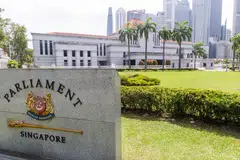
[SINGAPORE] Rental costs for food and beverage (F&B) and retail businesses have declined as a share of total operating expenditure between 2019 and 2024, said Prime Minister and Finance Minister Lawrence Wong in Parliament on Thursday (Feb 26).
Rent increases for retail spaces have also trended below nominal gross domestic product growth and inflation in recent years, he added.
For the F&B sector, rental costs fell to 17 per cent, from 26 per cent, of total business cost between 2019 and 2024. For the retail sector, the share declined to 26 per cent from 30 per cent, over the same period.
That is the broad picture, but the government is mindful that market rents vary by property type and location, and that individual tenants may face steeper increases at lease renewals, PM Wong said in his round-up speech closing the Budget debate.
Where government agencies serve as landlords – such as the Housing & Development Board and JTC Corporation – and where the government has direct oversight, such as in hawker centres, frameworks are in place to keep rents fair and competitive. These will continue to be reviewed and updated, he said.
“We will also continue to monitor the situation closely to ensure that rentals remain sustainable and competitive,” PM Wong added.

Business pressures
Rental costs featured in PM Wong’s round-up speech as he addressed concerns raised by several Members of Parliament (MPs) over the pressure facing small and medium-sized enterprises (SMEs), particularly those in the retail and F&B sectors.
He noted that these two segments face structural headwinds from e-commerce and changing consumer habits, as well as increased overseas travel by Singaporeans and the strength of the Singapore dollar.
Even so, the number of F&B and retail establishments has continued to grow, intensifying competition among players in the market, he said.


The government has supported businesses with corporate income tax rebates in the immediate term, including in this year’s Budget.
Over the longer term, however, support must be sustainable and should not distort market incentives, he added.
Workers’ Party MP Jamus Lim asked whether the government would consider introducing a fixed ceiling on rent increases to restrain “unbridled market forces”.
Replying, PM Wong said the government is not considering such a move, as rents on the whole remain stable. He also pointed to the experience of other jurisdictions, where rental caps have yielded mixed results.
“You end up with inadvertent consequences and you do not always achieve the objectives that you wanted, which was to ensure competitive rentals,” he said.
Instead, where there are sharp increases in rents in specific locations – which may be attributable to supply shortages or other localised factors – the government will study the circumstances and consider what targeted interventions may be appropriate, PM Wong said.
Labour costs
Labour costs represent another stress point for businesses, PM Wong noted, with expenses rising in recent years due to a combination of structural factors and deliberate policy choices.
On the structural side, an ageing population and tighter labour supply have pushed up wages, as have market forces – with firms competing for workers.
On calls by Nominated MP Mark Lee to give SMEs more leeway to hire foreign workers, PM Wong said the government cannot relax the dependency ratio ceiling (DRC), as doing so would encourage excessive reliance on foreign manpower and weaken the core of Singapore workers.
But the government will consider calibrated ways to provide more flexibility, such as expanding the sources from which businesses can hire work permit holders for occupations where genuine shortages exist.
WP’s Lim asked if the government would consider relaxing the DRC for the F&B sector, noting that despite relatively solid wages, the sector struggles to attract local workers and is subject to a lower ceiling than other sectors such as construction.
To this, PM Wong said the government prefers not to carve out a separate DRC for the F&B sector, as it is difficult to distinguish F&B from other service industries for enforcement purposes.
Relaxing the ratio for F&B alone risks foreign workers hired under that category taking on non-F&B roles, which would be hard to monitor, he added.
Ultimately, the sustainable path forward for SMEs is productivity improvement and business transformation, PM Wong said, noting that several MPs had offered suggestions on how the government could better support businesses in doing so.
The government will continue to study this feedback and lean forward to enable SMEs to innovate, upgrade and internationalise, he said.
SMEs that redesign jobs and transform their operations can offer higher wages and more meaningful opportunities to attract and retain Singaporeans, he added.
Decoding Asia newsletter: your guide to navigating Asia in a new global order. Sign up here to get Decoding Asia newsletter. Delivered to your inbox. Free.
Copyright SPH Media. All rights reserved.