

Budget 2026: S$3.6 billion in PWCS funding helped 110,000 employers give wage increases from 2022 to 2024
The median monthly raise supported by the scheme was about S$250, across more than 710,000 workers


[SINGAPORE] The government has supported about S$3.6 billion of Progressive Wage Credit Scheme (PWCS) funding to over 110,000 employers, for wage increases given between 2022 and 2024, said Minister of State for Manpower Dinesh Vasu Dash on Tuesday (Mar 3).
The median monthly increase supported by PWCS was about S$250, across more than 710,000 workers, he added in his speech during his ministry’s Committee of Supply debate in Parliament.
The scheme provides transitional wage support for employers to adjust to mandatory wage increases for lower-wage workers. Employers are meant to invest in upskilling and transformation during the transition period.
PWCS co-funding support for 2026 will be raised to 30 per cent, from 20 per cent, Finance Minister and Prime Minister Lawrence Wong had announced during his Budget speech.
The scheme will also be extended to 2028, with co-funding support of 30 per cent in 2027 and 20 per cent in 2028. The minimum qualifying threshold for wage increases will be raised from S$100 to S$200 for qualifying years 2027 and 2028.
These enhancements will help businesses to mitigate the cost pressures they face, Minister for Manpower Tan See Leng said separately in his Committee of Supply speech on Tuesday.

Noting suggestions from Members of Parliament to make the co-funding permanent, he also said that PWCS is meant to be temporary to cushion near-term cost impact – so that it “remains a catalyst, not a substitute, for productivity improvement”.
PM Wong had also announced during the Budget that the Local Qualifying Salary – which sets the minimum salary that local employees must be paid in firms that hire foreign workers – will be raised to S$1,800 for full-time employees from S$1,600 previously.
Businesses have given feedback that the Ministry of Manpower’s (MOM) policies add to costs and squeeze already-tight margins, Dr Tan acknowledged.

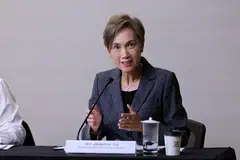
But these policies “also serve important social objectives” and promote inclusive growth, “preventing social fissures from deepening”, he added.
Several manpower political officeholders spoke about empowering and protecting all workers, including lower-wage workers and seniors.
Growth for all
Dinesh recognised that lower-wage workers may face a Catch-22 situation, where taking time off to upskill means forgoing income needed for immediate expenses.
The government will therefore broaden the list of courses supported by Workfare Skills Support (WSS) (Level-Up) – launched last year to provide training allowances for trainees undergoing long-form courses – to include “long-form Workforce Skills Qualification full qualifications” from the fourth quarter of this year, he announced.
The WSS scheme reduces the opportunity cost of training for lower-wage workers. Previously, the courses covered under WSS (Level-Up) included Nitec or Higher Nitec qualifications, diplomas, post-diplomas or undergraduate degrees.
Applications for WSS (Level-Up) opened on Feb 9 for training conducted from Mar 1.
This year, the government is also enhancing the WSS (Basic) scheme. It will increase the training allowance for self-sponsored trainees undertaking shorter training to further defray costs. Effective Jul 1, this allowance will go up to S$10.50 an hour, from S$6 an hour.
MOM is also streamlining the WSS to reduce complexity. From Jul 1, only trainees who attain full qualifications will receive the Training Commitment Award of S$800 a year.
Full qualifications – a set of related courses that result in formal qualifications – have been found to lead to better outcomes for trainees, compared with modules that do not lead to formal qualifications, Dinesh said.
For seniors, Dr Tan flagged the extension of the Senior Employment Credit until 2027, to continue supporting employers hiring senior workers, as a tripartite workgroup studies approaches for career longevity.
Decoding Asia newsletter: your guide to navigating Asia in a new global order. Sign up here to get Decoding Asia newsletter. Delivered to your inbox. Free.
Copyright SPH Media. All rights reserved.
TRENDING NOW

DBS, OCBC, UOB rout lops billions off STI as inflation, rate concerns spook investors

Grab CEO’s wife Chloe Tong on life with Anthony Tan and finding her purpose

OCBC sheds S$8 billion in value as shares close nearly 6% down; analysts cautious on banks

Deal between tycoon friends sparks scrutiny of Philippine power sector

