

Budget 2026: Vivian Balakrishnan says agency, partnerships are key amid ‘a geostrategic tectonic plate rupture’
Singapore’s strength lies in its domestic unity, economic relevance and ability to defend itself

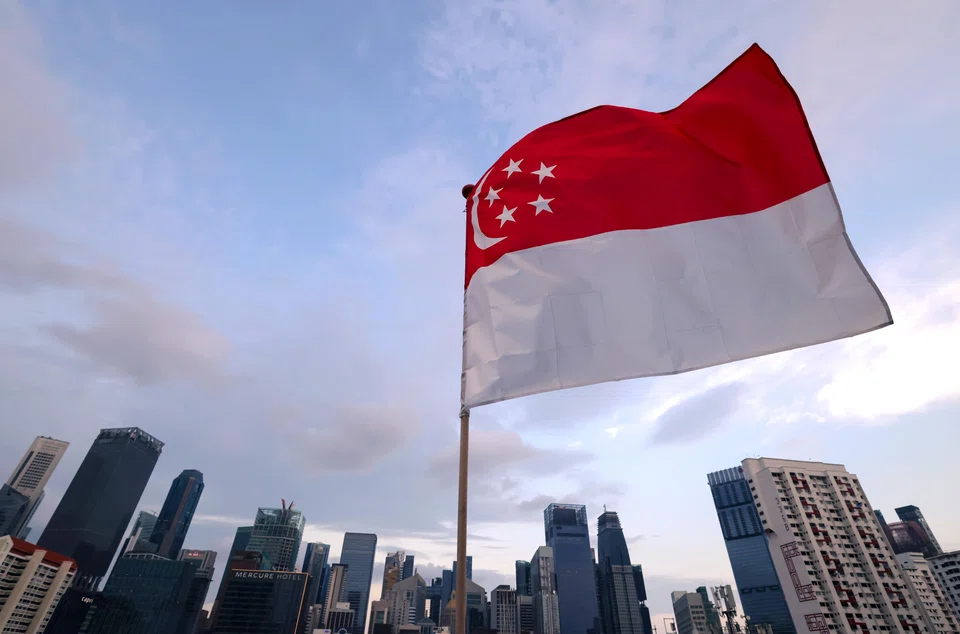
[SINGAPORE] Singapore’s only option in the evolving world order is to continue determining its national interests and exercising agency to chart its own path, said Foreign Minister Vivian Balakrishnan on Friday (Feb 27). “This is not just a small tremor. This is a geostrategic tectonic plate rupture.”
“Singapore thrived as a ‘global metropolis’ in an age of globalisation,” he said during his ministry’s Committee of Supply debate in Parliament.
But anti-globalisation sentiments have now not only manifested in domestic policy but also undermined support for the international order, he added.
Rules and consensus no longer drive international relations, he warned. This is a more dangerous world for small countries such as Singapore, which have no “strategic heft” to buffer against turbulence – but it has agency, resilience and resources.
“We have never been naive,” said Dr Balakrishnan. “There is a deep vein of realism in the way we view the world and operate.”
Prioritising Singapore
The city-state must objectively assess its national interests, he said. These are: to safeguard its sovereignty, independence and national unity; to secure access to essential supplies and freedom of navigation; to strengthen its role as a global hub; and to support a rules-based multilateral approach wherever possible.

As Singapore faces more strategic dilemmas and difficult choices, it must retain its “ability to say ‘no’”, said Dr Balakrishnan, the loss of which would result in a loss of relevance and independence.
He highlighted examples of Singapore’s ability to disagree with its partners, speaking out when Russia invaded Ukraine, when the US implemented tariffs that violated the Most Favoured Nation principle, and during the Israel-Gaza conflict.
“These positions, that we have taken and explicitly stated over the last years, have not been universally welcomed, and domestically, have even elicited active debate,” Dr Balakrishnan said. “(But this) aligns with furthering our national interests. Articulating these positions is part of exercising agency.”
SEE ALSO

He laid out five priorities for the ministry.
First, to engage all great powers constructively and give them a stake in the stability and prosperity of the region. This balance of power gives small states such as Singapore room to manoeuvre, he said.
Second, to buttress a wider network of middle-power partnerships for greater stability. Third, to strengthen a stable and integrated Asean, which has “great potential”.
Fourth, to create greater synergy between Singapore and its immediate neighbours. Fifth, to reinforce a rules-based international architecture despite current headwinds.
Strengthening partnerships
On Singapore’s relationship with major powers, Dr Balakrishnan noted the significance of its partnerships with both the US and China. It wants to work with both countries “where our interests coincide”, he said, noting that all countries must find “creative ways” to do so.
He updated that the government is still assessing the US’ invitation to formally join the Board of Peace.
Singapore will also strengthen its partnerships with middle powers and regional blocs, the minister said. It upgraded its partnerships with Australia, France, India, New Zealand and Vietnam in 2025, and established a partnership with South Korea. It also signed the EU-Singapore Digital Trade Agreement.
To deepen relations with more like-minded partners, the ministry is expanding its global footprint in Africa and Latin America, establishing new missions in Mexico and Ethiopia to support this.
Amid these partnerships, Asean remains the cornerstone of Singapore’s foreign policy, “and a salient platform from which we engage the wider world”.
With Singapore assuming chairmanship of the bloc in 2027, during its 60th anniversary, Dr Balakrishnan said it will use its role to pursue deeper integration, promote external partnerships, and keep Asean open and committed to peace, stability and cooperation.
For the bloc to remain relevant, it must become more cohesive, united and credible through deeper regional integration, Dr Balakrishnan said. This is why it is pushing hard on key initiatives – such as the Asean Power Grid and Asean Digital Economy Framework Agreement – that bind its economies closer together.
He also emphasised the importance of giving major powers a stake in the region’s stability and prosperity, and ensuring Asean stays the partner of choice.
“The more countries invest in Asean’s collective progress, the more stable we will be,” he said, noting that the balance of power and interest allows more room to manoeuvre than single-power dominance.
The bedrock of Asean cohesion is strong neighbourly relationships, Dr Balakrishnan continued.
With Indonesia, Singapore is exploring projects in energy, food security, education and healthcare, discussing cross-border electricity trade, carbon capture and storage, and establishing a Sustainable Industrial Zone across the Bintan-Batam-Karimun corridor.
With Malaysia, Singapore is deepening economic and people-to-people ties with East Malaysia through the establishment of consulates in Sabah and Sarawak, and managing complex outstanding bilateral issues.
Maintaining multilateralism
Despite the challenges of building consensus in a fractured world, Dr Balakrishnan said Singapore remains committed to the rules-based multilateral system, which provides “the architecture of norms, standards and institutions that protects the global commons and gives all small states a say”.
“We must continue to do our best to build overlapping, flexible circles of plurilateral partnerships with like-minded countries,” he said, highlighting the Joint Statement Initiative on E-commerce Agreement as one example, which began with Singapore, Australia and Japan and now has 72 co-sponsors.
Recognising that Singaporeans will have different views on foreign policy issues, Dr Balakrishnan said that they do not need to agree on foreign policy stances, but must agree that these are matters “to be discussed and decided by Singaporeans alone”.
While foreign actors will try to push their narratives and deepen internal divisions, Singapore – with its diverse population that is vulnerable to becoming polarised and fractured – must guard against this, he said.
“(We) do not expect a stable new equilibrium to take shape in 2026 or even the next couple of years,” warned Dr Balakrishnan. But he added that, compared to when Singapore unexpectedly became independent, the country is in a far better position – in terms of tools and resources.
It has three prerequisites for success, he said: domestic unity, where it inoculates itself from foreign influence; economic relevance, where its value as a hub is accentuated by the more fractious world; and its ability to defend itself, through National Service and steady investment.
Decoding Asia newsletter: your guide to navigating Asia in a new global order. Sign up here to get Decoding Asia newsletter. Delivered to your inbox. Free.
Copyright SPH Media. All rights reserved.
TRENDING NOW

Government to bring forward raising of retirement age, give employers more financial support to create flexi-load jobs

Indonesia stocks suffer worst plunge in nearly 30 years as MSCI proposes standalone status

If Europe goes to war, the fallout will be felt in East Asia
Natural gas to stay for the long haul beyond 2050: Singapore International Energy Week panellists

