

Changes to Singapore’s FDI tax strategy may come only after Budget 2023

Elysia Tan
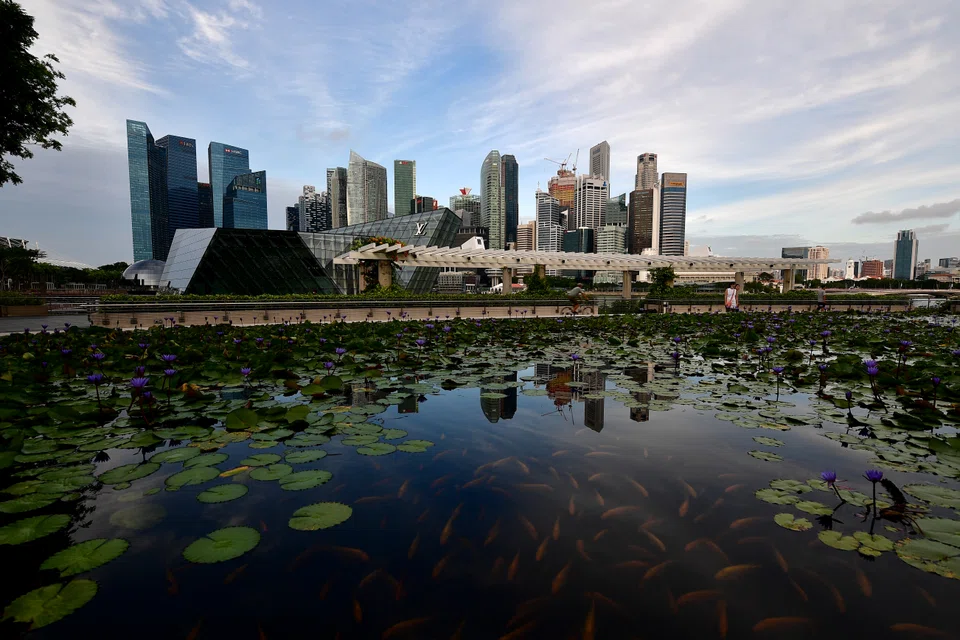
GLOBAL tax changes could prompt Singapore to find new ways to attract foreign direct investment (FDI), such as tax credit schemes, grants, or industry-specific measures – but this may only happen after Budget 2023, said industry watchers.
The catalyst is the proposed Global Anti-Base Erosion rules in Pillar Two of the Base Erosion and Profit Shifting (BEPS 2.0) initiative, led by the Organisation for Economic Co-operation and Development.
The rules introduce a global minimum effective tax rate of 15 per cent for multinational enterprise groups with annual global revenues of at least 750 million euros. This may require countries such as Singapore to introduce top-up taxes, limiting the effectiveness of traditional tax incentives.
“Especially when developing a new sector, the traditional approach of granting pioneer incentives to attract anchor players to establish the ecosystem may no longer work,” said Chester Wee, EY Asean international tax and transaction services leader.
Of course, the republic’s attractiveness goes beyond its tax regime, including factors such as its strong rule of law, skilled workforce, strategic location, connectivity and infrastructure. Singapore is the second most-preferred Asia-Pacific destination for cross-border investment in 2023, behind Tokyo, according to CBRE’s latest Asia Pacific Investor Intentions Survey.
“What continues to make Singapore attractive to investors is the Singapore brand,” said Singapore International Chamber of Commerce chief executive Victor Mills.
Nonetheless, with tax incentives being eroded, the government may have to look at other measures.
Grants and credits
For a start, the government could look at BEPS 2.0-compliant grants and refundable tax credit schemes, said watchers.
Companies affected by the new tax rules would be looking for subsidies in Budget 2023, such as cash grants to defray business expenditure or tax credits that can be converted to a cash payout, said international tax leader at Deloitte Singapore Liew Li Mei.
Refundable tax credit schemes for specific industries, such as food tech and environmental sustainability, would help to develop them. Irene Tai, partner specialising in corporate tax at PwC Singapore, suggested that credits and grants could be awarded to companies that meet productivity milestones or capital investment targets tied to agreed ESG (environmental, social and governance) benchmarks.
“Alternatively, support can also be given to companies that create new jobs which directly facilitate the transition to net zero, or to businesses that are developing sustainable low carbon products and services that can help minimise environmental impact,” she said.
Ajay Kumar Sanganeria, partner and head of tax at KPMG in Singapore, proposed enhanced tax deduction schemes for financing costs and rental of green properties.
Such schemes could also be used to encourage talent upskilling or research and development, further increasing Singapore’s appeal. Johanes Candra, partner for business incentives advisory at Ernst & Young Solutions LLP, proposed a qualified refundable tax credit scheme with an enhanced 300 per cent rate for qualifying staff training costs, up to a certain cap.
This should focus on in-demand skills in areas such as artificial intelligence, sustainability and the green economy, he said, adding that access to a highly skilled workforce is important in foreign investors’ location decisions.
Sanganeria also suggested widening the range of intellectual property-related categories that qualify for writing-down allowances for tax purposes.
Government commitments
Aside from financial and tax support, Sharon Tan, international tax partner at Deloitte Singapore, sees a need to “customise the incentive framework by industry”.
This could mean “co-sharing much more of the risk and reward” of investments in capital-intensive industries, by sharing the capital expenditure outlay with the foreign investor, she said.
In investment asset-light areas such as innovation hubs, the government could instead focus on talent and infrastructure spending. Already, Singapore has been investing in cluster locations at more affordable rents on the outskirts without directly subsidising the rental market, she said.
Harvey Koenig, tax partner at KPMG in Singapore, proposed channeling funds collected through Pillar Two into attracting and retaining investments, so the government can “send a powerful signal to multinationals that it is committed towards building the economy”.
Beyond corporations
Apart from businesses, Singapore’s government can engage at other levels. Tax treaties and free trade agreements with other governments would encourage cross-border investments too, said Candra.
Grant Thornton Singapore head of tax David Sandison believes that measures should appeal to individuals: “Businesses are run by people, and people look beyond the interests of their current employer.”
If individuals are drawn to Singapore’s opportunities for personal advancement, lifestyle and wealth creation, and are decision-makers in their company, “you will be surprised how easy it may be to ‘reverse engineer’ Singapore into top spot in the business case”, he said.
Personal tax benefits would sidestep BEPS 2.0, he noted. These could include beneficial or capped personal tax rates, or the resumption of the Not Ordinarily Resident scheme, which granted favourable tax treatment to qualifying individuals but ceased after 2020.
“Wait-and-see” approach
Though Singapore may eventually pursue some of the above measures, these are unlikely to be introduced as early as next month’s Budget, said watchers.
The government has been seeking feedback from the business community on maintaining Singapore’s attractiveness to investors, noted PwC’s Tai, adding that “such measures are expected to extend beyond tax incentives and grants, to broader factors like access to talents and business infrastructure”.
She hopes “to hear some highlights” of Singapore’s plans but expects that “details may not be available to be released during the Budget”.
KPMG’s Sanganeria hopes to see some measures in Budget 2023, but noted the complexity of the matter, adding: “Policymakers may find it more prudent to also observe how other jurisdictions may react before introducing further measures.”
One consideration is when Singapore will introduce a domestic top-up tax. Delaying this to 2025 “may help to avoid knee-jerk reactions of pulling operations out of Singapore”, said EY’s Wee. But Singapore might also be driven to action in 2024, he added, to avoid complications as other countries begin their implementation.
The European Union has agreed to implement the global minimum tax for the fiscal year beginning on or after Dec 31, 2023, as have Japan and Switzerland. South Korea has passed legislation to implement the global minimum tax, effective in 2024.
Deloitte Singapore expects Singapore might pivot from tax incentives to subsidies, but tax partner Chua Kong Ping does not expect it to happen in the near term.
These entail different policy considerations which will take time to assess, he added. With incentives, there is an outlay only if the recipient is profitable, but subsidies involve government spending even if the company does not do well.
Singapore’s response to BEPS 2.0, including new or enhanced subsidies, will in turn be scrutinised by other countries, he noted. Calling the global minimum tax a “seismic change”, Chua added: “Singapore may wish to wait for the dust to settle and observe whether countries coalesce around what is ‘acceptable’ support to provide businesses in lieu of tax incentives.”
TRENDING NOW

Two Singapore-listed palm oil firms named in Greenpeace report on Indonesian plantation fires

Singapore Airlines flight returns to San Francisco after ‘unruly’ passenger incident

Singapore looking into which companies responsible for haze-causing fires: PM Wong
Deluge IPO 3.86 times subscribed ahead of SGX debut

