

China’s electric Farizon SuperVan makes Apac debut in Singapore
Offering from the Geely-owned commercial vehicle brand features technology normally found in passenger EVs

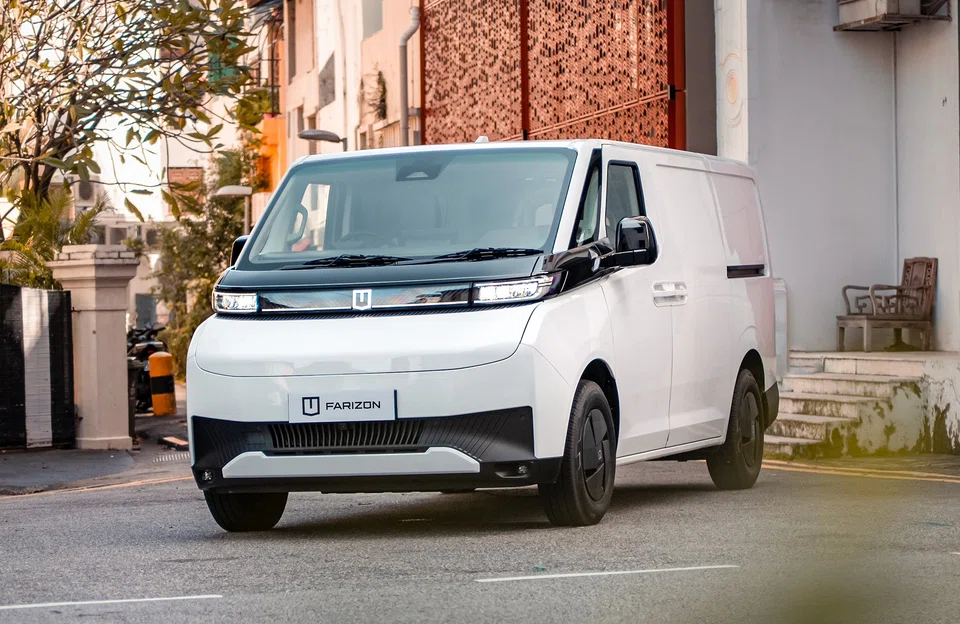
SINGAPORE is the first market in the Asia-Pacific outside China to see the debut and deliveries of the SuperVan, a full-electric light goods vehicle (LGV) from Geely-owned China manufacturer Farizon.
The van will be launched by Farizon and its Singapore distributor Hong Seh Motors on Tuesday (Feb 18), with 10 units already pre-sold.
The SuperVan debuted in its home country in April 2024 and was previewed in Hong Kong in December the same year.
In Singapore, its price starts at S$80,000 without a Certificate of Entitlement, after taking into account a S$15,000 rebate under the Commercial Vehicle Emissions Scheme.
Edward Tan, executive director of Hong Seh Motors, said: “Singapore is the first Asia-Pacific market to launch and see delivery of the SuperVan, and that shows how important it is to Farizon. It is the perfect place to showcase the vehicle’s technological innovations to the rest of the region.”
Tan added that the SuperVan includes advanced technology from passenger electric vehicles that are not commonly seen in LGVs, such as direct-current fast charging of up to 160 kilowatts, which is faster than competing models.
It also has a longer range and better charging performance than its competitors, he noted.
Globally, Farizon sells light, medium and heavy-duty goods vehicles as well as buses.
The SuperVan is expected to be a significant contributor to Farizon’s sales both in Singapore and abroad, as LGVs typically sell in greater numbers than medium or heavy goods vehicles. The brand aims to take the market share around the world from popular incumbents’ comparable models, such as the Toyota Hiace and Ford Transit.
According to the International Energy Agency, global electric LGV sales have increased to almost 500,000 in 2023 from fewer than 100,000 in 2020. Electric medium and heavy goods vehicle sales increased to more than 50,000 in 2023, from fewer than 20,000 in 2020.
Van with a plan
In Singapore, the SuperVan is configurable as a cargo van – with five versions offering between 6.95 cubic metres and 13 cubic metres of load space and varying roof heights – or as a minibus with space for up to 13 occupants.
Accordingly, these variants have electric ranges that span from 294 kilometres – for the version with the least cargo volume and smallest battery – to 376 km. The variant that can travel the longest distance has an 83 kilowatt-hour battery that can be fast charged from 20 per cent to 80 per cent in 36 minutes. Apart from higher-speed fast charging, other technologies present in the SuperVan, but uncommon in electric commercial vehicles, include drive-by-wire controls that save energy and advanced driver-assistance systems that keep the vehicle in its lane automatically.
Competing models on sale in Singapore include the diesel-powered Toyota Hiace and electrically powered models such as the Maxus eDeliver, Mercedes-Benz eVito and Opel Vivaro-e.
Farizon expects its total global sales of all models in 2024 to have reached around 150,000 vehicles. It has not stated future sales targets, but has begun expanding global sales with a focus on Europe, the Middle East, Africa, and Asia-Pacific.
Farizon debuted in Singapore in late 2023, after entering Hong Kong, Thailand, Japan, South Korea, Australia and New Zealand.
Farizon’s parent Geely Holding, which also owns the brands Lotus, Polestar, Volvo and Zeekr, has targeted annual global sales of five million cars by 2027.
TRENDING NOW

Once staunchly pro-China, Malaysian Chinese businesses are now distancing themselves from Beijing

Looking beyond looming CEO succession, should UOB potentially pursue a transformative merger?

Could stablecoins be the future of money?

Grab CEO’s wife Chloe Tong on life with Anthony Tan and finding her purpose

