

COE premium spike points to more hikes this year, warn industry observers
They tie this to reduced quota and increased time for returning de-registrations to the market
 Add BT as a preferred source
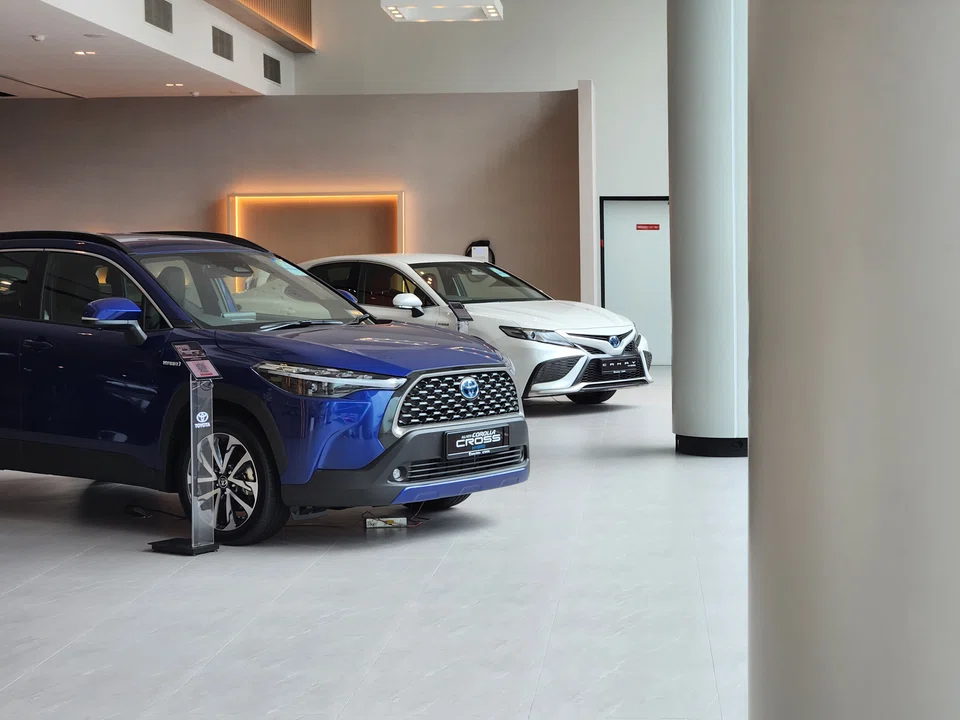
[SINGAPORE] After the latest round of Certificate of Entitlement (COE) bidding on Wednesday (Aug 19), automotive industry observers said they do not expect passenger car premiums to fall significantly in the coming weeks.
Nicholas Wong, chief executive officer of authorised Honda dealer Kah Motor, said: “COE premiums are not going to drop in the coming months, because the supply will continue to be in shortfall of demand.”
In the latest round of COE bidding, August’s second, premiums for all passenger car categories rose.
Category A, applicable to mainstream cars, increased by 3.7 per cent to S$128,501, just shy of its all time high of S$129,000 set in July this year.
Category B, for larger or more powerful cars, was up 0.8 per cent at S$131,001.
Category E, the open category, was up 3.1 per cent at S$135,000.
Steady driving
Car dealers said that Category A’s result, which saw an increase despite flat demand, was reflective of the current state of the market, with the category hovering at a relatively high level above S$120,000 since April.
Adelene Tan, managing director, BYD distributor and dealer Vantage Automotive, said: “Category A’s increase was sizeable, but this happened despite there being almost the same number of bids received as last round.”
She noted that bidding was not aggressive and overall market demand in the past two weeks was flat as there were no major car launches or single big order takes.
SEE ALSO









“A result like this is just a continuation of what we’ve seen most of this year,” the director of a major used car retailer told The Business Times, referring to high demand for Category A electric vehicles driven by rebates and cost-effective model offerings.
“I think Category A’s premium increase is going to continue. September is a mixed month, but we heard there is going to be another car show in the fourth quarter, and there will also be the typical rush for sales to close the year,” he added.
“I don’t believe any brand is near their targets and BYD is expecting even more this year, so competition will be fierce.”
Vantage’s Tan also noted that COE supply for Category A had dropped. “The (Category A) quota dropped a bit, but it is not insignificant because in this market, even a small change may affect premiums.”
COE quotas are announced in three-month periods. The current period, August to October, was announced in late July. Compared to the preceding period, there was a 0.2 per cent increase in overall COE supply to 19,085.
Category A’s supply fell by 4 per cent to 7,134, while Category B’s supply rose by 6.2 per cent to 5,527.
Supply expected to lag
Industry observers also said that continued high premiums are a result of supply lagging demand and this is not expected to change in 2026.
“The issue here is that replacements for the COE quota aren’t coming fast enough and that means current demand is not being satisfied fast enough, so we are seeing very high premium levels,” said Kah Motor’s Wong.
He argues that de-registrations are an indicator of market demand. Category A, for example, has seen 10,278 de-registrations from April to June this year, but its quota is 7,134.
“The car population is not allowed to grow so a de-registration means one unit of COE, replaced one-for-one. If you look at it this way, it means Category A is over-subscribed by more than 30 per cent.”
Except for Category C, commercial vehicles, which has a 0.25 per cent annual vehicle growth rate to support businesses, all other vehicle categories have zero growth. Their COE quota is made up almost entirely of de-registrations.
Currently, the quota is calculated from the rolling average of de-registrations from the preceding 12-month period, which is to prevent fluctuations in supply.This rule was introduced in 2023, before which the quota was calculated using the average of the preceding six months.
Walter Theseira, associate professor of Economics at the Singapore University of Social Sciences, said: “The issue now is the moving average lag. It is going to take quite a while still for the increased de-registrations and older vehicle stock to make its way into being recycled.”
Prof Theseira added: “We’re still not really at the point yet where a large number of those people turning in their vehicles can’t afford to get back in at these prices. Historically, we see that it takes some years of sustained supply to bring down prices by a large amount.”
Wong said: “Right now supply is being held back and it is not satisfying the current demand, feeding high premiums. Unless the rules change, we won’t see premiums come down.”
Decoding Asia newsletter: your guide to navigating Asia in a new global order. Sign up here to get Decoding Asia newsletter. Delivered to your inbox. Free.
Copyright SPH Media. All rights reserved.
TRENDING NOW

Japan Home closing outlets; staff say Valu$ taking over operations

Timah Partners lands S$60 million facility from lenders including UOB, RHB
ComfortDelGro’s Zig to buy S$10 million worth of BYD cars for private-hire fleet

How BYD disrupted Singapore’s car market – and why the strategy is turning on itself

