

COE supply expected to rise 20% in 2026, but premiums may not fall in proportion
Demand for electric vehicles and from private-hire fleets could keep premiums elevated, say industry observers

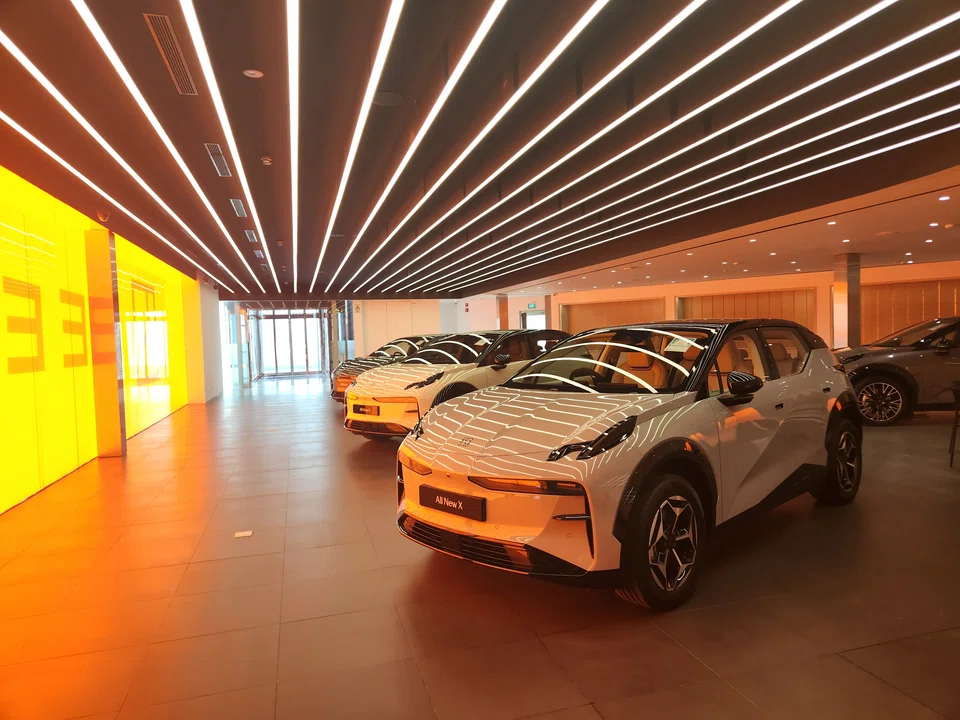
[SINGAPORE] The supply of passenger car Certificates of Entitlement (COEs) may grow some 20 per cent next year, but premiums may not fall significantly, say industry observers.
This is because demand will remain strong, supported by electric vehicle (EV) buyers and private-hire car (PHC) fleets.
“Weighing the major factors’ probabilities, I think COEs will not trend downwards significantly in 2026,” said automotive consultant Say Kwee Neng.
For premiums to fall, both demand for EVs and buying by PHC fleets would have to ease, he added.
Vincent Ng, automotive business consultant at Vincar Group, said that as buyers become “used to S$100,000 Category A COEs”, the figure will become a reference point in 2026.
“We’ve seen COE supply expand in 2025, but this has not been enough to satisfy the demands of consumers and rental companies,” he added.
In 2026, passenger car COE supply may rise to 50,000, up from around 40,000 in 2025, said car dealers and academics to whom The Business Times spoke.
Anthony Teo, managing director of BYD distributor and dealer Vantage Automotive, expects the passenger car market to be “around 50,000” as deregistrations continue to increase.
A COE lasts 10 years, after which it is renewed or the car is deregistered. Deregistrations largely determine quarterly COE quotas, as Singapore has a zero-growth policy for all categories except commercial vehicles.
After COE volumes peaked in 2017, deregistrations are expected to keep growing towards 2027, thus boosting available quotas now.
As at November 2025, some 70,300 cars are nine to less than 10 years old, and may contribute to deregistrations in 2026. Another 85,540 cars – 13 per cent of the current population – are eight to less than nine years old, and will fuel deregistrations in 2027.
Since May 2023, the government has also been increasing COE supply with its “cut-and-fill” policy of bringing forward guaranteed deregistrations, adding some 30,813 COEs across all categories till November 2026.
Separately, another 20,000 COEs are being gradually injected from February 2025.
High voltage
Despite the rise in COE supply, premiums will continue to face upward pressure due to sustained strong demand for EVs, driven by incentives as well as competitively priced models from China brands.
Said Say: “If China brands continue to prioritise growing market share and export subsidies continue, then I see the current levels of COE premiums being maintained.”
China carmakers have increased their market share rapidly over the past two years. In the first 11 months of 2025, EVs made up 44.5 per cent of new car registrations in Singapore, and two-thirds of EV registrations were from China brands.
But there is also a possibility that EV demand may ease, if consolidation of the China car industry brings down some brands and shakes consumer confidence.
According to analytics firm Euromonitor International, 2025 is the first year to have a fall in the number of active car brands in China – to 129, from 132 in 2024. Price wars, overcapacity and a surplus of brands are expected to contribute to a further decline in 2026.
“Sooner rather than later, we will see a major EV brand bankruptcy, and that will affect consumer confidence,” said Walter Theseira, associate professor of economics at the Singapore University of Social Sciences (SUSS).
China brands themselves might become less aggressive in pushing sales here, he added.
“The Singapore market is always a question mark, because how much can you really make? There’s no volume, and some brands are here for prestige reasons – not because they are making a huge amount of money.”
Private eye
Meanwhile, continued demand from PHC fleets is expected to sustain – if not necessarily drive up – premiums. Such cars serve ride-hailing and ride-sharing platforms, as well as rental companies.
Singapore’s PHC population reached an all-time high of 94,711 in November, up 4.8 per cent from the end of 2024.
But this represents slower growth compared to the 10.6 per cent rate in 2024. Recent developments have also raised questions about how much PHC fleets will continue to grow.
In late November, Tan Yew Kiat, the owner of car-leasing firm SRS Auto, was arrested on suspicion of money laundering. He is suspected of having links to Cambodia’s Prince Holding Group, which has been declared a transnational criminal organisation by the US.
A group of 18 related companies – including car rental firm Autobahn Rent A Car and car sharing service Shariot – were revealed to be owing creditors S$304.2 million and have filed an application for a court moratorium.
SUSS senior lecturer Victor Kwan noted that there has been “some recent negative financial news regarding car-sharing and ride-hailing leasing companies”.
“It seems that there is an oversupply of cars in this segment,” he added. “As such, I don’t see sustainable, strong demand from ride-hailing players in 2026.”
As for PHC fleets that do want to expand, Dr Kwan said recent developments may make it harder for them to access financing.
Still, observers expect PHC fleets to at least maintain their fleets at current levels, which will mean demand for COEs to replace deregistered cars.
“In 2016 and 2017, there were big purchases by (PHC fleets) Lion City Rentals and Grab, so I expect deregistration of such vehicles to be high,” said Vincar’s Ng. “But whether they add to their fleets above just replacing those cars remains to be seen.”
As PHCs experience high usage, fleets may opt to replace them even before the cars reach 10 years of age, and may opportunistically bid for certificates, he added.
“(Fleet operators’) replacements and consumer demand are probably enough to keep COEs at their current, high level through most of 2026.”
TRENDING NOW

Once staunchly pro-China, Malaysian Chinese businesses are now distancing themselves from Beijing

Stocks to watch: HPL, Aims Apac Reit, Zico, Advanced Systems Automation, ComfortDelGro

‘How many will survive?’: Bubble fears arise as China’s humanoid robotics face reality check

Smaller board lots can’t fix a market run by three banks

