Dealers go big on aftersales as margins shrink for new car sales

DWINDLING margins on new car sales mean Singapore’s dealerships now get as much as half of their revenue from aftersales instead – which includes customer service, car repair and servicing, as well as spare-parts sales.
Earnings from new car sales have fallen in recent years, as both sales volumes and profit margins have shrunk.
First, Singapore’s zero-growth policy for passenger cars has meant that the Certificate of Entitlement (COE) quota – and accordingly, new car sales – is dictated by the number of deregistrations. In the current environment of high COE prices, owners are reluctant to deregister.
While the aftersales business has always been “an important pillar” in the profitability of a dealership, this is even more evident now that owners hold onto vehicles for longer, said Audi Singapore managing director Markus Schuster.
From January to September this year, 20,558 cars were registered. Industry observers expect around 26,000 registrations for the whole year – 16 per cent less than 30,939 in 2022, and 67.6 per cent down from 80,281 in 2018.
No new joy for dealers
Second, profit margins have been eroded by high COE prices. With car prices being driven up by COE premiums, dealers have to accept a smaller mark-up to keep the price of a car reasonable.
“New car sales margins are now razor thin,” said Say Kwee Neng, a car industry consultant and former managing director of a car dealership group. “As a dealer, if you rely purely on new car sales margins now, you will surely die.
“A decade ago, (new car sales) would have been 60 per cent to 70 per cent of dealer turnover and around 40 per cent of their profit. Right now, it probably contributes a single-digit percentage to profit,” he added.
High COEs are particularly a problem for dealers whose contracts with manufacturers promise a specific sales volume.
Added Say: “If you have committed to the principal a volume of 3,000 cars a year, that’s 250 cars a month. If the COE spikes by S$5,000 on average, that is S$1.25 million extra you need to find.”
Aftersales driving revenue
In Singapore, the aftersales contribution to gross profit is around 50 per cent. This is double the global average, according to Joshua Cobb, senior automobiles analyst at BMI Research.
Aftersales has also become “crucially important” for customer retention, with a clear association between the aftersales experience and brand loyalty, said Peadar Walsh, global head of digital marketplaces at industry research company Jato Dynamics.
Dealerships have been investing more in aftersales infrastructure and customer-facing initiatives.
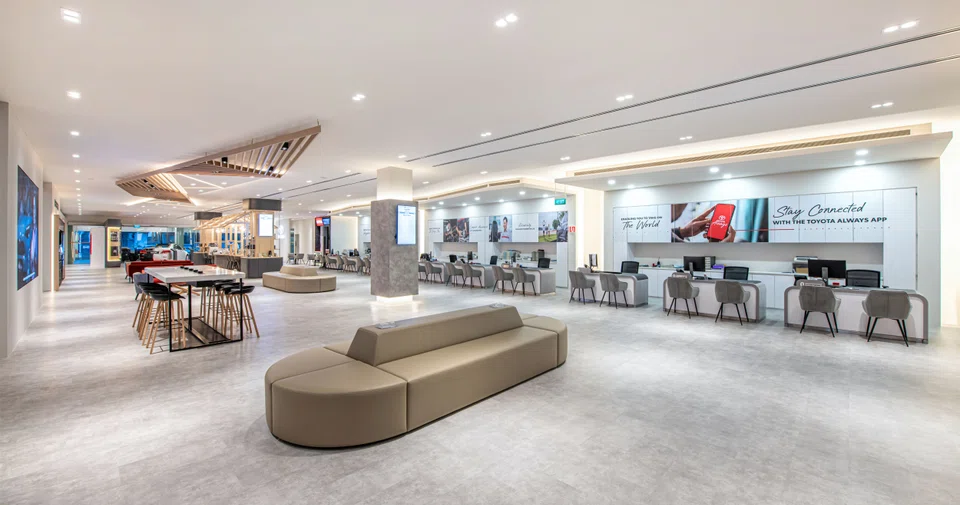
This August, for instance, Inchcape Singapore renovated its flagship Toyota showroom and aftersales centre. It now has a modern, mall-like appearance and separate zones for sporty cars and SUVs. Inchcape Singapore is the distributor for Toyota, Lexus, Suzuki and Hino.
The renovated aftersales centre was inspired by Singapore Airlines (SIA) lounges and offers a more upscale experience, pointed out interim managing director Ng Khee Siong, formerly Inchcape’s aftersales director and an ex-SIA manager.
Inchcape intends to apply aftersales lessons from luxury brand Lexus to its Toyota customers, such as assigning the same service advisers each time a customer visits.
Across its brands, it is also using churn prediction – analysing data to tell which customers are at highest risk of leaving a service – to pre-emptively offer aftersales services.
One aim is to blur the line between sales and aftersales, improving the overall customer experience to foster retention and future car purchases, said Ng.
Some of the largest capital investments in aftersales here have been by the Eurokars Group, Singapore’s sole authorised dealer for Mazda, McLaren, MG, Mini, Pagani and Rolls-Royce.
In 2018, it completed a S$80 million aftersales facility in Tanjong Penjuru, which handles servicing for all its brands, with a spare-parts warehouse and an electric vehicle (EV) workshop.
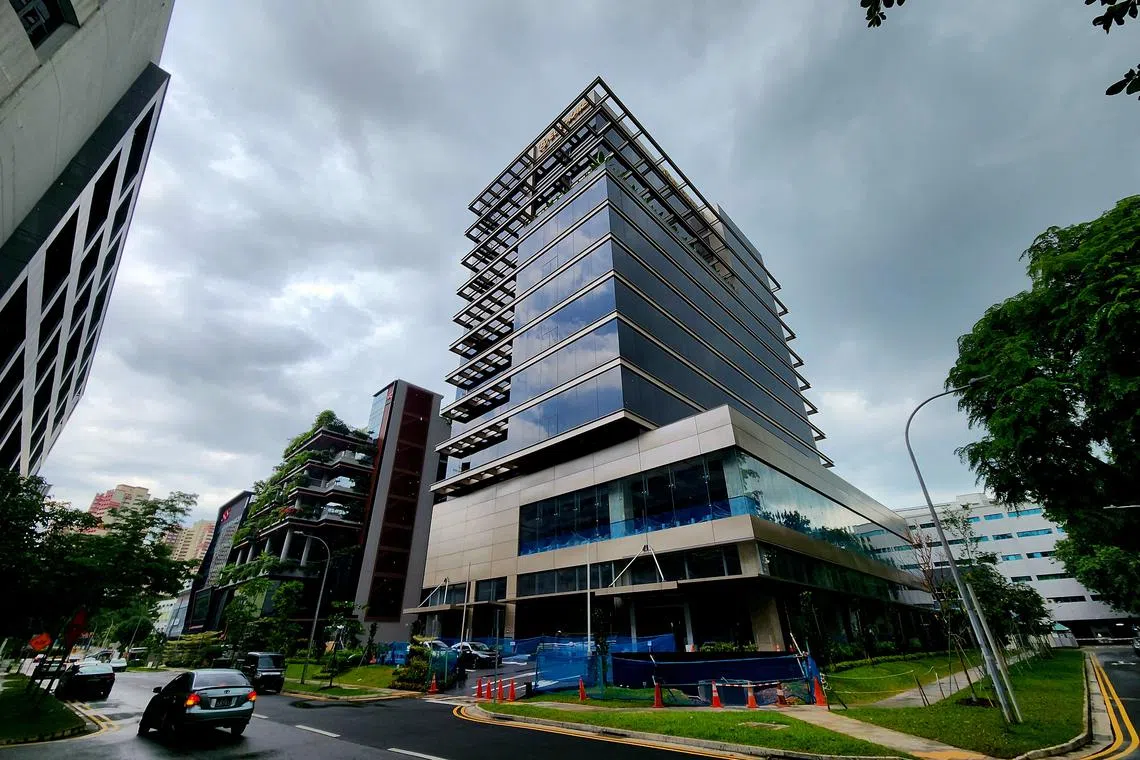
This December, Eurokars is opening a S$106 million flagship facility along the Leng Kee-Alexandra automotive belt.
Home to its corporate headquarters and new showrooms, this facility will also have an aftersales location with service workshops for BMW, Rolls-Royce, McLaren and Pagani.
“Aftersales is, and will continue to be, a key driver of our business,” said Eurokars executive director Charmain Kwee. “In our experience, there is a clear relation between aftersales and customer retention.”
Supporting the next step
Most major car dealers in Singapore have also ramped up investments in EV aftersales, which typically includes specialised training, equipment and facilities.
In January, Inchcape Singapore expanded its EV aftersales repertoire with the acquisition of AutoInsure, a third-party car workshop, for an undisclosed sum.
The acquisition not only allows the group to handle EV servicing, but also provides access to the wider aftersales market beyond its distributed brands. AutoInsure is an appointed repair workshop for 13 insurers.
In September 2022, Hyundai distributor Komoco Motors opened a dedicated EV service centre, with a laboratory-style clean-room look that differs from the waiting-room feel of a typical aftersales centre.
A Hyundai Motor Group Innovation Centre Singapore spokesperson said that the facility aims to “provide advanced experiences to our EV customers… (and to) enhance our customer experience and explore new future mobility business concepts”.
The rise of EVs and autonomous vehicles means a corresponding hike in the need for tech-related aftersales.
Jato’s Walsh expects the increasing complexity of cars to drive aftersales growth in electrification, connectivity and autonomous driving.
BMI’s Cobb said that over the next three to five years, the skill base for EV servicing will mature. Dealers must diversify by, for instance, offering their own EV charging stations, mobile charging services and even EV customisation.