

Dealers welcome extension of scheme for cleaner commercial vehicles, but bemoan lack of coverage for heavy vehicles
But some market watchers say lack of penalties for heavy diesel vehicles blunts the measure’s effectiveness

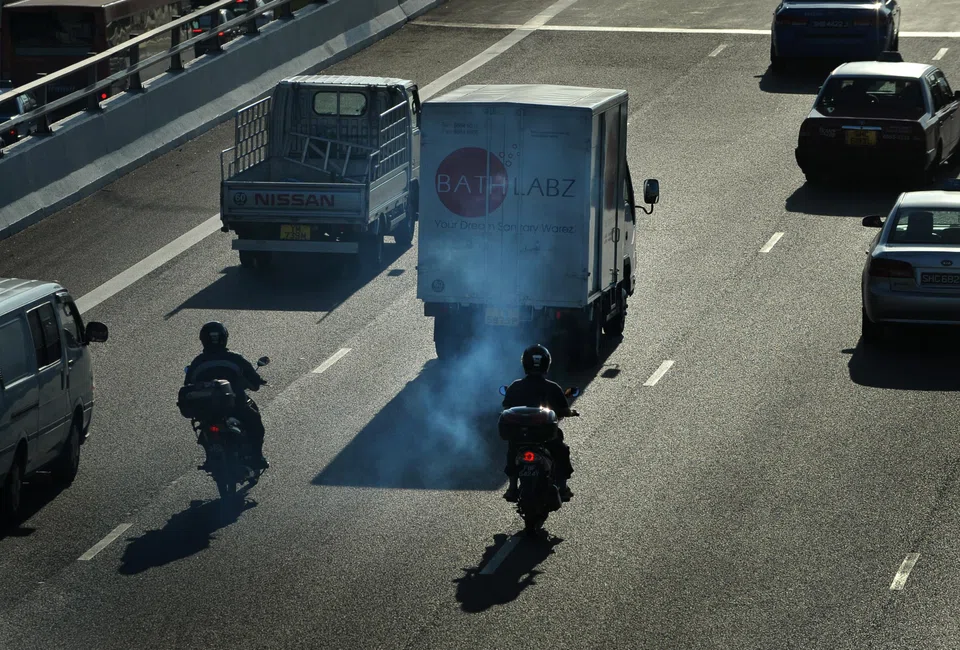
COMMERCIAL vehicle dealers welcome the extension of a scheme that promotes the use of cleaner light commercial vehicles, but note the continued lack of coverage for heavier vehicles.
The Commercial Vehicle Emissions Scheme (CVES), originally due to expire on Mar 31, 2025, has been extended by two years to March 31, 2027.
Vynn Tu, general manager for Renault at automotive distributor Wearnes, said the scheme remains important in helping Singapore meet its cleaner vehicle targets.
“Promoting EVs (electric vehicles) is especially important in the commercial vehicle sector as traditionally, most of the commercial vehicles have been powered by more pollutive transmissions. Moreover, commercial vehicles run longer distances than passenger ones,” she said.
CVES was introduced in April 2021 to encourage the adoption of less polluting light goods vehicles (LGVs), with incentives for these and surcharges for more polluting ones.
EVs are in the cleanest band, A, and will continue to receive a S$15,000 rebate.
But under the extended scheme, other rebates and penalties will change.
Petrol LGVs in Band B will no longer receive rebates, having previously received S$5,000.
Diesel LGVs – the most pollutive type – in Band C will be handed a penalty of S$20,000, up from S$15,000 now.
Tu noted that although EVs form a growing share of new sales in the light commercial segment, continued government support is needed as their share of the whole commercial vehicle population remains very low.
In the first 11 months of 2024, EVs made up 44.7 per cent of LGV registrations, but only 19.5 per cent of all commercial vehicle registrations.
Diesel vehicles still account for the most commercial registrations, at 67.4 per cent.
As at November 2024, electric goods vehicles formed only 3.1 per cent or 4,455 of the total 143,151 goods vehicle population.
About face
Some dealers were pleasantly surprised by the continued CVES rebate, as a meeting with the Land Transport Authority in late 2024 had indicated the possibility that it could be removed.
The sales manager of a European commercial vehicle brand told BT: “When we first heard that (suggestion), we were very shocked. We are still at a very early time in EV adoption and in 2023, the government had already slashed the rebate by so much, so early. The industry needs more stability and time to adapt.”
In April 2023, the rebate for cleaner vehicles was halved to S$15,000, from S$30,000 originally.
The manager said that longer timeframes for rebates are important as commercial vehicle tenders – especially high-volume contracts for larger entities – are a long-drawn process.
“Important clients like MNCs (multinational corporations) or even ministries have contracts that ask for quotation prices to be frozen for two to three years. It’s very difficult to do business if rebates keep changing. So it’s good that the authorities are listening to our feedback,” he said.
Not-so-silver lining
But dealers also noted that heavier commercial vehicles, which are more pollutive, remain outside the remit of the CVES.
Ron Lim, head of sales and marketing for Tan Chong Motor Sales, said: “The only disappointment is that we are still not seeing any expansion of the CVES to cover higher tonnage commercial vehicles beyond just LGVs, as heavy goods vehicles (HGVs) are still mainly diesel driven.”
CVES applies only to light commercial vehicles, defined as those with a maximum laden weight of up to 3,500 kg.
Since 2021, dealers have introduced new diesel-powered models that were formerly LGVs but are now classed as HGVs, to avoid CVES penalties.
From 2021 to 2023, the population of LGVs fell to 97,445 from 99,804; the number of HGVs in the 3,501 kg to 7,000 kg range rose to 22,228 from 19,411.
When queried by BT last October, the National Environment Agency said that HGVs are not covered because cleaner and market-ready alternatives are still limited.
But Edward Tan, executive director of the Hong Seh Group, said: “We would like to see CEVS be extended to HGVs, as there are now abundant makes and models in this category that have been electrified, and more will come.”
He argued that higher Band C penalties under CVES are less effective since more pollutive vehicles continue to escape penalties.
“The penalties make no sense. Business owners will move to diesel HGVs because there are no penalties, and the smaller HGVs can do the same job as LGVs.”
The exception for HGVs also discourages companies from downsizing their fleets.
Said the sales manager of a European commercial vehicle brand: “This also means there is no reason for companies that are using HGVs to downsize to LGVs, even if they want to, as downgrading might turn out to be more expensive.”
TRENDING NOW

Higher rates, weaker spending: Is the Philippines entering stagflation?

Ex-Nvidia CEO misled top lawyer on affair with Chinese businesswoman, sources say

‘I’ll be buying more’: Singapore investors pour into Nvidia shares on Jensen Huang’s exit
Nvidia approaches Arm CEO Haas as employees seek Huang's return, reports say

