Don’t ditch long-term internationalisation strategy amid global uncertainty, DPM Gan urges Singapore firms
He is speaking ahead of a trip to Germany, where he will meet business associations and companies

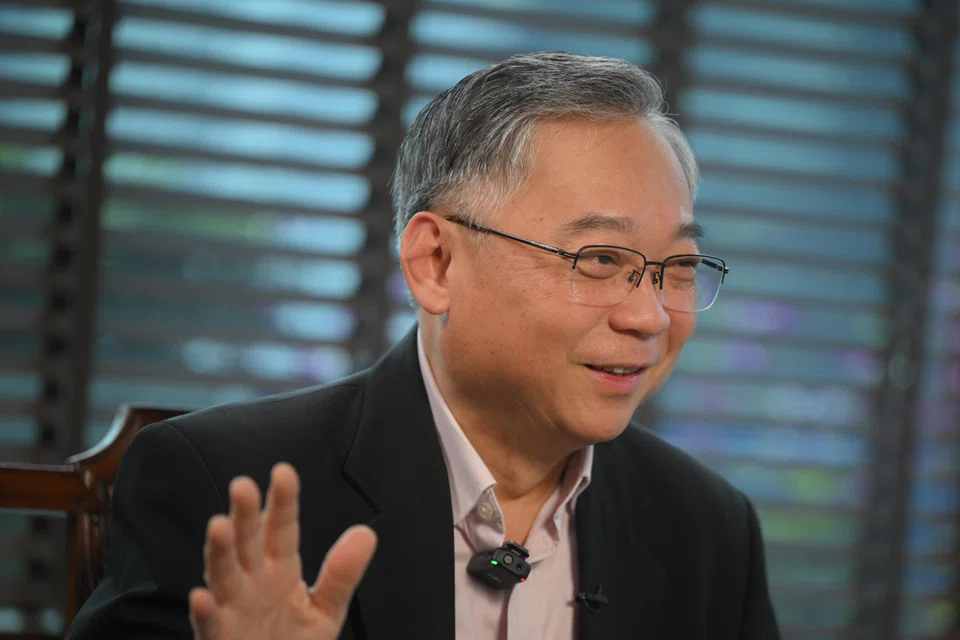
[SINGAPORE] Local firms should not abandon their plans to expand overseas in the face of short-term disruptions, even as the global economy grapples with rising geopolitical tensions and trade uncertainty, said Deputy Prime Minister Gan Kim Yong.
“Companies must not give up on the strategy of going international just because of a short-term crisis. Going international is not about this year – it is a long-term strategy,” said Gan, who is also trade and industry minister, in a media interview ahead of an official visit to Germany from Mar 25 to 28.
He acknowledged that amid current geopolitical crises, many companies’ immediate priorities are to stay afloat and address supply-chain disruptions. But he cautioned that they must not lose sight of longer-term goals.
“Otherwise, after the crisis is over, we realise we have taken two steps back and missed opportunities,” he said.
His comments came as he laid out opportunities for Singapore companies looking to expand into Germany, under a broader push by the government to help local firms go global.
In Berlin, he will meet German political leaders, including Federal Minister of Research, Technology and Space Dorothee Bar, Federal Minister for Digitalisation and State Modernisation Karsten Wildberger, Federal Ministry for Economic Affairs and Energy Parliamentary State Secretary Stefan Rouenhoff, and other members of the Bundestag.
At these meetings, he will affirm Singapore’s growing trade and investment ties with Germany, and discuss opportunities to strengthen economic cooperation and partnerships between the two countries and the European Union.
He will also meet representatives of German business chambers, including the German Chambers of Industry and Commerce and the Federation of German Industries.
In Hamburg, Gan will be the foreign guest of honour at the Ostasiatisches Liebesmahl, an annual networking gala organised by the German East Asia Association to strengthen trade links between Germany and the Asia-Pacific. He will deliver a ceremonial address at the event.
SEE ALSO
He will meet First Mayor of Hamburg Peter Tschentscher to discuss possible areas of cooperation between Singapore and the northern port city.
He also has meetings with the leaders of German multinational corporations and Mittelstand (the country’s highly specialised small and medium-sized companies) to explore openings for growing Singapore-Germany business linkages.
Areas for collaboration
Gan noted that Germany, like Singapore, is a hub economy – in that it is a key node in the European market and a gateway to both western and eastern Europe.
Singapore companies can thus leverage the EU-Singapore Free-Trade Agreement to gain access to the broader European market, he added.
Three areas of opportunity
He identified three main areas of opportunity for Singapore companies looking at operating in Germany.
The first is digitalisation. Germany, as Europe’s engineering hub, is still in the early stages of its digital transformation, including the adoption of artificial intelligence.
The EU-Singapore Digital Trade Agreement, which is in its final stages of negotiation, will further open up avenues for digital collaboration once it is concluded.
Sustainability is another area of potential. Singapore companies with expertise in green-energy projects – including hydrogen, ammonia and other alternative energy sources – may find opportunities to take part in Europe’s energy transition.
Green financing is closely linked to this, with European financial institutions actively seeking bankable sustainability projects in Singapore and the region.
The Monetary Authority of Singapore’s blended finance framework could serve as a platform for such collaboration, Gan noted.
Supply-chain diversification is another key area, he said. Both Singapore and Germany are deeply connected trading economies, and companies from both sides are looking to strengthen supply-chain resilience by establishing alternative sources, shipping routes and markets.
This is a priority that has taken on fresh urgency amid the ongoing global trade disruptions, Gan noted.
“As the world becomes more contested, there will always be the tendency and temptation to be more nationalistic and to protect domestic industries,” he said. “But competition also helps strengthen capability.”
Learning from Germany’s Mittelstand
Beyond market access, Gan said Singapore can also learn from Germany’s renowned Mittelstand.
Just as Singapore firms are interested in making a foray into Germany, there are also opportunities to attract some German firms to set up a presence in Singapore, which could in turn help level up local enterprises.
Germany has historically played an important role in Singapore’s industrial development, noted Gan, and German companies, such as Siemens, have been present in Singapore for decades.
The country also helped to establish vocational training centres that eventually became Singapore’s polytechnics; Singapore’s Continuing Education and Training model drew heavily from Germany’s approach to skills-based education, Gan noted.
“We are encouraging our companies to look at Germany as a gateway to Europe – not just exporting, but also investing in those markets and participating in their development and growth,” he said.
Confidence remains despite uncertainty
Despite the uncertain global environment, Gan said interest from European and German companies in Singapore remains high.
He noted increasing inquiries from firms worldwide looking to establish a footprint in Singapore, driven by a shift in corporate thinking from “just in time” to “just in case” supply-chain management.
“With this uncertainty, companies want to diversify and strengthen their supply chains. Singapore, being a hub, is important for them to have a presence here,” he said.
On the multilateral front, Gan said Singapore continues to play a facilitating role in strengthening trade relationships between regions.
He cited the inaugural EU-Asean dialogue as a promising development, and noted that Singapore and Germany were also working together through the Comprehensive and Progressive Agreement for Trans-Pacific Partnership, which had its first dialogue last year.
“There are many platforms on which we work together, and we hope to continue to strengthen this dialogue,” he said.
Decoding Asia newsletter: your guide to navigating Asia in a new global order. Sign up here to get Decoding Asia newsletter. Delivered to your inbox. Free.
Copyright SPH Media. All rights reserved.