Economists mixed on whether MAS will ease monetary policy again in 2025, after January move
The central bank loosens policy settings on Friday after having held them steady since Oct 2022

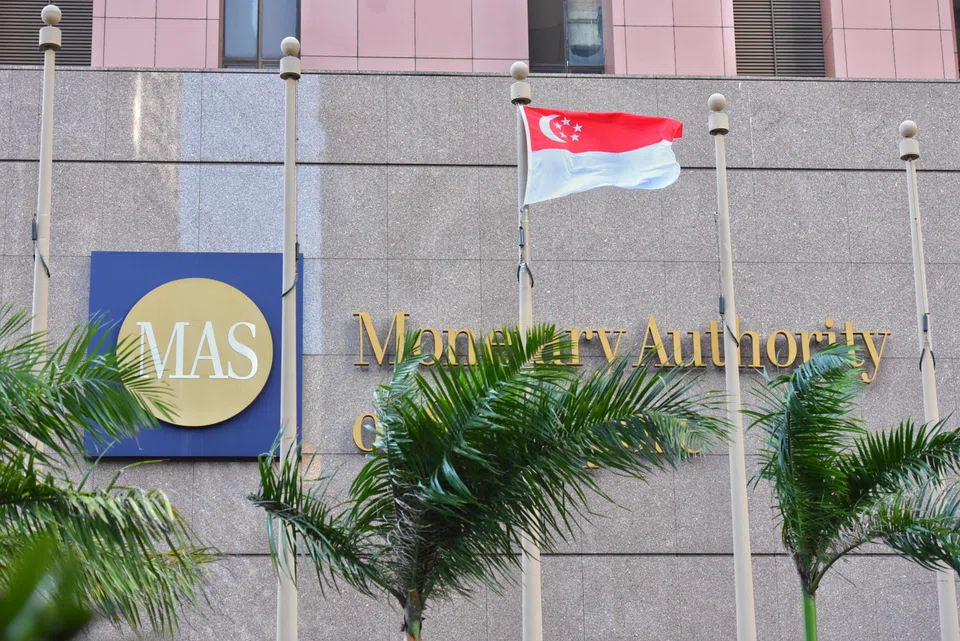
ECONOMISTS are not ruling out a further easing of monetary policy in Singapore this year, following January’s first loosening move since 2020 – though a common base scenario is for the central bank to stand pat for the rest of 2025.
Several economists cited the global trade impact from US President Donald Trump’s threatened tariffs as a potential reason for further easing.
Having held policy steady since its last tightening move in October 2022, the Monetary Authority of Singapore (MAS) on Friday (Jan 24) said that it will “slightly” reduce the slope of the Singapore dollar nominal effective exchange rate (S$NEER) policy band.
There was no change to the width of the band or the level at which it is centred.
The move was in line with market expectations, and the “fairly muted” market response suggests that “expectations were already in the price”, said OCBC chief economist Selena Ling.
Following the announcement, the Singapore dollar continued to trade at a stable rate of above 1.35 per US dollar.
The MAS decision came a day after data showed that Singapore’s core inflation, which excludes private transport and accommodation, remained below the 2 per cent threshold for the second straight month in December.
Several analysts then said that they were expecting MAS to ease policy the next day.
What’s next?
While Friday’s move was widely predicted, what remains unclear is whether the MAS will continue loosening policy in its next three scheduled monetary policy statements in April, July and October.
Citi analysts Kit Wei Zheng and Rohit Garg noted that MAS’ statement on Friday offered no “explicit clues” on the future bias of policy.
This is in contrast to stronger clues in, for example, the April 2024 statement, which described prevailing settings as both “needed” and “sufficient” to ensure medium-term price stability.
“Yet the lack of forward guidance has not precluded additional easing in past cycles, nor dissuaded market expectations in this direction, given the global backdrop and likely trajectory of data,” explained the Citi team.
On Friday, MAS said that core inflation “has moderated more quickly than expected” and is expected to remain below 2 per cent this year. It lowered its 2025 full-year core inflation forecast range to between 1 and 2 per cent, from a range of 1.5 to 2.5 per cent before. Its headline inflation forecast remains at 1.5 to 2.5 per cent.
The central bank also expects Singapore’s growth momentum to slow over this year, after “outperforming” in the second half of last year.
“Global economic policy uncertainty has risen since the October monetary policy review, mainly reflecting expectations of increasing trade policy frictions,” said MAS.
The official outlook for gross domestic product growth is 1 to 3 per cent, lower than the 4 per cent growth estimated for the full year in 2024.
Barclays, Citi and UOB said that their base-case scenario is for MAS to remain on hold for the rest of 2025, although the risk is tilted towards further easing.
MAS may have concluded that a “slight” slope reduction was the extent needed to veer the S$NEER away from an “unnecessarily restrictive” path, after its aggressive tightening cycle in 2021 and 2022, noted Barclays analysts Brian Tan and Audrey Ong.
“That said, the relatively measured slope adjustment suggests there is still scope for more FX (foreign exchange) policy easing if increases in US trade tariffs turns out to be worse than expected,” said the duo.
Concurring, UOB analysts Jester Koh and Peter Chia viewed Friday’s move as a “timely adjustment” to anchor the pace of the appreciation of the S$NEER towards a “cyclically neutral path”.
However, they do not rule out further easing in July or October should core inflation momentum continue to decelerate, or if growth surprises on the downside.
RHB also expects MAS to stand pat for the rest of the year, given their base scenario of “a period of slowing inflation pressures on the back of softer commodity prices and easing geopolitical tensions”, said analysts Barnabas Gan and Laalitha Raveenthar.
Other factors persuading MAS to keep policy unchanged are a “resilient economic backdrop” and “sizeable risks” for a re-inflationary climate.
Likely policy calibration
In contrast, DBS, Maybank, OCBC and Oxford Economics saw scope for further loosening this year.
OCBC’s Ling saw MAS’ statement as “slightly dovish”, reflecting “growing comfort” with the core inflation trajectory.
While not “overtly” dovish to the extent that it signals back-to-back easing, there may be another policy calibration this year, “should growth and inflation dynamics continue to materialise as anticipated”, she said.
Sheana Yue, economist from Oxford Economics, said that while Singapore is unlikely to be a main target of US tariffs, its reliance on exports makes it “vulnerable” to higher global trade barriers.
Risks are now tilted to the downside given uncertainty in global demand, she noted. “A marked fall in global demand could see the next loosening come as early as during April’s meeting.”
Maybank economists Chua Hak Bin and Brian Lee expect MAS to ease further in April to July, with the balance of risks shifting towards “growth concerns”.
Noting that MAS flagged higher uncertainty on the extent of trade policy frictions, they said that that this may refer to “uncertainty on the magnitude, coverage and implementation timeline of US tariffs, as well as associated retaliatory actions from other countries”.
DBS analysts Chua Han Teng and Philip Wee see the next loosening as likely in the second half of 2025, when the “global economic landscape becomes more challenging from the anticipated trade tensions”.