OUTLOOK 2023

Bleak outlook for Singapore’s electronics, semicon manufacturing amid global slowdown

Paige Lim
Published Mon, Jan 2, 2023 · 06:17 AM
    • Part of the weak outlook is due to semiconductors, which contribute about a third of Singapore's electronics output.
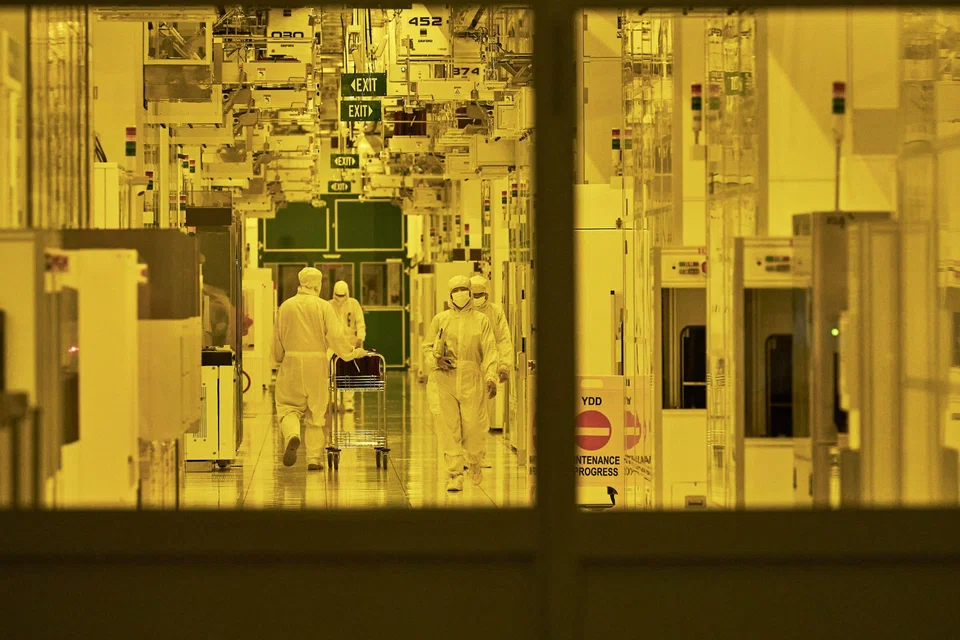
    • Part of the weak outlook is due to semiconductors, which contribute about a third of Singapore's electronics output. PHOTO: BLOOMBERG

    ELECTRONICS manufacturing in Singapore is expected to decline in 2023 as the industry’s global slowdown continues, amid challenging macroeconomic conditions and weaker external demand for consumer electronics.

    And with electronics comprising 40 per cent of total manufacturing, the overall sector may only rebound in 2024 when the global economy improves, said Maybank Kim Eng analyst Lee Ju Ye.

    OCBC chief economist Selena Ling expects manufacturing growth to flatline for the full year in 2023, with a likely contraction in the first quarter or half, before stabilising in the second half.

    The Q1 prognosis “remains weak” as final demand is softening in major markets such as the European Union and United Kingdom, “and the drag from the global electronics industry is likely to sustain past winter”, she said.

    Singapore’s manufacturing output fell 3.2 per cent in November, dragged down by electronics and chemicals, according to latest figures on Dec 23.

    UOB predicts that overall manufacturing will decline 5.4 per cent in 2023 “due to the faltering outlook for electronics and weaker external demand”, said senior economist Alvin Liew.

    Semicon downcycle

    Part of the expected contraction is due to semiconductors, which form about a third of Singapore’s electronics output. CIMB private banking economist Song Seng Wun projects a 5 per cent decline in electronics manufacturing in 2023, with a decline of about 3.5 per cent for semiconductors.

    Moody’s Analytics economist Denise Cheok noted that semiconductors were “previously propped up by the global chip shortage during the Covid-19 pandemic, which drove up export demand”.

    Now, declining demand for consumer electronics is contributing to the semicon slowdown. Said Maybank’s Lee: “The global semiconductor industry outlook for 2023 looks bleak, as rising recessionary risks are dampening demand, especially for consumer devices such as smartphones and computers.”

    Oxford Economics senior Asia economist Alex Holmes similarly cited lower demand for traditional electronics, noting that global PC sales were down 19.5 per cent year on year in Q3 – the steepest decline in two decades.

    While there are “pockets of resilience”, especially in auto chips and higher-end semiconductors, he expects overall semiconductor demand to fall further in the next couple of quarters as the global economy weakens.

    Ang Wee Seng, executive director of the Singapore Semiconductor Industry Association, also noted supply chain disruptions due to the United States’ tech curbs on China, the Russian-Ukraine war, and China’s zero-Covid policy, which have “inadvertently cast a pall over the whole industry” in recent months.

    “This is worsened by the high inflationary pressure the world economy is currently facing,” he added. He expects these conditions to affect the outlook for the industry in 2023, as companies adjust inventories and diversify supply chains to mitigate the impact.

    “The slowing global demand and targeted supply issues (from the US’s export ban) make a formidable combination,” said Ling.

    US-China trade tensions

    Ongoing trade tensions between the US and China will remain a complication. In October, the Biden Administration introduced sweeping export controls that ban China from purchasing high-end chips and chip-making equipment made with US technology, even if production takes place in other countries.

    Tensions could worsen in 2023, said UOB’s Liew, who expects the US to deliver more “Chinese-related measures” ahead of the 2024 presidential elections.

    “Even as the two main US political parties remain highly polarised and will likely disagree on almost all domestic issues, the one likely issue that both Democrat and Republican lawmakers will agree and work together on will be measures against China,” he said.

    Ang noted that major US semiconductor equipment makers project revenue losses of around 30 per cent in 2023 due to the curbs, which will have a trickle-down effect: “If the US continues its bans on exports to China, we can expect Singapore’s electronics industry to be affected in 2023 as well.”

    Small and medium-sized enterprises (SMEs) here whose processes and products rely on US technologies will have to reconfigure their supply chains to accommodate these curbs, he said.

    “Otherwise, they will see a more significant impact on their revenue if their business models are heavily dependent on China.”

    But there is a possible silver lining in the form of more foreign investment being directed to Singapore.

    “The US-China tech rivalry will help to reinforce supply chain shifts to Asean, and Singapore is benefiting from rising investments in the electronics cluster,” said Lee.

    She noted that fixed asset investment in electronics for Singapore jumped to a nine-year high of S$6.5 billion in 2020, and has “stayed resilient” at S$4.3 billion in the first nine months of 2022, compared with S$5 billion in the year-ago period.

    For Ling, it is currently “not so clear” whether the US curbs will drive the diversification of foreign direct investment and production into Singapore. “This depends on the specific part of the value chain being targeted, and whether Singapore is more attractive or competitive vis-a-vis Penang in Malaysia, or South Korea, or Taiwan for that matter.”

    Market watchers are banking on China’s reopening to boost global demand in manufacturing industries such as semiconductors and chemicals. But US restrictions could throw a spanner in the works, said Song: “The US wants companies to exercise restraint in supplying products to China… whether products in Singapore are exempted and can still be exported to Chinese companies, these are issues that still need to be sorted out.”

    Still, the long-term view remains bright. Although the World Semiconductor Trade Statistics expects the global semiconductor market to decline by 4.1 per cent to US$557 billion in 2023, the industry is still projected to achieve US$1 trillion in revenue by 2030, Ang noted.

    “This is because technology advancements, such as those found in electric vehicles, power electronics, photonics and 5G, will continue to pave the way for global semiconductor growth in the coming years,” he said.

    As a major player in the global semiconductor industry, Singapore stands to benefit. With the necessary infrastructure and government support for research and development, it provides an “attractive platform” for companies looking to invest in advanced technologies, he added.

    “Hence, this is a good time for SMEs in Singapore to also step up to showcase their technological innovations to collaborate with major players here to strengthen the semiconductor ecosystem.”

    Other manufacturing sectors

    Beyond electronics, the 2023 outlook is gloomy for the typically volatile biomedical cluster, but more upbeat for chemicals and transport engineering.

    Biomedical manufacturing

    This cluster is expected to underperform due to continuously weak demand for pharmaceuticals, said Maybank’s Lee.

    DBS senior economist Irvin Seah expects sluggish biomedical growth unless there is an increase in production capacity in Singapore, such as new plants or production lines.

    Whether China’s reopening will result in an increase in demand for pharmaceuticals “remains to be seen”, he said, noting that Singapore’s two biggest export markets for active pharmaceutical ingredients are the US and Europe.

    Precision engineering

    This sector’s fortunes are closely tied to those of electronics, which it supports. As such, “slowing global growth will likely cut into Singapore’s precision engineering sector,” said Cheok. Song expects precision engineering output to contract by 2 to 3 per cent in 2023.

    China’s reopening could possibly restore some demand for electronics, which could then induce demand for precision engineering, said Seah. But when exactly this uptick happens will depend on the pace and extent of reopening, he added.

    Chemicals

    Singapore’s chemical sector could be a bright spot, said Song. Oil and liquefied natural gas prices, driven up by the Russia-Ukraine war, have since stabilised due to recessionary worries, he said.

    He projects a “modest” 2 per cent growth, assuming no “deep, sharp recession” in developed economies. “There is some optimism with China’s reopening, which could boost demand. Therefore, we keep our fingers crossed and hope to see further demand for the range of petroleum, petrochemicals, and specialities products.”

    Similarly, Seah noted that Singapore’s chemicals sector is “highly reliant” on China and that the latter’s reopening will be “pivotal” for its growth.

    Transport engineering, general manufacturing

    The aviation segment should do well from the recovery of air travel and domestic demand, said Ling. Cheok also expects transport to “hold strong” as air travel picks up. The resumption in tourism will also boost sectors such as food and beverage manufacturing, she added.

    Under general manufacturing, “miscellaneous industries may benefit from the higher production of construction related materials as the construction sector extends recovery in 2023”, said Lee.

    But the pace of growth for transport engineering and general manufacturing may be “slower”, compared to the double-digit rebound in 2022 from 2021’s low base, she added.