BT Explains: What’s counted in ‘net zero’ Singapore

Wong Pei Ting
ON Monday (Sep 26), the Singapore government closed public consultations on setting a hard 2050 target to achieve net zero emissions for the country.
What does net zero mean at a country level? The Business Times looks at how emissions are calculated in a national context, and explains where businesses fit in the equation.
What’s not counted?
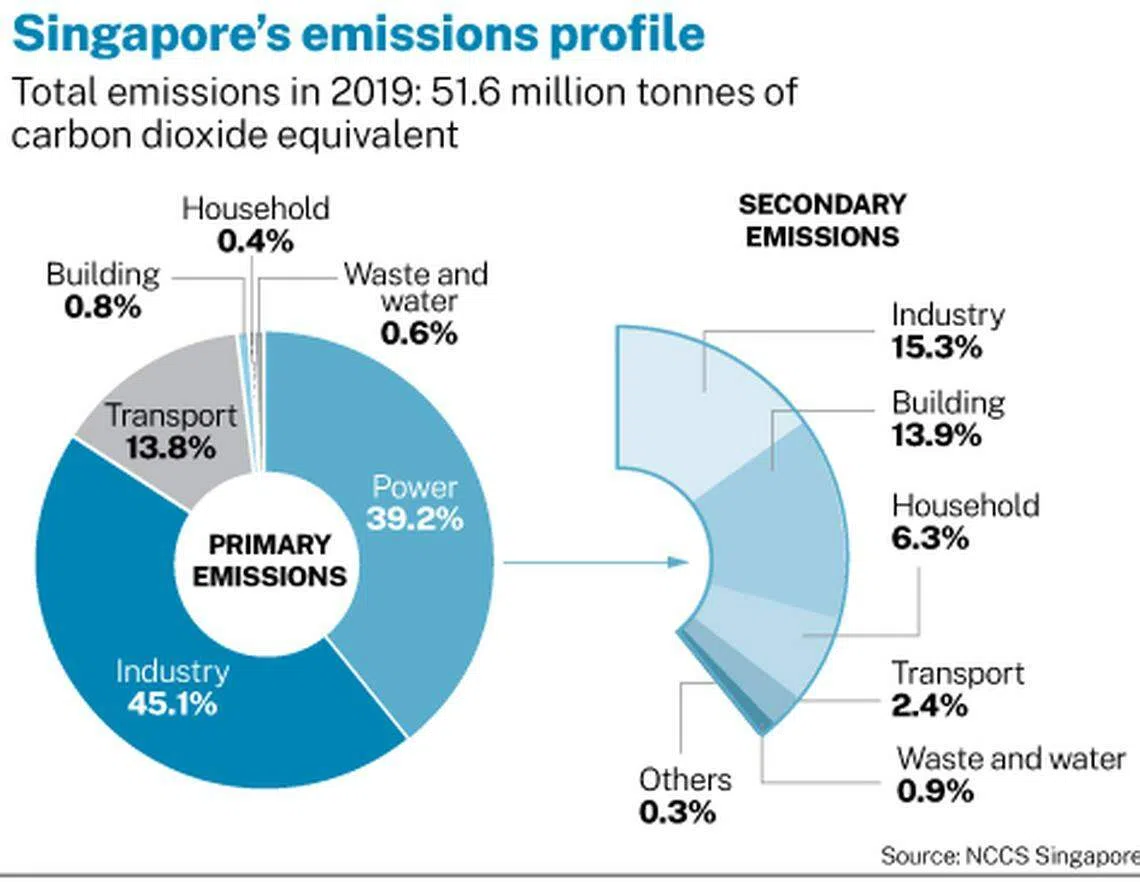
Imported goods: The United Nations Framework Convention on Climate Change’s (UNFCCC) internationally accepted carbon accounting methodology ascribes the embodied emissions on imported goods to the exporting country. It is a “production-based” accounting approach instead of an all-encompassing “consumption-based” approach. On that basis, Singapore’s National Climate Change Secretariat (NCCS) reported national greenhouse gas emissions of 51.6 million tonnes in 2019.
Navigation and civil aviation fuels: Fuels consumed by international bunkers and passenger airplanes are not counted as well. UNFCCC’s guide states that navigation and civil aviation fuel emissions from international transport activities should be reported separately and excluded from national totals. These are favourable to Singapore, a nation that heavily relies on imports for necessities, and which is a major transshipment and bunkering port.
What’s counted?
The carbon footprint of activities taking place within the country: These can be broken down into power, industry, transport, buildings, households, and waste and water. Of those, industry is the most polluting lot, directly contributing to around 45 per cent of the country’s emissions. A company’s direct emissions from its Singapore-based facilities and vehicles, technically known as Scope 1 emissions, fall under this. This covers direct fugitive emissions from refrigeration, air-conditioning, fire suppression, and industrial gases, apart from fuel burnt on-site.
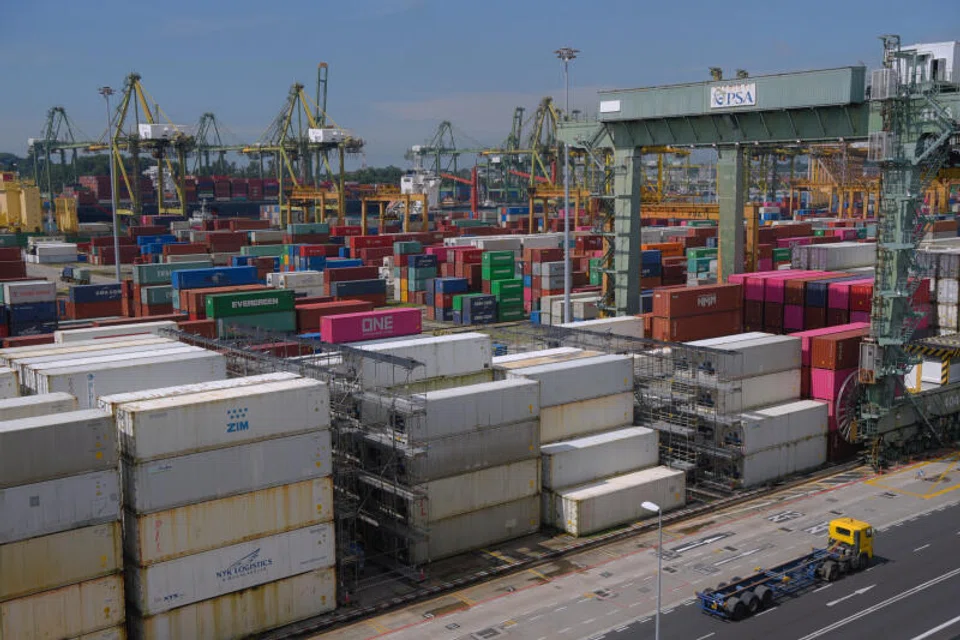
Emissions related to exports: While the embodied carbon in imported components does not count, emissions associated with the assembly, production, or refinement of these components for exportation do. Also included among Singapore’s manufacturers and exporters are companies in the oil and gas and chemicals sectors.
Electricity: Electricity use, including that consumed by industries and households, is accounted for under power. Emissions from this activity are largely dependent on the carbon efficiency of the national electrical grid, not something that companies control. Power in 2019 contributed 39.2 per cent of the country’s emissions.
What is industry’s part in Singapore’s net zero plan?
NCCS, under its long-term low-emissions development strategy (LEDS) submitted to UNFCCC in 2020, said industry will need to build up competitive advantage to be “best-in-class” in global energy and carbon efficiency.
Industry will be required to adopt emerging technologies to decarbonise industrial processes as they mature, NCCS stated, citing carbon capture, utilisation and storage and low-carbon hydrogen as technologies still in development.
With potentially more ambitious goals, industry will probably be called upon to “double down” on such efforts, said Melissa Low, a research fellow at the National University of Singapore’s Centre for Nature-based Climate Solutions.
Do carbon offsets count?
Singapore can use carbon offsets to reach net zero, but only if it can show that it has exhausted all other means. There is a “mitigation hierarchy” to be followed, Low pointed out.
To be accepted, those offsets will need to come from credible projects that can provide high-quality carbon credits, she said. The Singapore government will likely have to pay for those, with part of the costs borne by companies via the carbon tax.
Singapore plans to raise the carbon tax rate from S$5 per tonne currently to S$50 to S$80 by 2030, which could drive companies toward decarbonisation, Low noted.
“Of course companies won’t want to pay this kind of money,” she added.