

Budget 2026: New S$800 million decarbonisation challenge to support research and innovation in low-carbon technologies
There will also be a new programme under it that develops promising solutions into commercially deployable ones to serve Singapore's climate goals

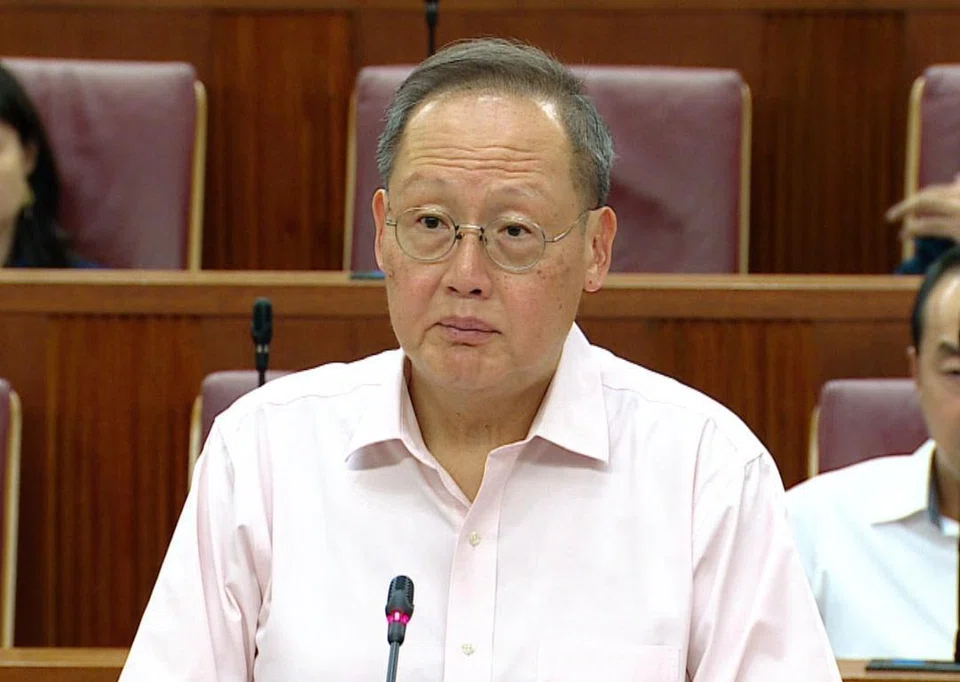
[SINGAPORE] The Republic will launch a new S$800 million challenge to support research and innovation in low-carbon technologies, said Minister-in-charge of Energy and Science and Technology Tan See Leng on Monday (Mar 2) during his ministry’s Committee of Supply debate.
Under the Decarbonisation Research, Innovation and Enterprise (RIE) Grand Challenge (DGC), the government will invest S$800 million over the next five years to support research, innovation and translation efforts for low-carbon energy generation and industrial process decarbonisation technologies for the industry and power sectors.
The DGC also falls under the government’s broader strategy to leverage science and technology to establish leadership in key growth sectors and venture into new growth areas, said Dr Tan.
“Building on past efforts, we are significantly increasing investments in promising solutions to reduce power sector and industry emissions, and at the same time, ensure a reliable and resilient power system,” he added.
The DGC is one of two “grand challenges” under the national RIE2030 plan, with the first announced in December 2025. The RIE grand challenges are large-scale research and translation programmes that advance national strategic priorities.
Decarbonisation has been identified as one priority, on account of Singapore’s commitment to reduce its greenhouse-gas emissions to between 45 and 50 megatonnes of carbon dioxide equivalent by 2035, and to reach net-zero emissions by 2050.
'%3e%3cpath%20d='M12.1475%2025.5262C13.7713%2025.4295%2014.94%2023.913%2014.94%2021.8832C14.94%2019.5359%2013.474%2018.093%2011.5917%2018.093C11.3745%2018.093%2010.9582%2018.093%2010.8393%2018.1413V25.2086L11.8891%2025.5745C11.8891%2025.5745%2012.207%2025.5262%2012.1475%2025.5262ZM11.4934%2017.6281C13.2567%2017.6281%2014.3843%2016.4292%2014.3843%2014.4501C14.3843%2012.372%2013.275%2011.2973%2011.4339%2011.2973H10.8393V17.6305H11.4934V17.6281ZM6.66078%2025.6482L7.39265%2025.5492C8.02617%2025.4502%208.26403%2025.3053%208.26403%2025.1097V11.6149C8.26403%2011.4193%208.1451%2011.3709%207.23484%2011.249L6.68137%2011.173L6.6219%2010.7588H11.9508C15.7153%2010.7588%2017.0624%2012.0797%2017.0624%2014.1578C17.0624%2015.9666%2015.7748%2017.1909%2013.4969%2017.6305V17.7041C16.111%2017.948%2017.6571%2019.5382%2017.6571%2021.7636C17.6571%2024.3318%2015.8937%2026.0417%2012.1109%2026.0417H6.60132L6.66078%2025.6482Z'%20fill='%232B2B2B'/%3e%3cpath%20d='M20.6287%2025.6505L21.5596%2025.5515C22.1725%2025.4779%2022.4104%2025.3076%2022.4104%2025.112V11.249H21.9346C20.073%2011.3479%2018.982%2013.0095%2018.408%2014.6227L18.1907%2015.5018H17.6555L18.1701%2010.7588H29.3837L29.6421%2015.4787H29.1664L28.9491%2014.6227C28.3728%2012.8645%2027.3047%2011.2743%2025.5002%2011.249H24.9856V25.1856C24.9856%2025.3812%2025.1251%2025.4548%2025.9965%2025.5515L26.7695%2025.6505L26.829%2026.0417H20.5693L20.6287%2025.6505Z'%20fill='%232B2B2B'/%3e%3c/g%3e%3cdefs%3e%3cclipPath%20id='clip0_5242_21648'%3e%3crect%20width='24'%20height='16.8'%20fill='white'%20transform='translate(6%2010)'/%3e%3c/clipPath%3e%3c/defs%3e%3c/svg%3e)
The S$800 million investment under the DGC will catalyse advancements in low-carbon technologies that can be deployed in Singapore to meet its climate commitments.
It will focus on technologies with the potential to decarbonise the industry and power sectors at scale. This is because industrial processes and power generation account for more than 80 per cent of Singapore’s greenhouse-gas emissions.
Examples of these technologies include solar power, hydrogen and its derivatives; energy efficiency; energy storage; carbon capture and utilisation; and grid modernisation.
The DGC will support laboratory-based research to advance the development of emerging low-carbon technologies, as well as support the test-bedding and piloting of more mature solutions.
New programme to pilot promising innovations
Under the DGC, the government will also launch a new programme that develops promising solutions into commercially deployable solutions to serve Singapore’s climate goals.
The Singapore Pilots for Energy and Enterprise Decarbonisation (Speed) programme will be hosted by the Agency for Science, Technology and Research under the DGC.
The Speed programme will bring together stakeholders from across the Republic’s climate tech ecosystem, including facility owners, investors, solution providers and relevant government agencies to pilot and support the development of promising innovations.
The government will release more information on specific initiatives under the DGC, including the Speed programme, in the coming months.
Decoding Asia newsletter: your guide to navigating Asia in a new global order. Sign up here to get Decoding Asia newsletter. Delivered to your inbox. Free.
Copyright SPH Media. All rights reserved.
TRENDING NOW

Once staunchly pro-China, Malaysian Chinese businesses are now distancing themselves from Beijing

Looking beyond looming CEO succession, should UOB potentially pursue a transformative merger?

Could stablecoins be the future of money?

Grab CEO’s wife Chloe Tong on life with Anthony Tan and finding her purpose

