Business travel, high-end tourists lead return of China visitors to Singapore

Paige Lim
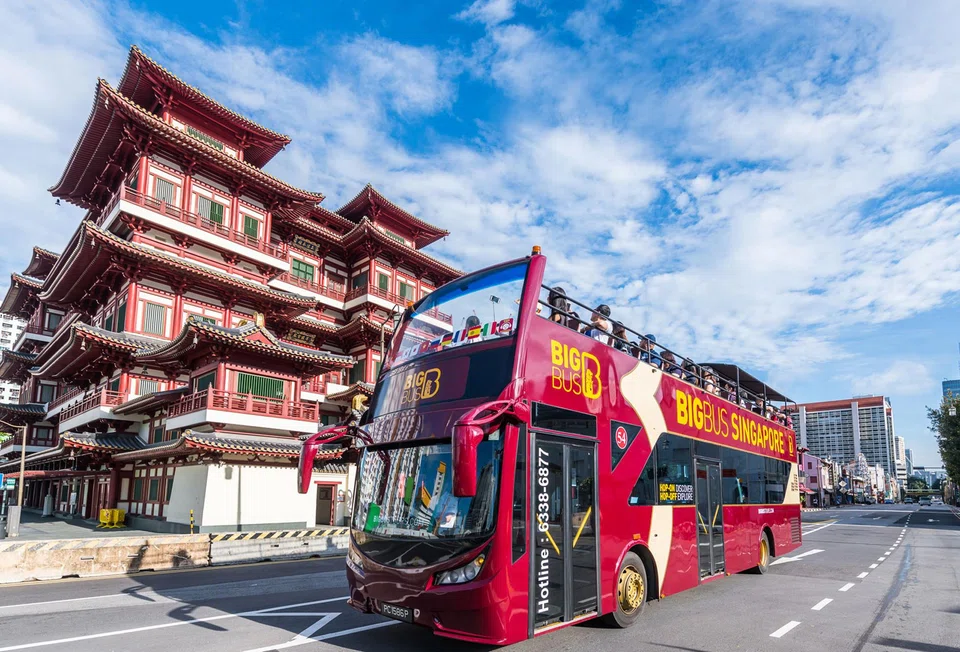
BUSINESS travellers and high-end tourists are leading the return of China visitors to Singapore, with mass-market tourism unlikely to resume significantly yet amid economic uncertainty and limited flights, say businesses and analysts.
The recovery in arrivals from China is expected to be more apparent only from the second quarter or second half of 2023, due to Chinese New Year festivities in late January as well as China’s current Covid-19 wave.
In 2023, the Singapore Tourism Board (STB) hopes to see China arrivals recover to between 30 and 60 per cent of pre-Covid levels, chief executive Keith Tan said at STB’s year-in-review on Tuesday (Jan 17).
The meetings, incentives, conventions and exhibitions (Mice) and corporate travel segments are expected to pick up first, based on what happened when other markets reopened their borders with Singapore, said Singapore Hotel Association (SHA) president Kwee Wei-Lin.
Leisure tourism will follow, though the higher cost of travel means this will be led by higher-end “experiential leisure travellers” rather than the mass group tours of the past, said SHA.
“We can look forward to welcoming more affluent travellers, subject to speed of restoring air connectivity between Singapore and China,” said Kwee. SHA’s 160 member hotels have seen a “gradual increase” in bookings from Chinese travellers since China eased its pandemic travel curbs on Jan 8.
The National Association of Travel Agents Singapore expects essential travel from China to “take precedence” in the initial months of reopening, with leisure tour bookings to pick up from April onwards, said a spokesperson.
More affluent, younger consumers
Some tourism companies are seeing more demand for curated luxury travel experiences, driven by a younger generation of Chinese with higher disposable income.
“Air ticket and hotel prices are still very high, so only those with slightly deeper pockets who can afford the increase in prices will come back to Singapore,” said Stanley Foo, founder of Oriental Travel & Tours. His firm offers a mix of luxury and mass-market tours, with visitors from China making up about 20 per cent of its pre-pandemic sales.
Luxury Tours & Travel has already received some individual travellers and families from China, said director Michael Lee, whose clients mostly stay in five-star hotels and dine at Michelin-starred restaurants. He expects to see more Chinese tourists travelling in smaller groups and choosing less jam-packed itineraries.
“Their travelling patterns evolve very quickly. Before the pandemic, the Chinese – those in their 50s to 70s – just want to see as much as they can, then go back … Now, the younger ones want to enjoy and have more time to themselves.”
More “budget” Chinese travellers – such as those who join “shopping bus tours” – will not return so soon, said Chan Chee Kong, chief operating officer of GlobalTix, a tours and activities e-ticketing platform. Pre-pandemic, demand from China made up about 20 to 25 per cent of its ticket sales.
In such tours, buses ferry tourists from one retail store to another. Oriental Travel & Tours’ Foo noted that many travel agencies specialising in such tours shuttered during the pandemic, as they were “100 per cent” dependent on arrivals from China.
The return of higher-end tourism, however, should boost Singapore’s luxury retail scene.
Since December, home-grown luxury handbag brand Ethan K has seen a spike in appointments made by Chinese travellers to visit its Scotts Square flagship store. Many are aged below 40 – a “completely different demographic” from the shoppers aged 50 to 70 whom the brand saw pre-pandemic, said its founder and designer Ethan Koh.
Sulian Tan-Wijaya, executive director of research and lifestyle at Savills Singapore, noted the global resilience of luxury goods during the pandemic.
Even before China’s reopening, most prime shopping malls in Singapore were seeing tenant sales 30 to 45 per cent higher than pre-Covid levels, she noted. “With the arrival of the Chinese tourists, tenant sales may even hit uncharted territories.”
UOB senior economist Alvin Liew said that China travellers could contribute S$2 billion to Singapore’s retail sales this year, comparable to pre-Covid levels.
China was Singapore’s biggest inbound tourism market from 2017 to 2019, as well as in 2021. In 2019, nearly half of tourist receipts from China were from shopping, at around S$2.1 billion.
Singapore’s tourist receipts are expected to reach S$18 billion to S$21 billion in 2023, or about two-thirds to three-quarters of 2019 levels, with STB citing China’s reopening as one growth driver.
Gradual recovery
However, analysts noted that China’s subdued recovery could limit the pace and extent of Chinese tourist spending overseas.
In the short term, pent-up demand could override concerns over economic uncertainty, said DBS analyst Andy Sim. “In a nutshell, we may see a surge in spending for the initial phase, and thereafter (it will) normalise. Where it will normalise to, will likely depend on the economic situation then.”
“The main difference pre- and post-pandemic would be that economic growth in China has slowed substantially and that may have an impact on spending patterns,” he added.
Jeff Ng, senior currency analyst at MUFG Bank, believes tourism demand from China will recover at a “gradual pace”. China’s employment and housing issues may weigh on mass-market spending – although perhaps not the higher end of tourism, he said.
Limited flights and expensive fares may also limit the return of Chinese tourists in the near term, making it difficult to “project the boost to (Singapore’s) headline gross domestic product growth”, said UOB’s Liew.
As at January 2023, there are about 38 weekly flights from China to Singapore – less than 10 per cent of pre-Covid levels, STB assistant chief executive (international group) Juliana Kua said at the agency’s year-in-review.
Indonesia, Middle East, India among growth markets
Some hospitality and luxury businesses are no longer banking on the return of China travellers, as demand from other markets has risen.
From 2017 to 2019, as well as in 2021 when travel resumed, Indonesia and India were Singapore’s next-largest sources of arrivals and tourism receipts, after China. In 2022, both countries topped the list for arrivals, while China was not among the top 10.
Travellers from Saudi Arabia now make up 20 per cent of luxury tour operator Fayyaz Travels’ inbound sales, up from 5 per cent in 2019, said managing director Muhammad Fayyaz Butt. Chinese tourists used to account for about 30 per cent.
For First Luxury, a distributor of new and second-hand luxury handbags at Mandarin Gallery, 60 per cent of in-store sales come from Indonesians and Malaysians, up from half in 2019.
Pre-pandemic, China tourists contributed about a fifth of sales. But founder Susan Yin sees “more potential” in Indonesia than China and is opening a shop in Jakarta’s Fairmont Hotel this March.
Indonesians are the top spenders by nationality at Ethan K, contributing to 35 per cent of sales, up from 25 per cent in 2019. Founder Koh has also seen more customers from the United Arab Emirates and India in the past four months, with both markets jointly accounting for 10 per cent of sales, up from 2 per cent in 2019.
But he is still looking forward to the full return of Chinese tourists: “We can (already) see the growth in sales. Just two weeks ago, we received a special S$36,000 order for a bag from a Chinese customer, which was a huge sale for us.”