

China reopening: Singapore businesses in country hit by Covid surge but remain optimistic
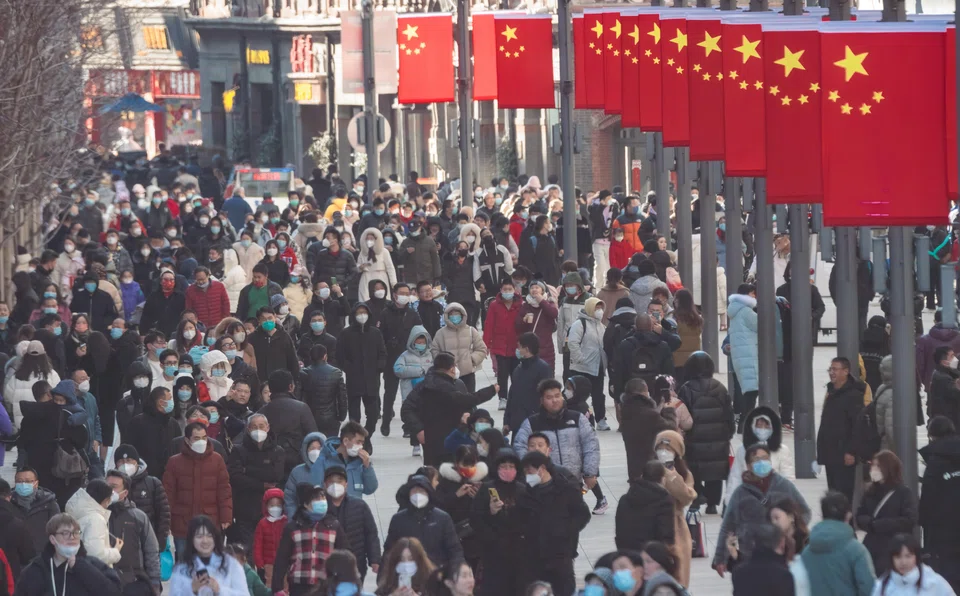
SINGAPORE companies with operations in China said the country’s reopening led to a surge in infections rather than consumer demand, shuttering retail outlets and factory lines alike. But bosses are cautiously optimistic now that the wave has subsided.
Last December, China’s abrupt departure from a zero-Covid approach created a spike in Covid-19 cases. Far from benefiting from the loosened curbs, business owners had to grapple with acute labour shortages.
Furniture retailer Commune, which has four self-operated and 71 franchised retail outlets in China, said some 80 per cent of its China-based workforce was down with the virus in December.
Commune chief executive Joshua Koh said: “Instead of having a positive effect (from the reopening), our shops were closed because people were getting Covid-19 and the shops couldn’t operate.” Commune is a unit of Singapore-listed Koda .
Restaurant operator Jumbo Group , which has eight Jumbo Seafood restaurants in five Chinese cities, was less affected by Covid-19-related labour shortages chiefly because demand, too, took a hit.
There were only a few occasions in December when staff had to be deployed across locations to plug shortfalls in manpower, said Ang Kiam Lian, CEO of Jumbo Group’s China operations.
This was mainly because Jumbo had fewer customers during the peak of infections, as patrons fell ill or stayed home. Jumbo Seafood could therefore continue to operate even with leaner staffing, Ang told The Business Times.
He added that Jumbo Seafood’s operations in Beijing had recovered by Christmas Eve, with demand “about even” with the same period a year ago.
For the 15-day Chinese New Year (CNY) celebrations that began on Jan 22, Jumbo Seafood’s restaurants had more business as residents recovered. This was partially offset by a boom in travel, after China reopened its borders in January. Jumbo thus expects its CNY takings across China to be about on a par with 2022 levels.
As drastic as the December surge in infections was, business heads said the return to normalcy has been just as swift.
“The explosion in numbers was insane,” said Kelvin Wee, chief executive of metal stamping specialist Patec. Within a week of reopening, up to 40 per cent of Patec’s approximately 500 employees in China were diagnosed with Covid-19.
But after the workers recovered – which typically took about two weeks – so did operations, to a level “probably better than it was” before, Wee said, adding that fears about the virus ebbed as it spread.
It was a similar picture at manufacturing company Akribis Systems. Capacity at its four factories in China dropped by as much as 70 per cent during the recent peak of infections, but recovered swiftly afterwards.
“Our company got over Covid-19 relatively quickly, because of the exponential rate of infection that was affecting the whole country,” said Akribis chief executive Leow Yong Peng.
Before the CNY holiday – which typically brings a long break for manufacturers – factory operations were already “back to normal” for furniture retailer Marano, said managing director Christopher Lim. Marano has some 2,000 workers across five factories in two Chinese cities.
As normalcy resumes, businesses are optimistic about their Chinese operations in 2023.
Cost pressures in China have eased this year, Commune’s Koh said. In previous years, the furniture retailer faced annual cost increases of about 5 to 10 per cent as its suppliers raised prices amid high demand. Such cost pressures have cooled this year, with suppliers’ factories having excess capacity amid lower demand.
While previous snap lockdowns have been disruptive, Marano’s Lim expects fewer such measures in 2023, as Chinese residents would have acquired “mass immunity” from the recent surge.
Disruptions from the Covid-19 surge and previous snap lockdowns have also thinned the playing field, with some competitors winding up, said both Koh and Lim.
Lim added: “At the end of the day, it’s about who makes it to the finish line, and you just have to manage the risks along the way.”
TRENDING NOW

Analysts cut DBS target price on lower 2027 earnings, but see buying opportunity after share price slide

Waymo founder predicts ‘landslide’ robotaxi adoption in Singapore, driven by high car costs

The limits of China’s trade concessions to Europe

Nvidia CEO Jensen Huang drops from world’s top 10 richest after chips sell-off

