

Circuit breaker sends April retail sales into sharpest fall in 30 years
Online retail sales as a share of total retail sales at record high; supermarkets booming, but sales in discretionary items plunge
Singapore
SINGAPORE'S retail sales tumbled 40.5 per cent year on year in April - the sharpest fall in more than three decades - triggered by "circuit-breaker" measures implemented between April 7 and June 1 to contain the Covid-19 outbreak.
Going by Department of Statistics figures released on Friday, this 40.5 per cent number was a deepening of the -13.3 per cent fall in March. It also represented the 15th consecutive month of decline, and the worst dive since 1986.
Excluding motor vehicles, retail sales were down 32.8 per cent in April.
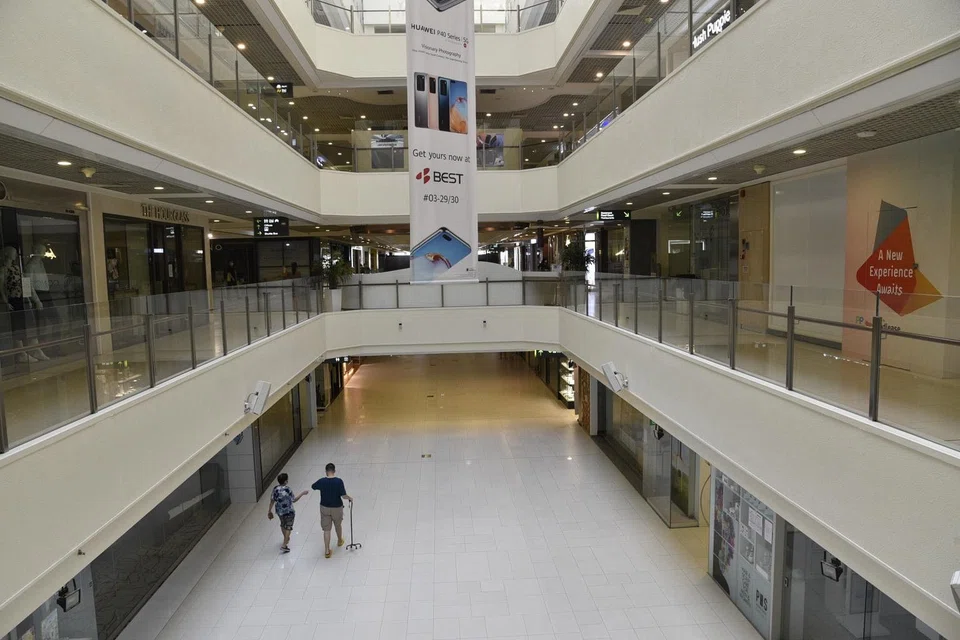
UOB economist Barnabas Gan said retail sales growth is likely to "contract in a double-digit fashion" for May and June, given the circuit breaker and Phase One restrictions, which started on June 2. Most retail outlets are still shuttered.
"Some reprieve may be seen, given the rise in online sales and the increased demand for consumer necessities in the coming months, although growth in these sectors is likely inadequate to offset the decline in other retail clusters," said Mr Gan.
With food and beverage (F&B) establishments operating on a takeaway or delivery basis for most of April, F&B services took a larger hit, with takings down 53 per cent year on year, or 38.8 per cent on a month-on-month, seasonally-adjusted basis.
Total retail sales value in April was S$2.1 billion, of which online sales accounted for 17.8 per cent. This is up from 8.5 per cent in March.
Mr Gan noted that online sales as a share of total retail sales surged to a record high, translating to a 96.2 per cent year on year increase in online retail sales. (This data has been available since 2018.)
He said a silver lining, perhaps, is that the rise in online sales demand will likely encourage retail stores to actively incorporate IT and digital solutions to supplement their businesses. "We expect the demand for IT and digital solutions to increase in the coming months, driven by the provision of government incentives, and the need to adapt in these unprecedented times," he said.
Likewise, OCBC Bank chief economist Selena Ling noted that the shift towards online sales continued to accelerate in April. "This trend is likely to sustain in May due to the extended circuit-breaker period, but hopefully, we'll see some tentative signs of stabilisation from Q3."
For overall sales, supermarkets and hypermarkets bucked the gloomy trend with a 74.6-per-cent rise in sales, as demand for groceries rose with more people staying at home. The only other segment to have clocked an increase in sales was mini-marts and convenience stores, with a 10.7 per cent year-on-year rise.
Conversely, the worst-hit were discretionary spending items. Watches and jewellery took the biggest fall, down 87.8 per cent, followed by wearing apparel and footwear, which fell 85.3 per cent. Also registering large falls were department stores, motor vehicles and optical goods and books.
On a seasonally adjusted monthly basis, retail sales were down 31.7 per cent in April, and fell 26 per cent excluding motor vehicles.
Total sales value for food and beverage services in April was S$397 million, with online sales accounting for 39.2 per cent, up from 15.6 per cent in March.
All categories of food services declined, but in various degrees. With the suspension of dine-in, restaurant takings plummeted 66.9 per cent, while the takings of food caterers dropped 59.8 per cent from a year ago. Cafes, food courts and other eating places also saw sales fall 45.5 per cent; fast food outlets were relatively less badly hit, with a 28.6 per cent decline.
For the whole of 2020, OCBC's Ms Ling expects total retail sales to contract 9.5 per cent, more than three times the -2.8 per cent seen in 2019. She forecasts that retail sales may only gradually recover from Phase Two.
Meanwhile, UOB is keeping its full year retail sales forecast at -5 per cent with downside risks.






