

DBS cuts Singapore's 2020 growth forecast to 0.9%

Fiona Lam
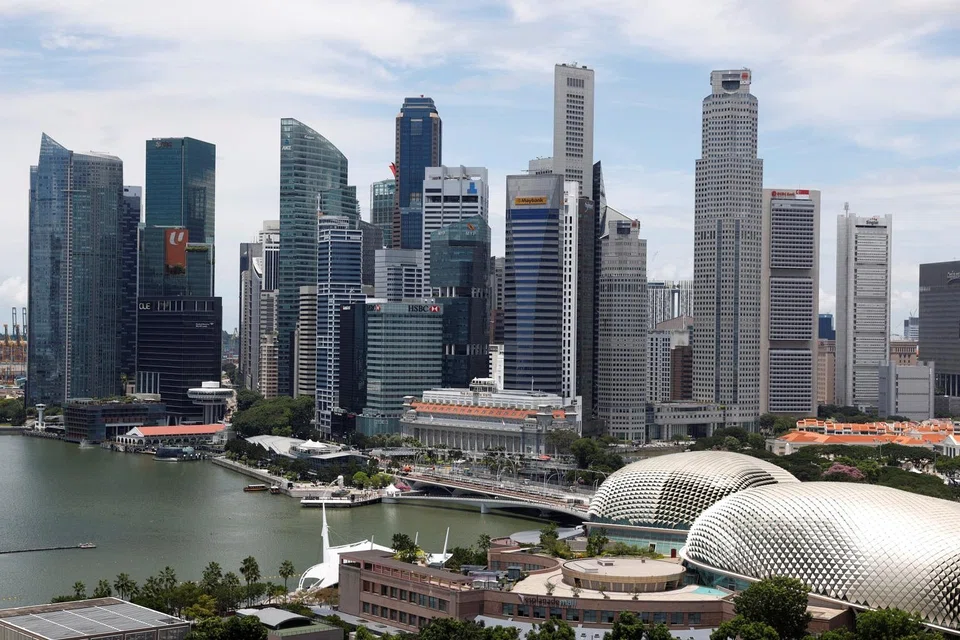
Singapore
DBS Group Research has downgraded its growth forecast for Singapore's 2020 real gross domestic product (GDP) to 0.9 per cent, from 1.4 per cent previously.
This takes into account the likely hits to consumer and business sentiment, tourism and the regional supply chain from the novel coronavirus outbreak, DBS senior economist Irvin Seah said in a research note on Friday.
"The economic outlook is supposed to be improving, but the virus has thrown a spanner in the works," he wrote. The concern is that the impact from the novel coronavirus could be deeper than the severe acute respiratory syndrome (Sars) outbreak in 2003 because Singapore has since developed "significantly stronger" economic links with China, he added.
For instance, the number of China tourists in Singapore surged to 3.4 million in 2018, six times that of 568,000 in 2003. China is now Singapore's largest tourism market, accounting for about 19 per cent of total visitor arrivals, which means the travel restrictions imposed thus far will hit the city-state's tourism sector severely, Mr Seah noted.
For every three months of Singapore's travel ban, DBS expects a decline of about one million tourists, or about S$1 billion of lost tourism receipts. This is based on an estimated 310,000 China tourists per month, and includes some immediate cancellations by regional travellers.
China is also Singapore's largest non-oil domestic export market, which means supply chain disruptions such as extended factory closures in China will have a significant impact on Singapore's manufacturing sector, according to DBS.
Singapore companies that rely heavily on Chinese workers, particularly construction firms, will also be affected by the mandatory 14-day leave of absence for workers returning from China. They could face manpower shortage as well as delays in their work schedule, Mr Seah said.
The drop in tourist arrivals and other effects from the outbreak will likely shave off about 0.5 percentage point from the Republic's full-year GDP growth, according to DBS. This assumes that like the Sars episode, the economic hit will be transient.
The impact will be most deeply felt in the first quarter, Mr Seah said. A sharp decline in Q1 will soon be followed by a V-shaped recovery.
"Headline GDP is expected to contract by about 0.6 to 0.8 per cent year on year
(y-o-y) in Q1 2020, the first quarterly decline since the global financial crisis, and about twice as deep as the Sars outbreak," he added.
DBS foresees a double-digit decline in the tourism sector, including the food and beverage industry, which is set to be the worst hit.
Sectors such as manufacturing, transport services, retail and construction will also likely be affected, but to a smaller extent. "These sectors are expected to recover faster once the outbreak subsides," Mr Seah said.
A robust fiscal response is expected, and further monetary easing could also be on the cards should the outbreak escalate, he wrote.
On Wednesday, the Monetary Authority of Singapore said there is breathing room for the Singapore dollar to ease without an off-cycle move.
The government will also announce a relief package in the upcoming Budget to support companies and industries affected by the outbreak.
During the Sars episode, the impact on Singapore's economy was felt mainly in the second quarter of 2003. During that quarter, GDP shrank by 0.3 per cent year on year. The tourism industry bore the brunt of the impact.
TRENDING NOW

Knight Frank’s Tan Tee Khoon leaves firm, Nicholas Keong takes over auction business
Keppel Energy, Sembcorp Utilities and Tuas Power to supply biomethane in pilot project

GovTech retrenches another 38 staff in second round of layoffs
Take-up of new private homes dives 45% in Q3 as prices accelerate with 1.4% rise

