

Decades of low rates, low inflation coming to an end: Gan Kim Yong

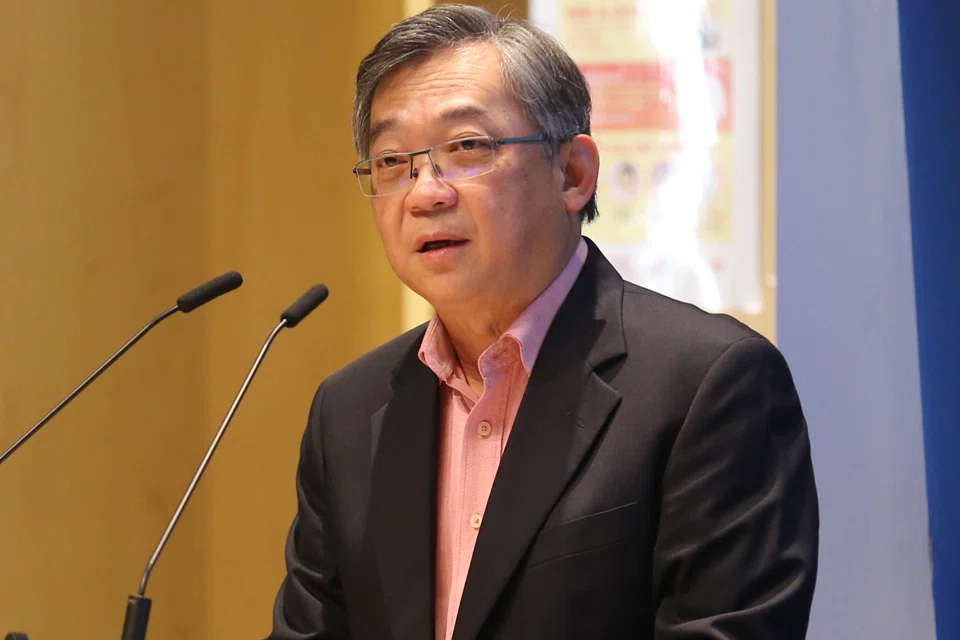
THE move towards decarbonisation is likely to increase costs in the near and medium term, with many low-carbon solutions not yet commercially viable, said Trade and Industry Minister Gan Kim Yong on Monday (Apr 25).
This comes amid a "significant" ramp-up in commitment towards many countries, including Singapore.
At the same time, the low interest rate and low inflation environment that has supported economic growth in recent decades may be coming to an end, said Gan, speaking to business leaders and trade association representatives at the Ministry of Trade and Industry's Firefly Symposium 2022 held at Suntec Hybrid Experience Centre.
His comments come as Singapore authorities on Monday reported headline inflation in March hitting a decade high of 5.4 per cent.
"Going forward, governments will likely need to manage starker trade-offs between growth and inflation," he said, adding that Singapore must be prepared for the impact of heightened inflation, constrained supply and volatile geopolitics.
Still, Gan said there are many growth opportunities, and Singapore is well-positioned to seize them.
He noted that the shift in global economic weight to Asia, particularly South-east Asia, puts Singapore in a "position of strength", adding that major powers such as the United States and China have been increasing their engagement with the region.
Singapore is also investing heavily to capture value from 2 secular trends that Gan said will fundamentally transform its economy - advancement in digital technology and sustainability.
One example is the automotive industry, which is managing both these trends as it works towards the ideals of connectivity, autonomous driving, shared economy and electrification. The pressure to reduce emissions has also driven manufacturers to develop electric vehicles and hydrogen fuel-cell vehicles, all of which will have a significant impact on supply chains, technical capabilities and workforce competencies of carmakers, said Gan.
Meanwhile, Singapore is organising its efforts around the Singapore Economy 2030 vision, which comprises 4 key pillars - manufacturing, services, trade and enterprises.
Noting that the Industry Transformation Maps (ITM) have laid the foundation and are in the midst of being refreshed, Gan said the vision builds on the hard work and collective leadership of all stakeholders - industry leaders, trade associations, the unions, workers and the government.
"Most importantly, we need to achieve deep industry and business transformation, and build a strong bench of Singapore enterprises that can create good careers for our people," said Gan.
One way to do this is to nurture high-potential local companies into "Singapore Global Enterprises", which will be achieved through the Enterprise 2030 strategy.
Gan also highlighted 3 key areas that companies need to address.
First, companies need to improve their productivity. Now that borders have reopened, Gan said businesses need to overcome the limit in labour supply by adopting innovative solutions and adapting their business model, to reduce their demand for labour.
Companies also need to innovate, build deep capabilities, and pivot their business models where needed, to respond to industry trends, open up new revenue streams, and leapfrog the competition, said the minister.
The third and final key area is workforce transformation, which will require not only commitment and investment from companies, but also the willingness of workers to learn new knowledge and skills, and take on new responsibilities, he said.
"Some businesses have asked - how can we think about transformation, when costs are escalating, and we cannot even find sufficient workers with the right skills to support the companies’ daily operations? Actually, the only sustainable way to address these challenges is to relentlessly push on innovation and transformation," said Gan.
Copyright SPH Media. All rights reserved.
TRENDING NOW

Grab CEO’s wife Chloe Tong on life with Anthony Tan and finding her purpose

Income Insurance appoints former Manulife Singapore top man as new CEO
Incidence of civil servants buying property near unannounced MRT stations ‘a concern’, but may not establish misconduct: PSD
Three ex-employees of Envy group join Ng Yu Zhi in bankruptcy

