Economists not ruling out further government support if inflation persists; GST hike likely to stay

Sharon See
SINGAPORE’S inflation appears on track to peak in the third quarter, but economists told The Business Times that further government support should not be ruled out if prices continue to stay elevated beyond that.
“Food prices are starting to fall off from their recent peaks. The relaxation on some export bans on palm oil from Indonesia and fertilisers from Russia will also ease food-price pressures,” said Maybank senior economist Chua Hak Bin.
“Energy prices are highly correlated with food prices, and have also eased from their recent peaks. The global growth slowdown and monetary tightening is leading to some demand destruction and cooling of global commodity prices,” he added.
This means there is a “high likelihood” that core inflation could peak in Q3, said Dr Chua, in line with what the Monetary Authority of Singapore projected in April.
Still, inflationary risks tilt towards the upside, said UOB head of research Suan Teck Kin. “As the Russia-Ukraine conflict continues to drag on, along with bottlenecks in supply chain disruptions, commodity prices could continue to stay elevated through the second half of 2022.”
RHB senior economist Barnabas Gan is expecting core inflation to “stabilise in Q4, but said: “Any unexpected exacerbation of food and energy inflation in 2022 may require another fiscal response.”
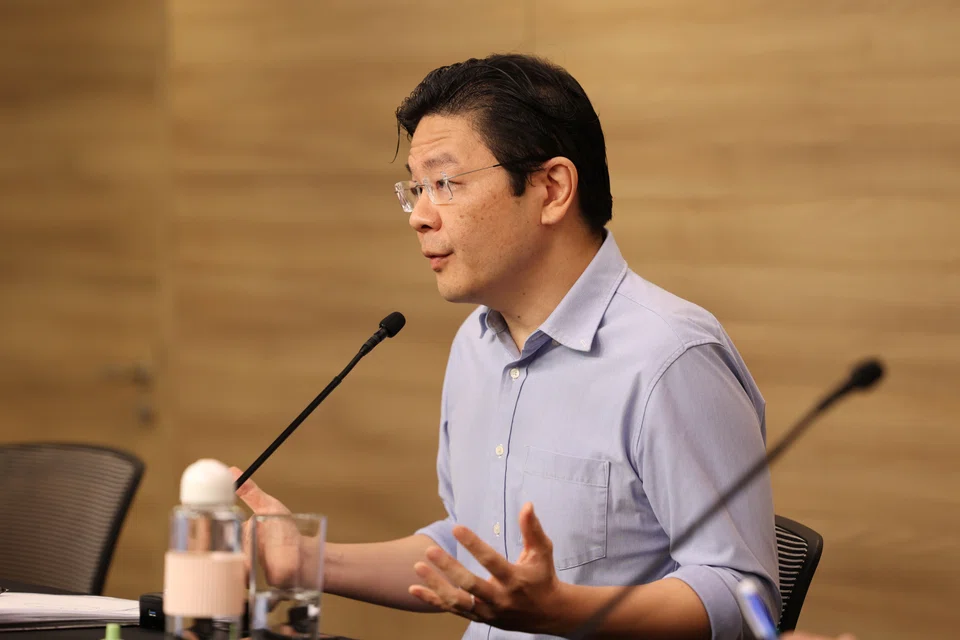
Such a response would come on top of a S$1.5 billion support package announced on Tuesday (Jun 21) by Deputy Prime Minister Lawrence Wong for businesses, households and individuals, with particular focus on the vulnerable.
“For now, we must expect price increases to continue in the coming months. In particular, energy prices are likely to remain elevated for the rest of the year,” he told reporters at a briefing.
Wong, who is also Finance Minister, added that the government has taken care to ensure the package does not “spark more inflation”.
UOB’s Suan said the inclusion of non-cash schemes such as the utilities credit as well as the prudent amount of cash disbursed to target groups will help stave off inflationary pressures that may be afforded by stimulus packages.
And beyond cash transfers, the package also includes grants for businesses to improve their energy efficiency as well as support to continue their transformation efforts.
Said Wong: “I know many Singaporeans are concerned about the immediate issues of rising prices and cost of living. Please understand that the challenges before us are not just about inflation, they are also about adapting to major structural changes in our operating environment – rising temperatures and climate change; increased geopolitical contestation and tensions, potentially moving into a more bifurcated and decoupled world.”
At the same time, Covid-19 remains a risk for the global economy and for Singapore, he said.
“If the trajectory were to take a turn for the worse, certainly, it will compound the issues with the Ukraine war and supply chain disruptions, all of it coming together,” said Wong, a co-chair of the Covid-19 multi-ministry taskforce.
This underscores the need to accelerate Singapore’s economic reforms, and it is also why the planned Goods and Services Tax (GST) hike to 9 per cent — with the first 1-percentage point rise to take effect on Jan 1, 2023 — should not be delayed, Wong said.
“We cannot afford to slow down, and that includes ensuring we have a strong and sustainable fiscal position going forward, because that will enable us to deal with a more uncertain future, to deal with any challenges that we may face in the future and also to seize any new opportunities,” he said.
Maybank’s Dr Chua said there may be a case for a 1-year delay to the GST hike if core inflation “continues to surprise on the upside” and shows no signs of peaking in Q3 or Q4.
But if persistent inflation indeed warrants more measures or packages ahead, Singapore does not have a “bottomless well”, said OCBC chief economist Selena Ling, adding: “Hence, this clearly hints that there is still a need to still push ahead with the GST hike.”
The cost burdens could also become “more acute” if the government further delays bringing in revenue to address the country’s longer-term challenges, such as its ageing population, said UOB’s Suan.
“Healthcare expenditure is already the largest operating expense in the Budget, followed by defence and education, and the only realistic way to address this is by increasing revenue via the GST. The timing is critical, given that Singapore is expected to be on an economic recovery wave post-Covid-19,” he said.