

Economists split on whether MAS tightening in October will be single or ‘double-barrelled’ move

Tessa Oh
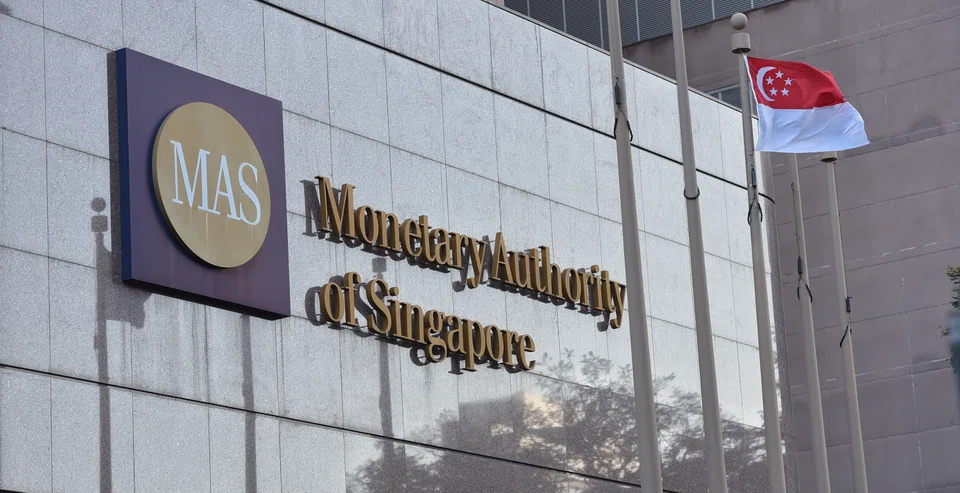
ECONOMISTS are split on the extent of policy tightening at the Monetary Authority of Singapore’s (MAS) next decision in October, but agree that it is likely to coincide with flash estimates of third quarter economic growth, rather than preceding those figures.
The MAS has made several early or off-cycle moves in recent years. But the policy review traditionally takes place at the same time as the flash release of Singapore’s gross domestic product (GDP) growth estimates, and there is currently no strong justification to split the two up, private-sector economists told The Business Times (BT).
For one thing, any inter-meeting moves – such as the ones in January and July this year – have not been so close to the scheduled meeting dates, noted OCBC chief economist Selena Ling. The next MAS meeting is due no later than Oct 14.
“There is also no market-moving CPI (consumer price index) data due from now to the next MAS meeting which could swing the balance of risks,” she added. The latest CPI figures were released on Sep 23, with no change to official full-year forecasts.
But while the economists with whom BT spoke to were unanimous that further tightening is on the cards, there was no consensus on the exact form this could take.
At least 5 economists predict a more aggressive “double tightening” move, in which the Singapore dollar nominal effective exchange rate (S$NEER) policy band will both have its slope steepened and be re-centred higher.
Khoon Goh, head of Asia research at ANZ Bank in Singapore, said further aggressive policy tightening is needed in order to dampen inflation pressures, given that the MAS’ moves since last October have not been sufficient to slow inflation down.
Inflation has steadily inched upwards in recent months, with core inflation reaching another multi-year high of 5.1 per cent in August. Officials now expect prices to remain elevated in the coming months, instead of easing towards the end of the year as previously predicted.
Goh expects the central bank to re-centre the midpoint of the S$NEER policy band to the prevailing level and steepen the slope by 100 basis points (bps) to take it to 3 per cent per annum, with no changes to the width of the band. “There is a clear need to take policy settings towards restrictive levels, and a slope of 3 per cent per annum will get us closer there.”
Mohamed Faiz Nagutha, Asean economist at the Bank of America (BofA) Securities, also expects the policy band to be re-centred to the prevailing level, but expects its slope to be increased by just 50 bps.
“The higher slope will recognise the protracted inflation fight and deliver a more durable form of policy tightening against the still-elevated core inflation trajectory over 2023, versus a 2 per cent implicit policy target. The re-centring will help to address near-term inflation risks and also keep expectations anchored,” he wrote in a research note.
Other economists predict that the MAS will steepen the slope of the S$NEER band to allow the Singapore dollar to appreciate at a faster rate, but will not change its width, nor shift it upwards or downwards.
“I believe MAS will want to be responsive to the continued strength of the Singapore dollar to US dollar exchange rate by adjusting the rate of appreciation, but err on the side of caution (and not adjust the midpoint). This is primarily driven by concerns that the S$NEER might appreciate too quickly,” said Essec Business School Asia-Pacific associate professor Jamus Lim.
Nomura analysts believe a steeper S$NEER slope is a more appropriate policy response to the “higher-for-longer” medium-term inflation outlook, rather than a third re-centring of the policy band. “In our view, recent policymakers’ assessment of risks appear to be tilting towards growth, global inflationary pressures have broadly eased, and Singapore import prices – which have around an about 4 month lead over core inflation – also turned lower for 2 consecutive months in June and July,” they said in a research note.
Oxford Economics senior economist Alex Holmes believes the central bank will steepen the slope by 0.5 percentage points to 2 per cent, though he noted that the “risks are increasingly weighted to additional action”.
In contrast, Moody’s Analytics economist Denise Cheok expects the MAS to re-centre the midpoint of the band upwards, but leave its width and slope unchanged. She added: “In addition to managing imported inflation, MAS will also need to consider the rather weak export numbers that we have been seeing in recent months. A stronger Singapore dollar will make imports cheaper, but exports more expensive.”
OCBC’s Ling sees the possibility of a “double-barrelled” tightening – but also raised the idea that the MAS might go the other way and re-centre the policy band to below the prevailing level instead, given that headline and core inflation may ease by the first half of 2023.
TRENDING NOW

Analysts cut DBS target price on lower 2027 earnings, but see buying opportunity after share price slide

China Investment Corp, PGIM’s 50% stake in Nex mall up for sale; asking about S$1.2 billion

Nvidia CEO Jensen Huang drops from world’s top 10 richest after chips sell-off

OCBC wealth clients turn defensive amid market volatility as Q3 profit rises 3%

